Doctor Who
The Seeds of Doom, Part Three
TV Flash files “The Seeds of Doom, Part Three” as hour 424 of 700 in the TV Flash guide — Doctor Who (1963–) on BBC, season 13, episode 23, aired 1976-02-14, 25 min.
From the desk
How this hour is filed
This leaf is S13E23: listed hour 424 of 700 in the Doctor Who guide, hour 23 of 26 in season 13. It aired 1976-02-14 (25 min). The listed hour before it is “The Seeds of Doom, Part Two” (S13E22). Next is “The Seeds of Doom, Part Four” (S13E24). Broadcast log — titles and dates, not a plot bible.
Catalog log
Broadcast listing — not a TV Flash recap.
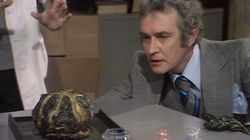
Surviving two attempts to end their lives, the Doctor and Sarah seek the identity of the plant fanatic who ordered the hit on the arctic base, pursuing their only lead - a commissioned painting of a rare flower left in the boot of a car. Chase, meanwhile, is doing all he can to encourage the hatching of the Krynoid pod.
Viewer FAQ
Where does The Seeds of Doom, Part Three sit in the Doctor Who guide?
S13E23 is listed hour 424 of 700 — hour 23 of 26 in season 13, season 13 episode 23.
When did Doctor Who S13E23 air?
The Seeds of Doom, Part Three aired 1976-02-14 and is listed at 25 minutes.
Where should I start with the 1960s serials?
William Hartnell's First Doctor is the origin of the TARDIS-and-companions contract. Patrick Troughton's Second Doctor is the proof that regeneration works. Start at a serial whose surviving episodes interest you; missing-episode gaps are part of the classic-era weather.
In the series
Why this series still plays
A Time Lord, a police box bigger on the inside, and regeneration as infinite franchise life: Doctor Who launched from the BBC in 1963 and never really parked. Early black-and-white serials built the mythology; Hartnell-to-Troughton proved the lead could change without ending the show. The longest experiment in serialized reinvention — woolly, weird, endlessly renewable.
November 23, 1963, is a drop that never really parked. BBC's *Doctor Who* launched a Time Lord and a blue police box bigger on the inside, then treated the lead as renewable inventory. **Regeneration is the window.** Sydney Newman, C. E. Webber, and Donald Wilson were among the early architects. Early black-and-white serials built the mythology; companions, sonic screwdrivers, and cliffhangers became ritual. Rex wants woolly national inheritance. Fine. The business model is recasting without ending the show.
Filed against
- William Hartnell as The First Doctor
William Hartnell’s First Doctor launched Doctor Who from the BBC in 1963 — a Time Lord, a police box bigger on the inside, regeneration as infinite franchise life. Early black-and-white serials built the mythology; Hartnell-to-Troughton…
- Patrick Troughton as The Second Doctor
Patrick Troughton played the Second Doctor on Doctor Who, the 1960s BBC proof that a Time Lord could change faces without ending the franchise. Police box bigger on the inside, regeneration as infinite life, early black-and-white serials…
- Jon Pertwee as The Third Doctor
Jon Pertwee’s Third Doctor kept Doctor Who’s police box moving — a Time Lord, a box bigger on the inside, regeneration as infinite franchise life. BBC serials launched in 1963 and never really parked; Hartnell-to-Troughton proved the lead…