Doctor Who
The Armageddon Factor, Part Two
TV Flash files “The Armageddon Factor, Part Two” as hour 501 of 700 in the TV Flash guide — Doctor Who (1963–) on BBC, season 16, episode 22, aired 1979-01-27, 25 min.
From the desk
How this hour is filed
This leaf is S16E22: listed hour 501 of 700 in the Doctor Who guide, hour 22 of 26 in season 16. It aired 1979-01-27 (25 min). The listed hour before it is “The Armageddon Factor, Part One” (S16E21). Next is “The Armageddon Factor, Part Three” (S16E23). Broadcast log — titles and dates, not a plot bible.
Catalog log
Broadcast listing — not a TV Flash recap.
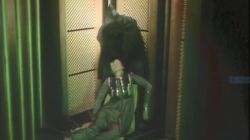
When the Doctor and Romana work to escape they Marshal, they not only discover that their TARDIS has been buried underneath a pile of rubble from a recent Zeos attack, but also they discover someone who may be trapped and kidnapped by a unknown source.
Viewer FAQ
Where does The Armageddon Factor, Part Two sit in the Doctor Who guide?
S16E22 is listed hour 501 of 700 — hour 22 of 26 in season 16, season 16 episode 22.
When did Doctor Who S16E22 air?
The Armageddon Factor, Part Two aired 1979-01-27 and is listed at 25 minutes.
Where should I start with the 1960s serials?
William Hartnell's First Doctor is the origin of the TARDIS-and-companions contract. Patrick Troughton's Second Doctor is the proof that regeneration works. Start at a serial whose surviving episodes interest you; missing-episode gaps are part of the classic-era weather.
In the series
Why this series still plays
A Time Lord, a police box bigger on the inside, and regeneration as infinite franchise life: Doctor Who launched from the BBC in 1963 and never really parked. Early black-and-white serials built the mythology; Hartnell-to-Troughton proved the lead could change without ending the show. The longest experiment in serialized reinvention — woolly, weird, endlessly renewable.
November 23, 1963, is a drop that never really parked. BBC's *Doctor Who* launched a Time Lord and a blue police box bigger on the inside, then treated the lead as renewable inventory. **Regeneration is the window.** Sydney Newman, C. E. Webber, and Donald Wilson were among the early architects. Early black-and-white serials built the mythology; companions, sonic screwdrivers, and cliffhangers became ritual. Rex wants woolly national inheritance. Fine. The business model is recasting without ending the show.
Filed against
- William Hartnell as The First Doctor
William Hartnell’s First Doctor launched Doctor Who from the BBC in 1963 — a Time Lord, a police box bigger on the inside, regeneration as infinite franchise life. Early black-and-white serials built the mythology; Hartnell-to-Troughton…
- Patrick Troughton as The Second Doctor
Patrick Troughton played the Second Doctor on Doctor Who, the 1960s BBC proof that a Time Lord could change faces without ending the franchise. Police box bigger on the inside, regeneration as infinite life, early black-and-white serials…
- Jon Pertwee as The Third Doctor
Jon Pertwee’s Third Doctor kept Doctor Who’s police box moving — a Time Lord, a box bigger on the inside, regeneration as infinite franchise life. BBC serials launched in 1963 and never really parked; Hartnell-to-Troughton proved the lead…