The Wire
Sentencing
TV Flash files “Sentencing” as the last listed hour of season 1 — The Wire (2002–2008) on HBO, season 1, episode 13, aired 2002-09-08, 60 min.
From the desk
How this hour is filed
This leaf is S01E13: listed hour 13 of 60 in the The Wire guide, last listed hour of season 1. It aired 2002-09-08 (60 min). The listed hour before it is “Cleaning Up” (S01E12). Next is “Ebb Tide” (S02E01).
Catalog log
Broadcast listing — not a TV Flash recap.
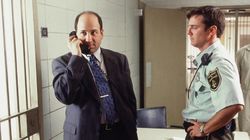
"all in the game..." - Traditional, West Baltimore Daniels and McNulty's evidence of political corruption is of slight interest to the FBI, but the unit decides not to turn over the case to the FBI, but to pursue other directions, so that those involved in the drug trade are arrested or taken off the street. Daniels and McNulty face the ire of their superiors for flouting orders for a quick resolution to the case. D'Angelo is convinced to stand with his family after a visit from his mother. The detail has enough information to arrest Avon and many of his people but Stringer is left on the street. Business resumes in the pit with Bodie and Poot leading the way.
Viewer FAQ
Where does Sentencing sit in the The Wire guide?
S01E13 is listed hour 13 of 60 — last listed hour of season 1, season 1 episode 13.
When did The Wire S01E13 air?
Sentencing aired 2002-09-08 and is listed at 60 minutes.
Where should I start The Wire?
Episode one of season one. The show is a five-volume novel; skipping the corner season to “get to the good part” is how you miss the grammar.
In the series
Why this series still plays
Watch it as a civic novel that happens to be television: each season a new institution, the same city refusing to be solved. Characters function inside systems, not merch. Start at the corner; stay for the report card — and for a newsroom closer that still argues with the first wire.
Open on a street that is already an argument. The first hour of The Wire does not introduce a hero so much as a jurisdiction: a corner, a courtroom, a police department already lying to itself about what it can solve. David Simon and Ed Burns write Baltimore as a set of interlocking machines — drugs, docks, City Hall, schools, the newsroom — and then ask television to behave like a novel that refuses a narrator’s mercy. If you came for an antihero origin story, the text will starve you politely. If you came to…
Filed against
- Dominic West as Jimmy McNulty
Dominic West swaggered through The Wire as Det. Jimmy McNulty — brilliant, self-destructive, and allergic to institutional sense. David Simon's Baltimore saga made him the face of novelistic cable crime. On TV Flash he is still arguing…
- Idris Elba as Stringer Bell
Idris Elba’s Stringer Bell is The Wire’s MBA language trying to colonize a street that will not be colonized — civic instrument, not brand extension. David Simon’s Baltimore treats institutions as leads; Stringer is the corner with a…
- Wendell Pierce as Bunk Moreland
Wendell Pierce’s Bunk Moreland made The Wire’s homicide hour feel like a civic novel with a cigar — David Simon’s Baltimore in five institutional volumes, the corner never the point, characters inside systems rather than merch. On TV…
- Lance Reddick as Cedric Daniels
Lance Reddick’s Cedric Daniels is The Wire’s institutional still center — David Simon’s Baltimore as interlocking machines, a novel in five civic volumes, the corner never the point. Badge as ethics, not as merch. On TV Flash he is cable…
- Sonja Sohn as Kima Greggs
Sonja Sohn’s Kima Greggs made The Wire’s detective work feel like a civic novel, not a merch cop show — David Simon’s Baltimore in five institutional volumes, the corner never the point. On TV Flash she is the badge inside the system:…
- Clarke Peters as Lester Freamon
Clarke Peters’s Lester Freamon made The Wire’s detail work look like poetry — dollhouse miniatures, quiet fury, institutions as characters. Novelistic HBO crime needed his patience. On TV Flash he’s the detective who always had a longer…