Law & Order
Boy Gone Astray
TV Flash files “Boy Gone Astray” as hour 440 of 545 in the TV Flash guide — Law & Order (1990–2010) on NBC, season 20, episode 7, aired 2009-11-06, 60 min.
From the desk
How this hour is filed
This leaf is S20E07: listed hour 440 of 545 in the Law & Order guide, hour 7 of 23 in season 20. It aired 2009-11-06 (60 min). The listed hour before it is “Human Flesh Search Engine” (S20E06). Next is “Doped” (S20E08). Broadcast log — titles and dates, not a plot bible.
Catalog log
Broadcast listing — not a TV Flash recap.
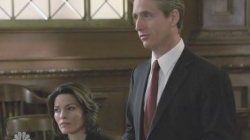
When a young woman is found dead in her apartment, a few tell-tale signs quickly lead Detectives Lupo and Bernard to believe that the killer was not after her wealth. After finding suitcases filled with money and drugs in one of the victim's apartments, the detectives watch a security video from her lobby. The video exposes two potential suspects, leading the detectives to a drug cartel. ADA Rubirosa winds up getting a personal stake in the case as she tries her best to help Rafa Alvarez (Mario Quinonez Jr.), a young man who involuntarily got pulled into the cartel, testify against the drug lord, who has a rich and powerful defense attorney, who has crossed paths with Rubirosa before, Marcus Woll (Jonathan Cake).
Viewer FAQ
Where does Boy Gone Astray sit in the Law & Order guide?
S20E07 is listed hour 440 of 545 — hour 7 of 23 in season 20, season 20 episode 7.
When did Law & Order S20E07 air?
Boy Gone Astray aired 2009-11-06 and is listed at 60 minutes.
Do I watch in order, or is it modular?
Modular is the point. Cases close. Casts change. Start anywhere in the original 1990–2010 run and you will understand the clang within twenty minutes. Order matters only if you care which partner is standing next to whom.
In the series
Why this series still plays
For the walnut that became a city: street then courtroom, a clang as civic punctuation, and two decades of interchangeable parts that taught TV how to clone a night. Comfort is the feature. The original 1990–2010 cathedral still teaches the form; the revival is the machine refusing to clock out.
Picture a Tuesday when the nation still had a cop show that split like a walnut: first the street, then the courtroom, a clang on the soundtrack that became civic punctuation. Law & Order premiered September 13, 1990, on NBC, created by Dick Wolf, and it did not invent the procedural so much as industrialize it. Prescription for Death is the template in miniature — a hospital night, a dead patient, cops then lawyers, no hug required. On the palate: newsprint, a New York that looks like a location budget with a…
Filed against
- Jerry Orbach as Lennie Briscoe
Jerry Orbach’s Det. Lennie Briscoe delivered Law & Order’s world-weary one-liners like dry gin — dun-dun, partner chemistry, ripped-from-headlines cool. Broadway roots fed the perfect procedural everyman. Cast churn and Dick Wolf power…
- Sam Waterston as Jack McCoy
Sam Waterston’s Jack McCoy made Law & Order’s walnut-paneled courtroom feel like civic weather — executive-ADA steel, ripped-from-headlines modular TV, and two decades of interchangeable parts that still teach the form. On TV Flash he is…
- S. Epatha Merkerson as Anita Van Buren
S. Epatha Merkerson’s Anita Van Buren ran Law & Order’s precinct as a long occupation — captain as walnut, dun-dun as civic punctuation, cast churn as a business model that still needed a boss. Street then courtroom. TV Flash still clocks…
- Chris Noth as Mike Logan
Chris Noth’s Det. Mike Logan helped launch Law & Order’s dun-dun empire before Mr. Big made him Sex and the City’s emotional cliffhanger machine. Sparse Manhattan cool and endless will-they discourse built a dual-brand career. TV Flash…
- Benjamin Bratt as Rey Curtis
Benjamin Bratt’s Det. Rey Curtis brought intensity to Law & Order’s dun-dun empire — partner chemistry, ripped-from-headlines cool, and franchise modular star power. He made the squad room feel urgent. TV Flash keeps him in the procedural…
- Jesse L. Martin as Ed Green
Jesse L. Martin’s Ed Green is Law & Order as the partner who made the dun-dun feel like a city again — ripped-from-headlines modular television with a badge that photographed as heat, not paperwork. Dick Wolf’s empire runs on cast churn.…