Procedural modular empire; ripped-from-headlines as brand.
Why it matters
From the desk
Dun-Dun as Infrastructure
The original 1990–2010 machine, plus an honest look at the revival still on the books: ripped-from-headlines modular TV, cast churn as a business model, and five hours that still teach the form.
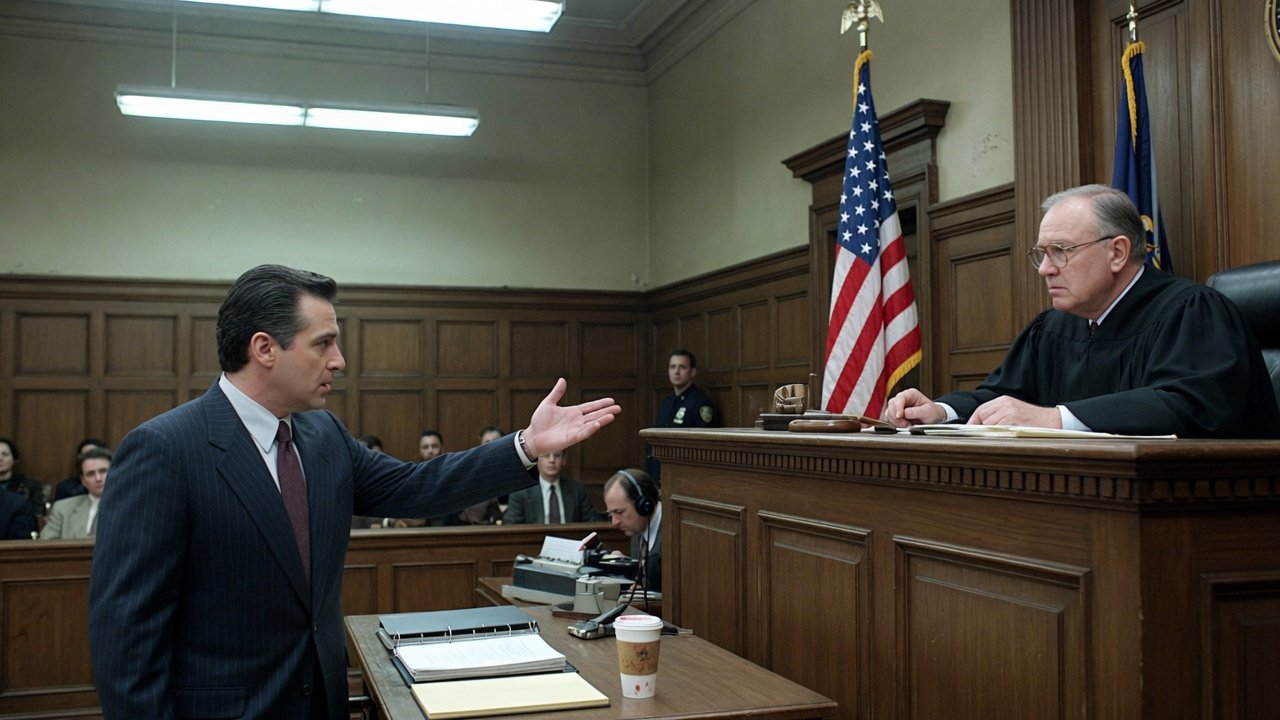
Picture a Tuesday when the nation still had a cop show that split like a walnut: first the street, then the courtroom, a clang on the soundtrack that became civic punctuation. Law & Order premiered September 13, 1990, on NBC, created by Dick Wolf, and it did not invent the procedural so much as industrialize it. Prescription for Death is the template in miniature — a hospital night, a dead patient, cops then lawyers, no hug required. On the palate: newsprint, a New York that looks like a location budget with a conscience, and guest stars who might be in the tabloids next week. Ripped from the headlines was not a vibe. It was a production bible. Max will tell you the algorithm is culture now. Cute. This show was cloning itself before his vending machine had a PR department.
The form is the star, which is how you survive twenty original seasons of lead replacements sold as weather. Investigation half, prosecution half, a clang, credits. Detectives hand the case over like a baton. ADAs argue the city into a plea or a verdict. Captains and DAs rotate through like feudal lords. That modularity is why the franchise could mitosis into SVU and Criminal Intent and a late-night binge habit that outlived the original cast. It is also why a lot of hours feel like competent furniture. Furniture that held a network night for two decades is still furniture worth studying. Do not confuse comfort with emptiness. Dragnet taught cadence. This show taught interchangeable parts.
A network night, in brief — not a table of contents, a tasting flight. Mayhem (season 4) is the form at a sprint: one day, stacked cases, the 27th Precinct as a system under load. Aftershock (season 6) is the rare hour that steps off the assembly line after an execution and lets the principals have a night that is not a case file. The machine blinking. Corruption (season 7) is the blue wall eating itself, a dirty-cop argument older than Wolf and still filed under every generation's badge show. Rubber Room (May 24, 2010) is the original-run closer — Van Buren's last original-era hour, a teacher, a blog, a city that would not stay solved. Then the show went dark. Then it did not stay dark. NBC revived the flagship in 2022. This catalog currently runs through a 2025–26 season and a placeholder next-fall slot. The dun-dun did not retire. It waited.
Three scandals that would trend today (and did, analog-style): 1. Cast churn sold as continuity — new partners, same clang, pray the audience forgives the jawline. 2. Headline harvesting — a real tragedy on Monday, a fictional docket on Wednesday, Standards & Practices hovering like a nervous priest. 3. Franchise mitosis as business — SVU's second life proving the child can outdraw the parent. Wolf power is not gossip. It is industrial history. The pattern is old: bury a tired idea, hype a spin-off, rewrite a star. Streaming did not invent disposable leads. It just gave them a Continue Watching row.
How to watch without amnesia: start at the 1990 template. You do not watch 500-plus hours in order unless you are writing a dissertation or avoiding your family. Graze by era — early Logan/Briscoe grain, mid-run McCoy theater, late original as a municipal service, revival as a separate weather system. This package's five essentials stay inside the 1990–2010 original because that is the cathedral. The revival is honest latest, not a finale. Raise a glass: the clang still works. The remote had more buttons now. The soap opera of justice TV did not get gentler. It got a brand extension. Max can keep the drop night. I will be where the affiliate used to join in progress, dun-dun, and the city pretended it had been solved.
Episode guide
How this series is filed
TV Flash files Law & Order (1990–2010) on NBC as a season-first catalog of 545 listed hours across 26 seasons, 1990-09-13–2026-10-08 from “Prescription for Death” (S01E01) to “TBA” (S26E01).
Open the episode guide · S01E01 Prescription for Death · S26E01 TBA
Essential episodes
Original-run architecture — five hours that still teach the clang, the handoff, and the rare night the machine blinks. Filed by Rex Fontaine (Golden Age Dispatch).
- S01E01 Prescription for Death
The template: hospital night, dead patient, cops then lawyers. No hug. The industrial bible opens here.
- S04E17 Mayhem
The form at a sprint. One day, stacked cases, the precinct as a system under load — furniture at concert pitch.
- S06E23 Aftershock
The assembly line steps off after an execution. A night that is not a case file; the machine blinking.
- S07E05 Corruption
The blue wall eating itself. Dirty-cop argument older than the franchise, filed under every generation's badge show.
- S20E23 Rubber Room
Original-run closer, May 2010. The cathedral door for twenty seasons — not the revival's latest, the first goodbye.
At a glance
Half investigation, half prosecution: New York cases ripped from headlines with modular casting and the famous dun-dun. Justice as franchise mitosis. Comfort procedural with moral aftertaste.
Network & studio
- NBC — broadcast network
Why watch now
For the walnut that became a city: street then courtroom, a clang as civic punctuation, and two decades of interchangeable parts that taught TV how to clone a night. Comfort is the feature. The original 1990–2010 cathedral still teaches the form; the revival is the machine refusing to clock out.
Cultural impact
Law & Order turned franchise spinoffs into a business model and “ripped from headlines” into a genre promise. SVU’s second life proved the machine outlives original cast.
Creators
Dick Wolf
Key cast
- Jerry Orbach as Lennie Briscoe
- Sam Waterston as Jack McCoy
- S. Epatha Merkerson as Anita Van Buren
- Chris Noth as Mike Logan
- Benjamin Bratt as Rey Curtis
- Jesse L. Martin as Ed Green
- Steven Hill as Adam Schiff
- Jill Hennessy as Claire Kincaid
Flash facts
- NBC procedural created by Dick Wolf; original run 1990–2010 with later revival seasons.
- Signature two-part structure: police investigation then courtroom prosecution.
- Launched a vast franchise including SVU, Criminal Intent, Organized Crime, and more.
- Known for “ripped from the headlines” case approaches and cast turnover over decades.
- One of U.S. TV’s longest-running live-action drama franchises.
FAQ
Do I watch in order, or is it modular?
Modular is the point. Cases close. Casts change. Start anywhere in the original 1990–2010 run and you will understand the clang within twenty minutes. Order matters only if you care which partner is standing next to whom.
Original run or revival?
The original series ran 1990–2010 (twenty seasons), closing with Rubber Room on May 24, 2010. NBC revived the flagship in 2022. This catalog includes both. Essentials here are original-run hours. The latest real hour in the pack is not a TBA slot — use the last titled episode, not a placeholder.
What's the structure, exactly?
Roughly half investigation, half prosecution. Detectives of the 27th Precinct hand off to the DA's office. A clang punctuates scene jumps. Ripped-from-headlines plotting is the brand promise, not a guarantee of a specific real case.
How is this different from SVU?
SVU is the longer-running child: special victims, a different precinct mythology, a second life in pop culture that often outshines the parent. The flagship is cops-and-lawyers in equal halves. If you only know Ice-T's squad, you have not met the original walnut.
Is there a true finale?
The original run ended in 2010. The revival is open. Do not call the latest hour a finale. Rubber Room is the cathedral door for the first twenty seasons. Everything after 2022 is the machine still on the clock.
Official & further reading
External sites for further reading — TV Flash is not affiliated with these networks or studios.
Back to the decade
Also on the dial
More after Law & Order
- Related showBlossomHats, fourth-wall bits, and Very Special Episodes — Mayim Bialik’s first era.
- Related showJAGNavy lawyers with jet fuel — procedural that quietly built a franchise navy.
- Related showUnsolved MysteriesRobert Stack’s trench coat and that theme — true crime as living-room séance.
- Related showWingsNantucket airline brothers — Cheers-adjacent comfort with a one-plane airline.
- Related showNewsRadioWNYX workplace farce — Phil Hartman perfection in a radio station madhouse.
- Related show3rd Rock from the SunAliens in human suits discover emotions, bureaucracy, and Jane Curtin.