Genre TV literacy, found family, and online fan culture acceleration.
Why it matters
From the desk
The Hellmouth Was a Group Chat With Fangs
Seven seasons of metaphor-as-monster, found family, and fandom seminary — with fences for the ships, the musical, and the creator-shaped hangover.
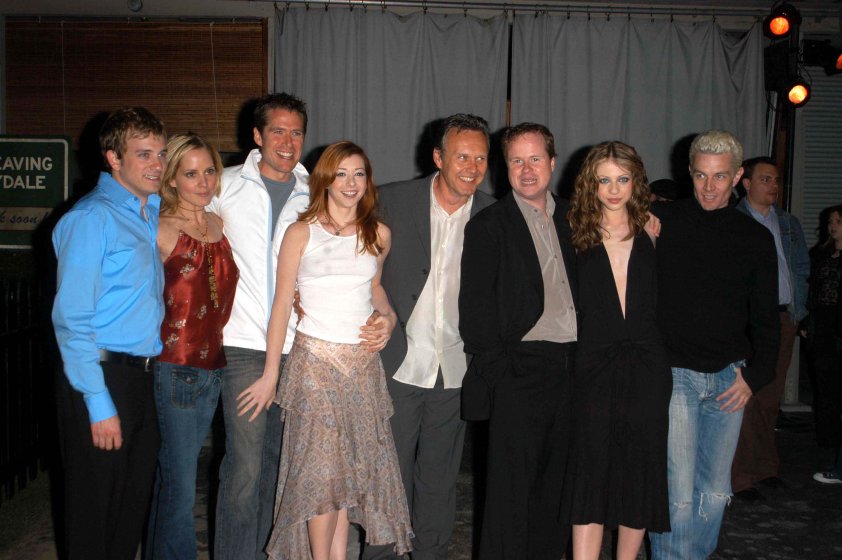
So about last night's group chat: someone said season six is the one that ruined a friendship, someone else posted a still from The Body like it was a legal document, and a third person typed Spuffy versus Bangel as if it were a custody hearing. (I said spoiler-free. I lied a little.) Buffy the Vampire Slayer is fandom seminary. The WB, then UPN, 1997 to 2003: a Slayer in high school, then college, then the part of adulthood where the metaphors stop being cute. Sarah Michelle Gellar is the spine. The Scoobies are the group chat that would die for you and also ratio you. Lana wants the gown at the premiere. I want the reply guy who treated a wooden stake like a personality. The carpet is content. The replies wrote gender studies without a syllabus.
From here: mild. Welcome to the Hellmouth (March 10, 1997) is the first fence — destiny as a high-school transfer, one-liners as armor, the Master as a season-one problem that is also a metaphor if you want it to be. You can watch it as a teen horror comedy. You will not stay that innocent. Innocence (season 2) is the ship nuclear event: the look after the look, the hour that taught a generation spoiler hygiene and also how to be furious at a love story. I will not name the sandwich. If you know, you were online. If you do not, let the episode do it. Hush (season 4) is the gentlemen in the fairy tale and the show proving it can shut everyone up and still be louder than a quip. The Body (season 5) is the one you do not meme until you have sat with it. Joyce. The fluorescent lights. Fandom still treats it like a church you enter quietly. Once More, with Feeling (season 6) is the musical that is also a character sheet with a key change — people sang their secrets because a demon made them, which is the most Buffy sentence ever written.
What the timeline decided at 1 a.m. (this list falls apart, on purpose): 1. Willow/Tara is the actual romance. 2. Spike has a soul discourse. 3. Season six is trauma, not a vibe. 4. The creator's reputation is part of the afterlife whether your rewatch is cozy or not. 5. Wait, Dawn? I need sleep. That last one is a joke and also a spoiler fence. The later reckoning with Joss Whedon's workplace reputation is not a subplot you can skip in 2026. It is the water the fandom swims in. Watch the text. Do not pretend the factory was a found family just because the characters were. Care is the point. Care without etiquette is friendly fire.
From here: nuclear-adjacent on the episode pages. The Gift closes season 5 like a finale that got a two-season epilogue. Chosen (May 20, 2003) is the actual closer: the Slayer line rewritten, a smile that is also a dare. Angel the spin-off is optional homework, not a required lab. You can skip early monster-of-the-week filler after you have the voice; you cannot skip Prophecy Girl if you want to know whether season 1 is a toy or a thesis. Graduation Day is the high-school door. Restless is the dream that tells on everyone. I will not relitigate every ship war here. I will say the show is better when you let more than one love story exist without a custody hearing.
How to watch now: start at the Hellmouth. Fence Innocence for anyone still in season 2. Watch The Body alone the first time. The musical is required if you care about season 6 at all. Tell me how your chat ranks Bangel/Spuffy/the platonic Scooby core: treaty, exile, or chaotic neutrality. I need sleep and a rewatch of Hush without anyone talking over the silence. See you in the tags. Bring CWs. The Hellmouth is still open. So is the comment section, and I actually read it.
Episode guide
How this series is filed
TV Flash files Buffy the Vampire Slayer (1997–2003) on WB/UPN as the episode guide: 144 listed hours across 7 seasons, 1997-03-10–2003-05-20 from “Welcome to the Hellmouth” (S01E01) to “Chosen” (S07E22).
Open the episode guide · S01E01 Welcome to the Hellmouth · S07E22 Chosen
Essential episodes
Spoiler-fenced seminary hours — the ones the group chat still treats as scripture. Filed by Tessa Quinn (Spoiler-Free (Mostly)).
- S01E01 Welcome to the Hellmouth
The first fence. Destiny as a transfer student; one-liners as armor; the tags being born in a library.
- S02E14 Innocence
The ship nuclear event. The look after the look — fence the sandwich, not the fact that fandom learned fury here.
- S04E10 Hush
Silence as volume. The show shuts everyone up and still outtalks a quip; craft the timeline treats like a dare.
- S05E16 The Body
The church hour. Grief without score, lights that will not flatter — do not meme it until you have sat with it.
- S06E07 Once More, with Feeling
The musical as character sheet. Secrets in a key change because a demon made them — the most Buffy sentence possible.
At a glance
Buffy Summers fights vampires and demons while high school (then adulthood) metaphors do the real bleeding. Found family, witty horror, and genre literacy weekly. The Hellmouth is a character.
Network & studio
Why watch now
For genre TV that trained a generation to read metaphors with punchlines: high school as Hellmouth, found family as a group chat with fangs, and fandom seminary that still argues ships, silence, and the musical like they are civic issues — because to us they are.
Cultural impact
Buffy trained a generation in feminist genre reading and online fan culture. Later reckoning with the creator’s reputation is part of its complicated afterlife.
Creators
Joss Whedon
Key cast
- Sarah Michelle Gellar as Buffy Summers
- Alyson Hannigan as Willow Rosenberg
- Nicholas Brendon as Xander Harris
- Anthony Stewart Head as Rupert Giles
- James Marsters as Spike
- David Boreanaz as Angel
- Emma Caulfield as Anya Jenkins
- Amber Benson as Tara Maclay
Flash facts
- Teen supernatural drama (1997–2003) created by Joss Whedon, based on his 1992 film concept.
- Aired on The WB then UPN; seven seasons of monster metaphors and ensemble “Scooby gang” lore.
- Spin-off Angel (1999–2004) followed David Boreanaz’s character to Los Angeles.
- Influential for genre TV writing, fan culture, and witty ensemble dialogue.
- Continued in comics and other media after the televised finale.
FAQ
Where should I start, and is season 1 skippable?
Start with Welcome to the Hellmouth (March 10, 1997). Season 1 is shorter and cheaper-looking; it is also the contract. Prophecy Girl is the test of whether the metaphors have teeth. Do not start at the musical. That is how group chats die.
How do I talk about the ships without ruining friends?
Fence. This package names Bangel and Spuffy as discourse, not as a plot dump. Innocence is the nuclear-adjacent hour; do not describe the turn. Let people hit season 2 themselves. Ships are desires, not moral identities — until we make them that.
Is the musical required?
If you are watching season 6, yes. Once More, with Feeling (s06e07) is character work with a key change, not a stunt you can skip and still claim the season. Watch it. Then argue. That is the assignment.
What can I skip?
Some early MOTW filler after you have the voice. Do not skip Innocence, Hush, The Body, The Gift, the musical, or Chosen. Restless is extra credit that becomes required if you like dreams as character sheets.
How do you watch after the creator reckoning?
As a text made by many people, including a writers' room and a lead who carried the spine. The workplace reputation is public. It does not erase the hours. It does erase cozy found-family myths about the factory. Watch with your eyes open; fandom already did.
Is the finale worth it?
Chosen (May 20, 2003) is a closer that tries to give the metaphor away — the Slayer line as a dare, not a twist. It is worth it if you came for found family. It will not settle the ship wars. Nothing will.
Official & further reading
External sites for further reading — TV Flash is not affiliated with these networks or studios.
Back to the decade
Also on the dial
More after Buffy the Vampire Slayer
- Related showMoeshaBrandy in the house — teen sitcom with diary room and realer edges.
- Related showSister, SisterTia and Tamera — twin sitcom energy that defined mid-’90s youth multi-cam.
- Related showFelicityCross-country for a boy — and a haircut that became national news.
- Related showCharmedThree sister witches — WB supernatural soap with demon-of-the-week engine.
- Related showSabrina the Teenage WitchTalking cat, magic aunts, and Melissa Joan Hart — TGIF enchantment.
- Related showPokémonGotta catch ’em all — late-’90s kids’ globalization in pocket-monster form.