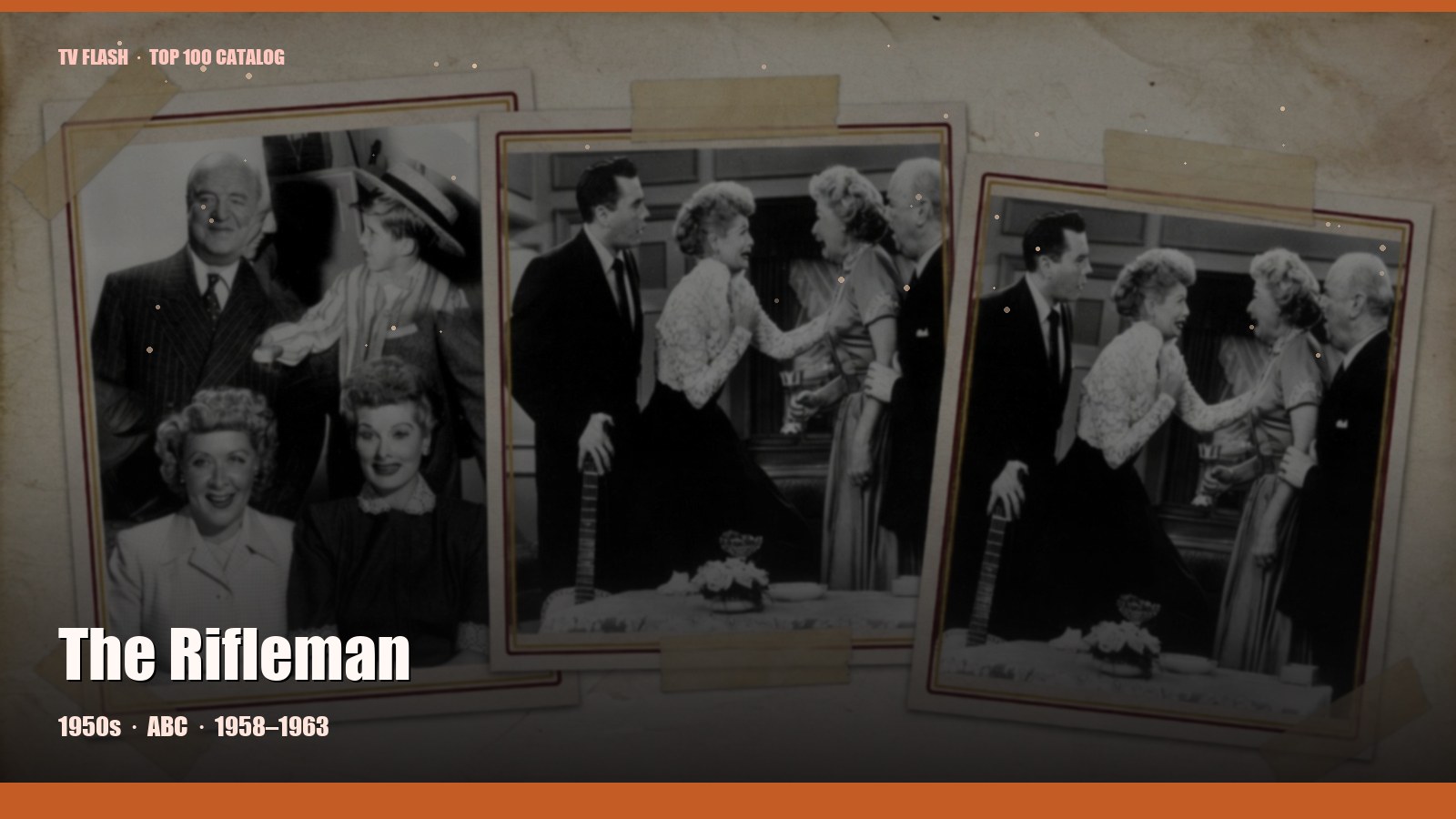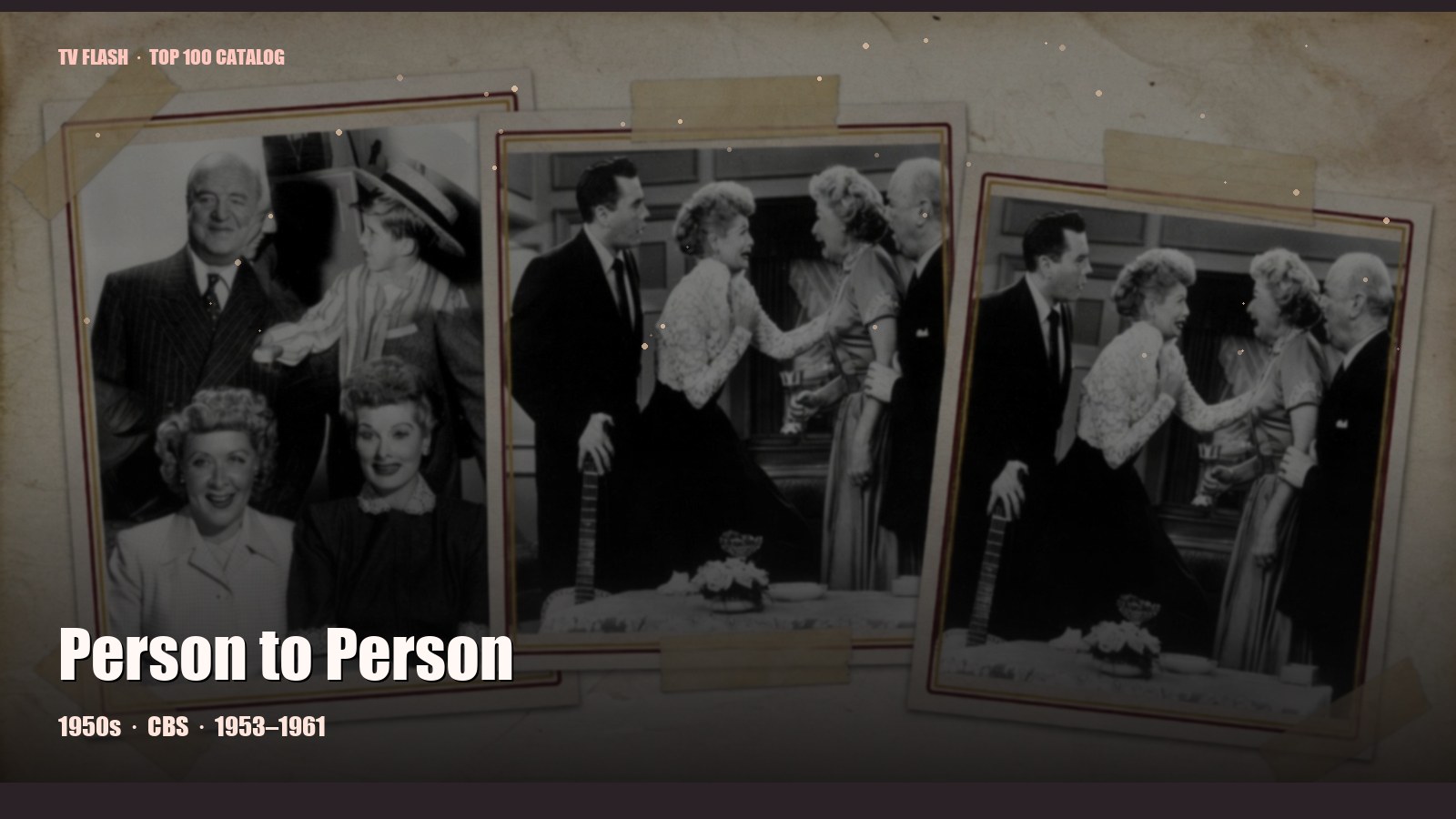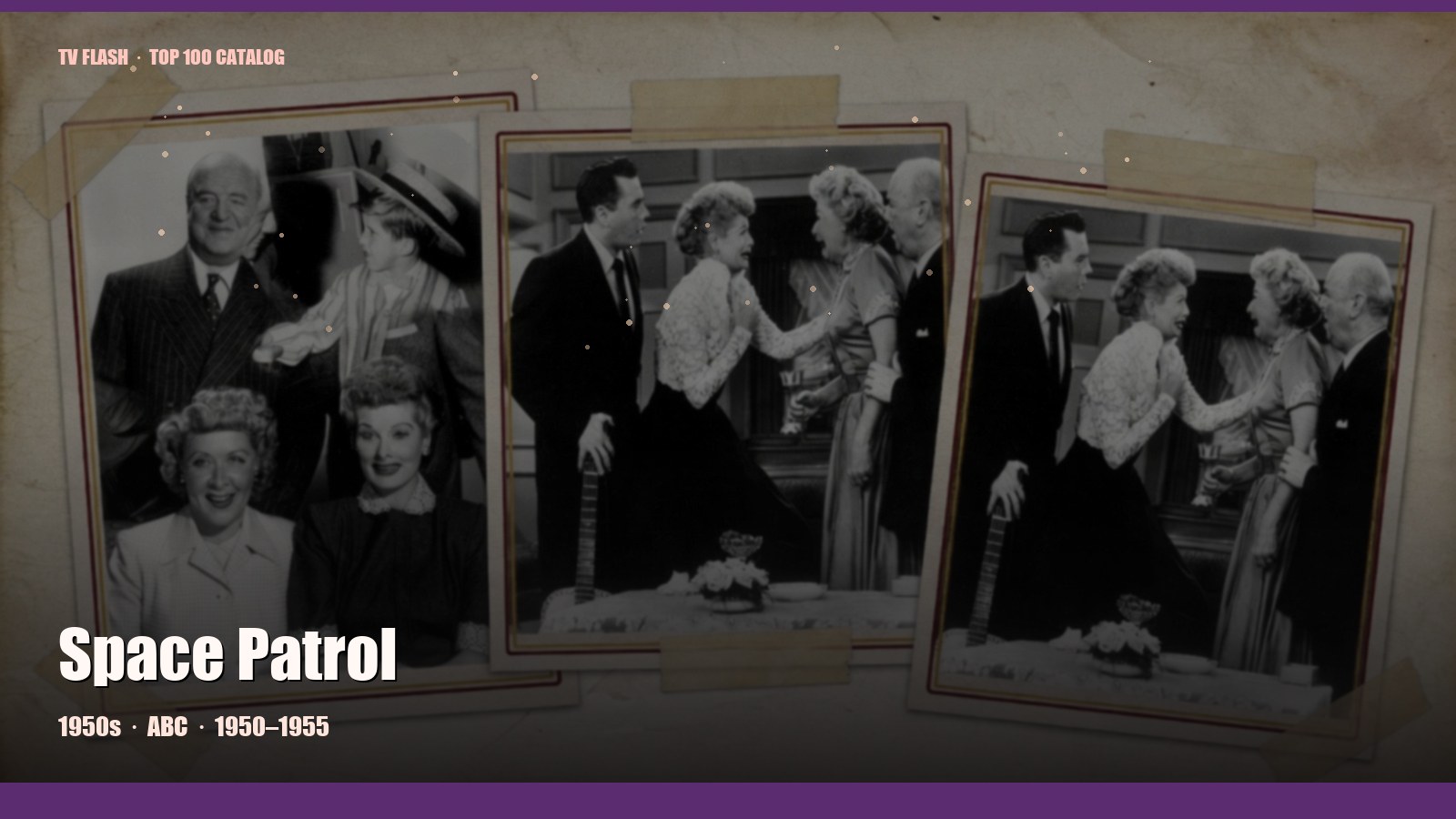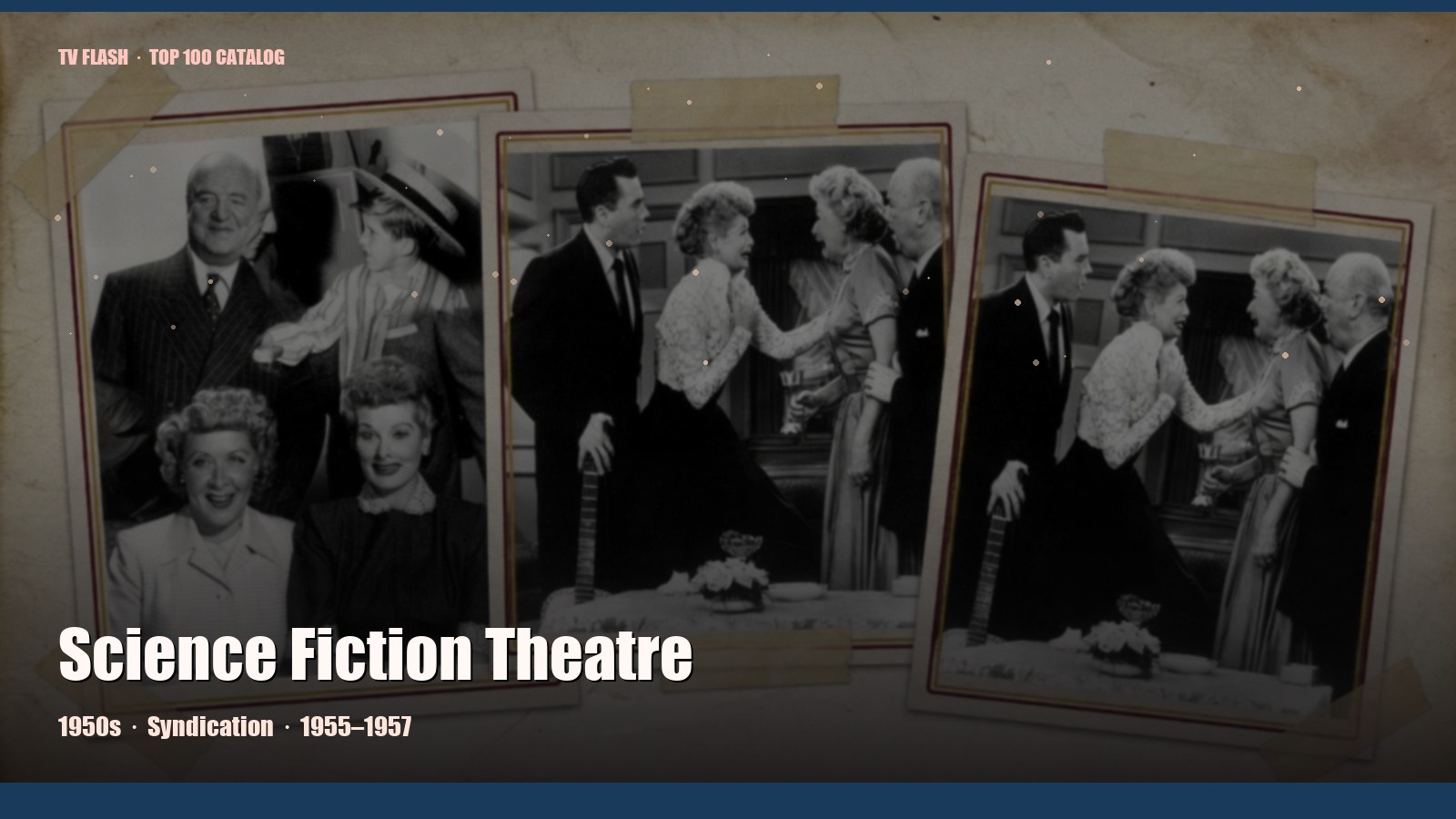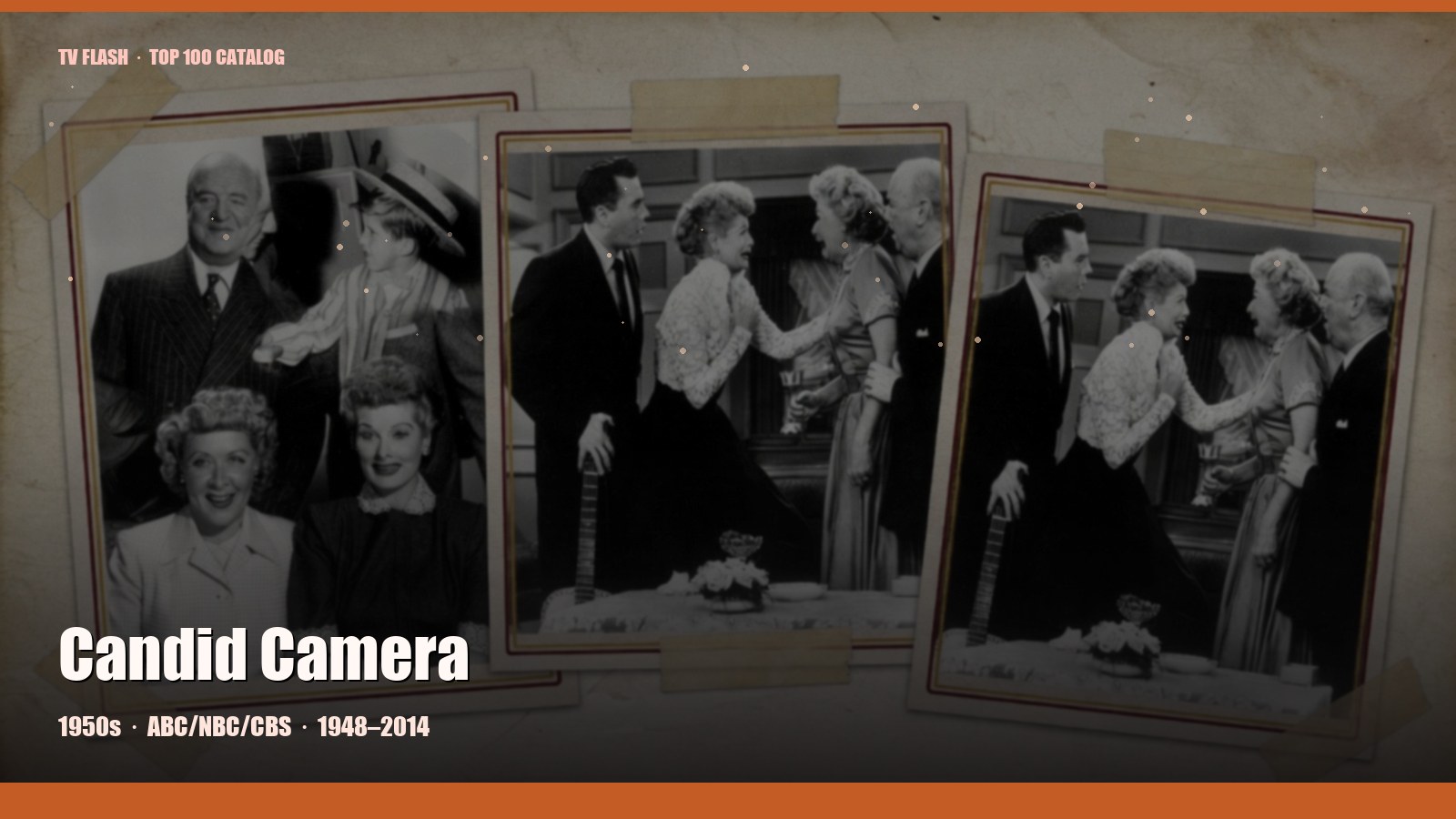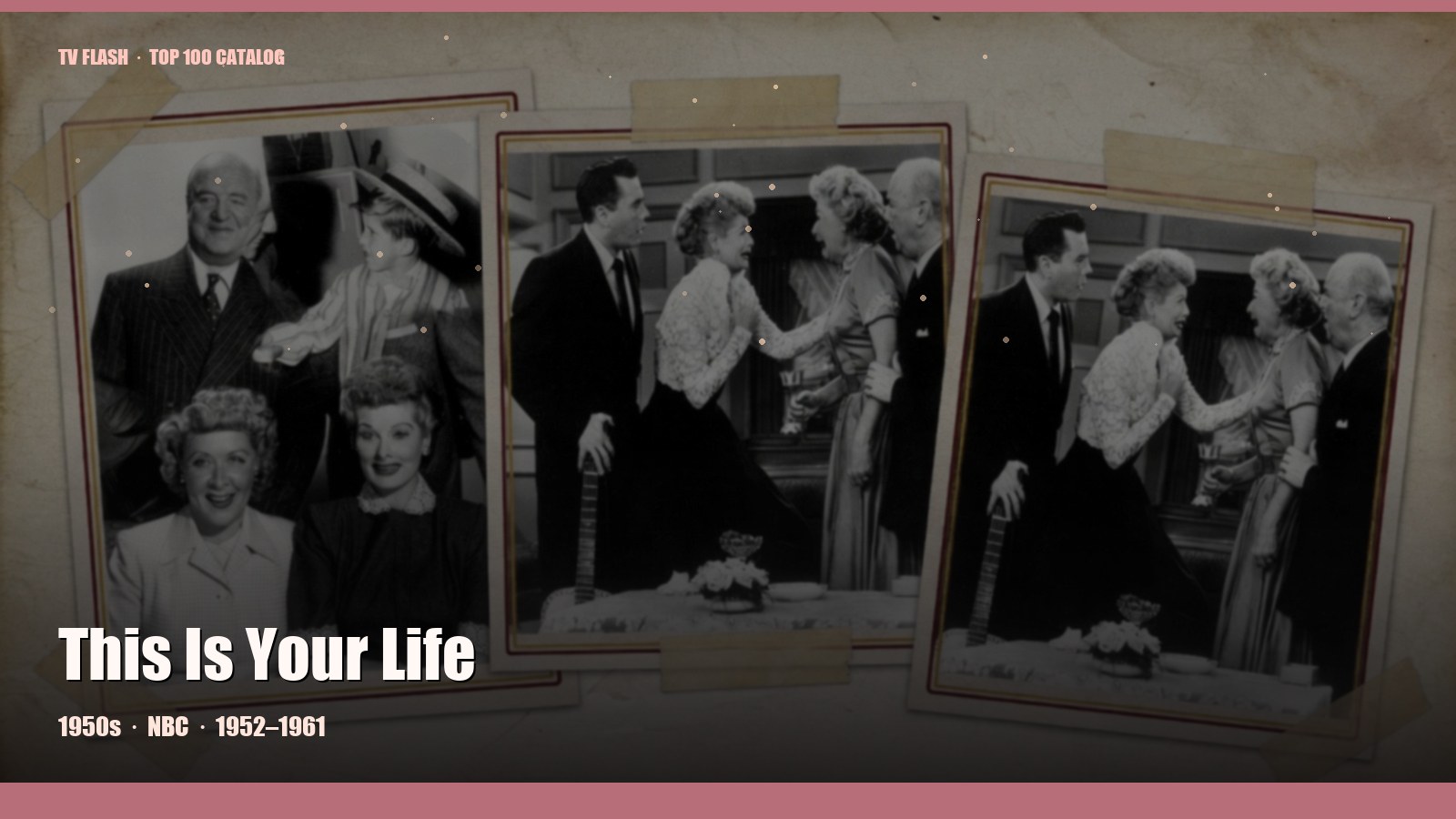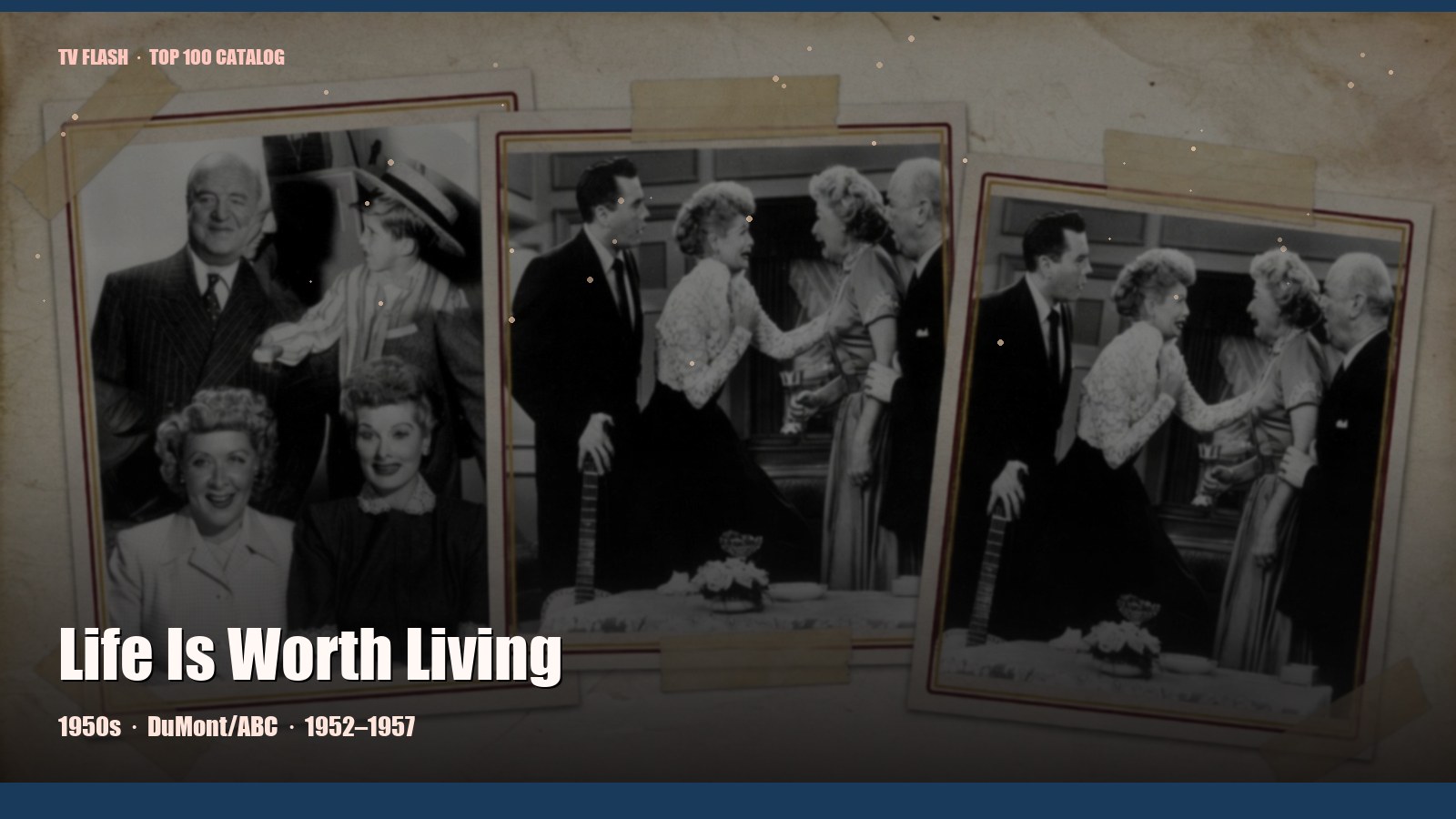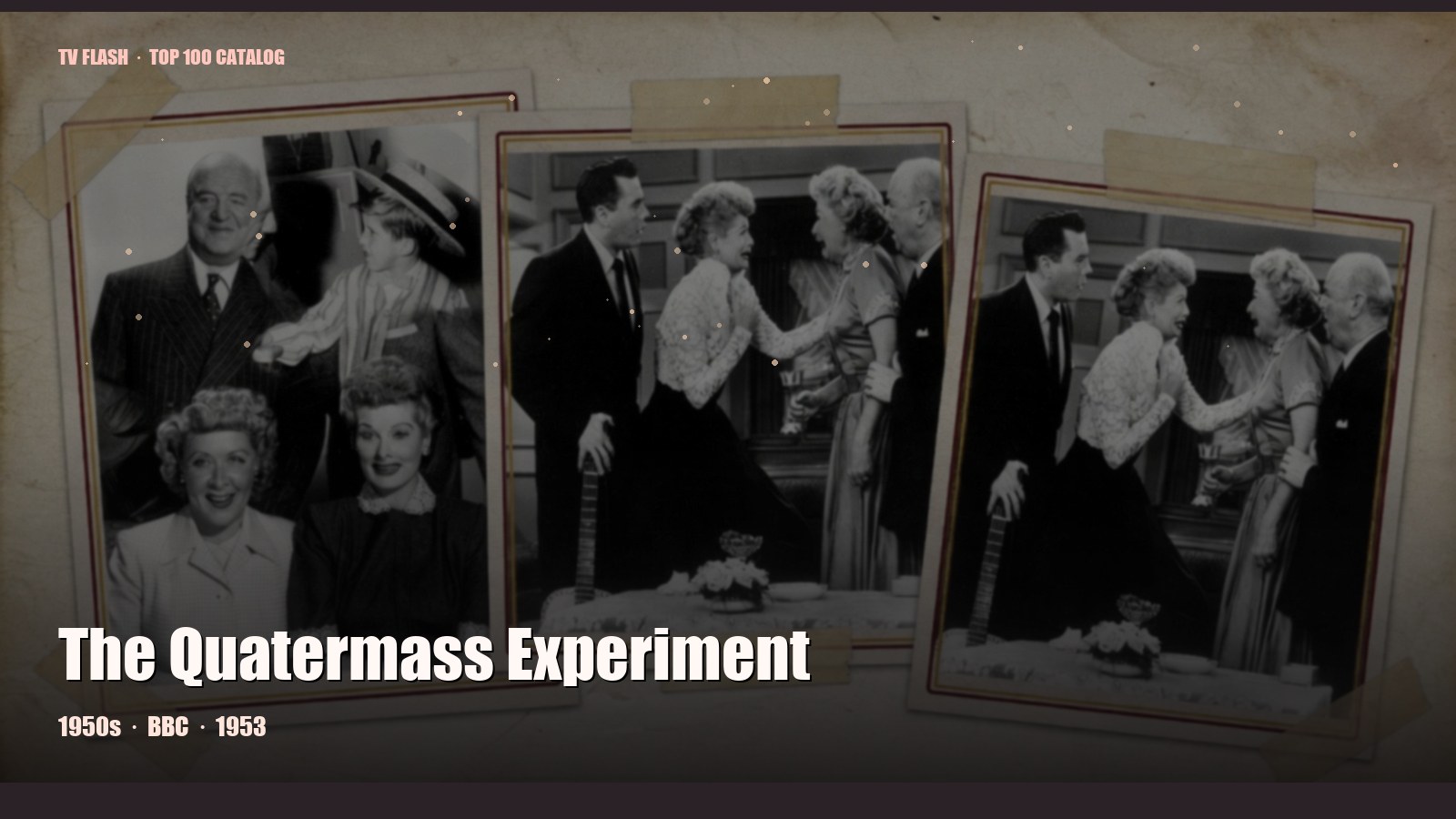
I Love Lucy
The template for multi-cam chaos, physical comedy gold, and a star marriage the public thought it owned.
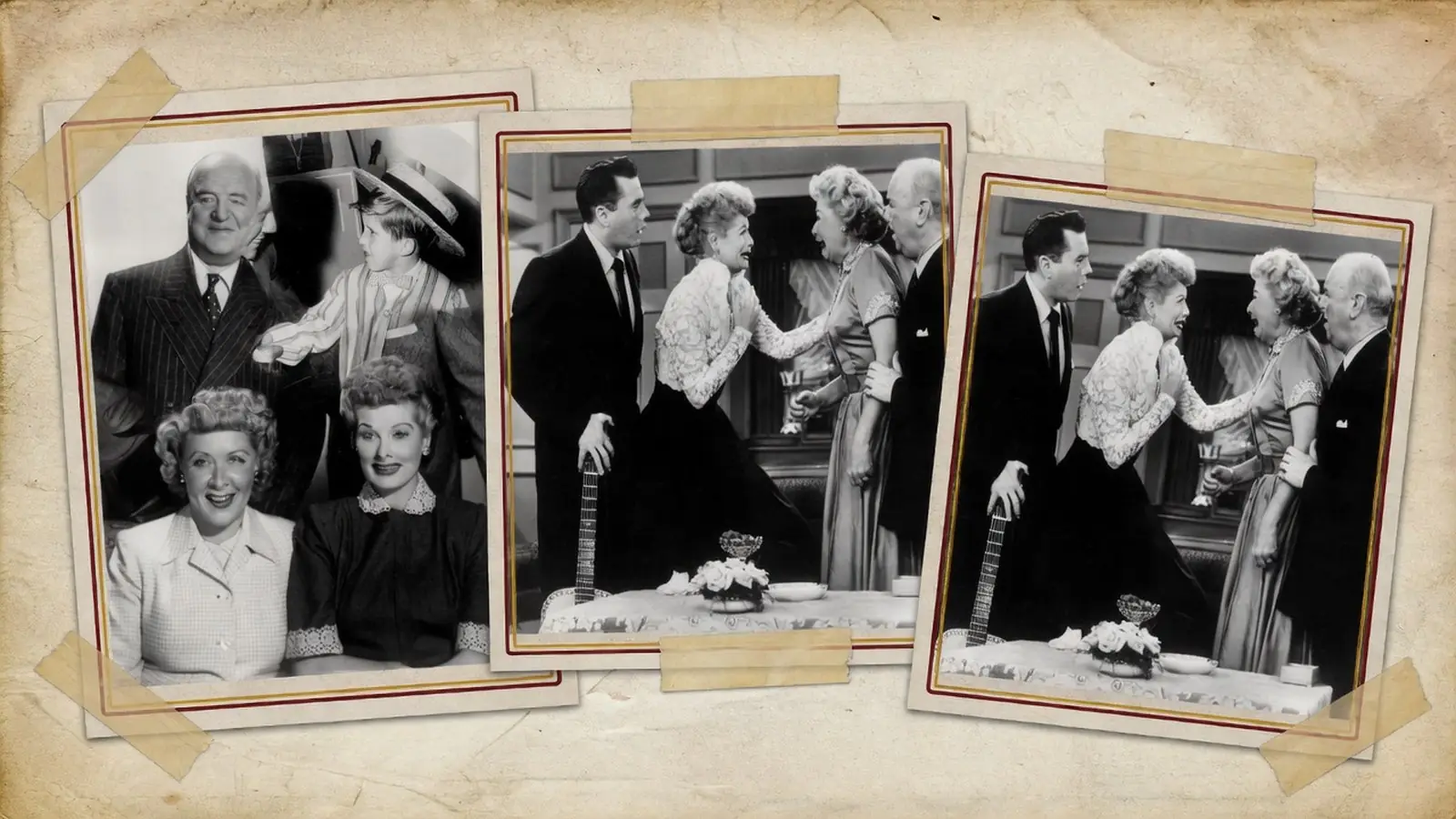
1950–1959
The 1950s on TV Flash is Living Rooms Get a Glow: I Love Lucy invents the sitcom laugh in front of an audience, The Ed Sullivan Show stacks Sunday variety, Gunsmoke holds the prairie, and The Twilight Zone turns anthology into a dare. Perry Mason and Dragnet prove the living room could also be a courtroom and a badge.
Black-and-white glamour, antenna nights, appointment viewing is born.
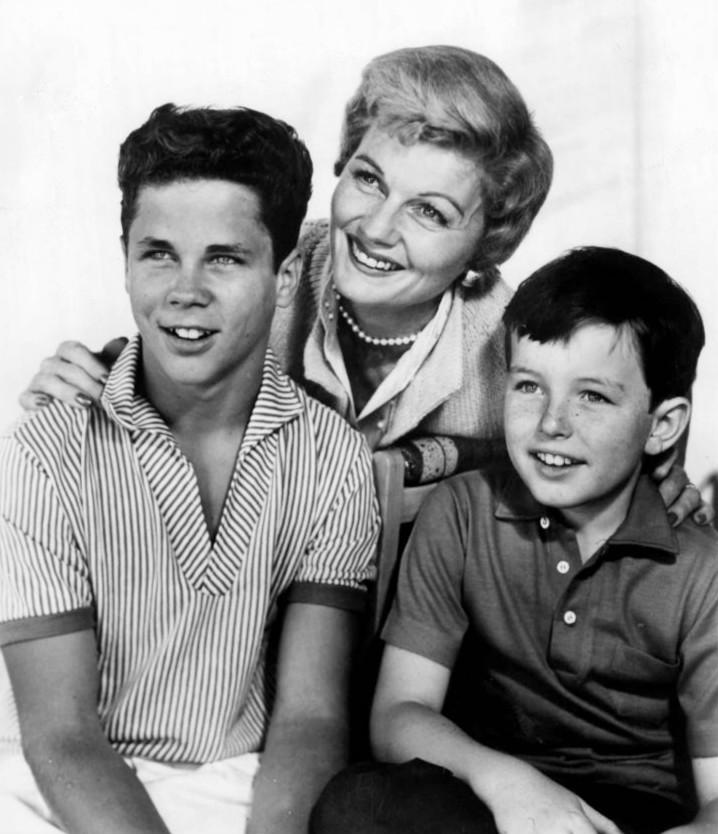
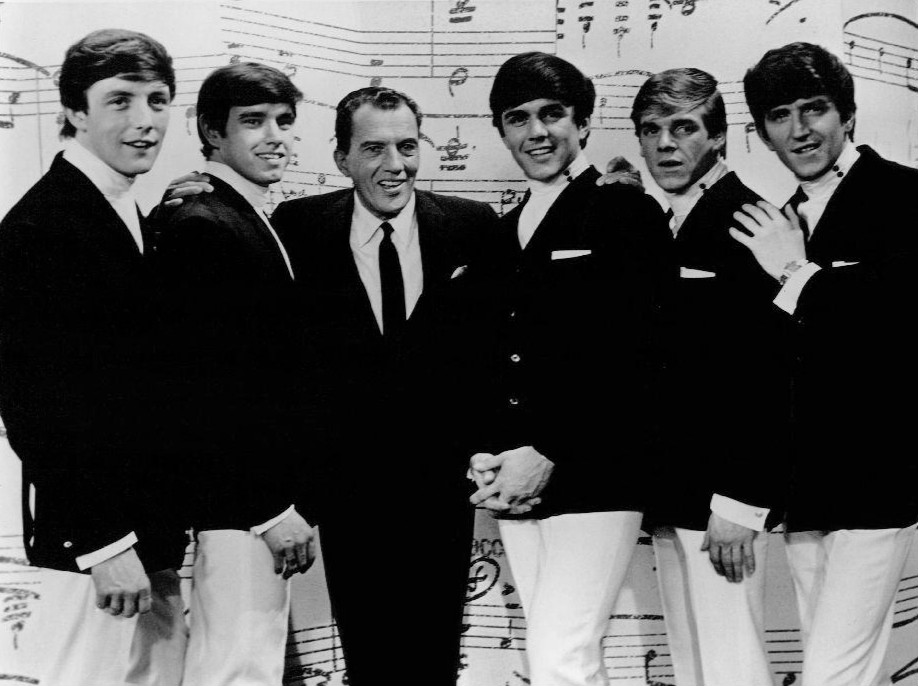
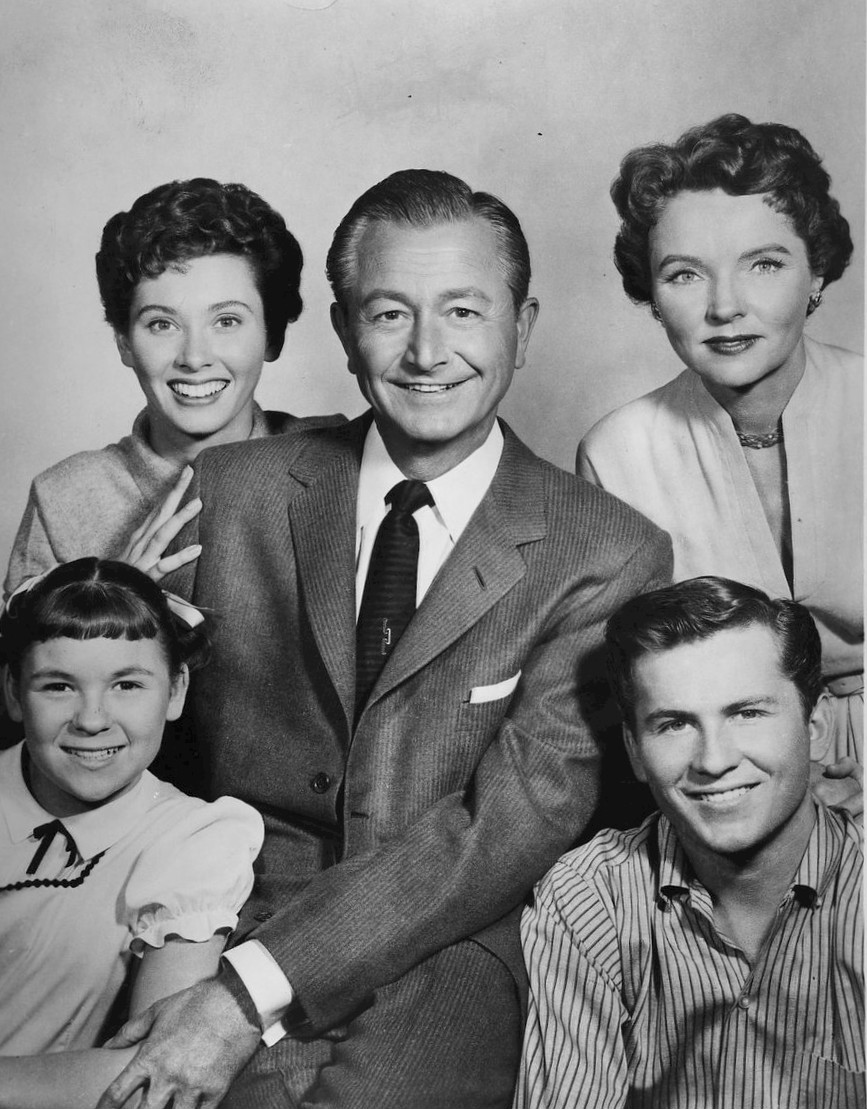
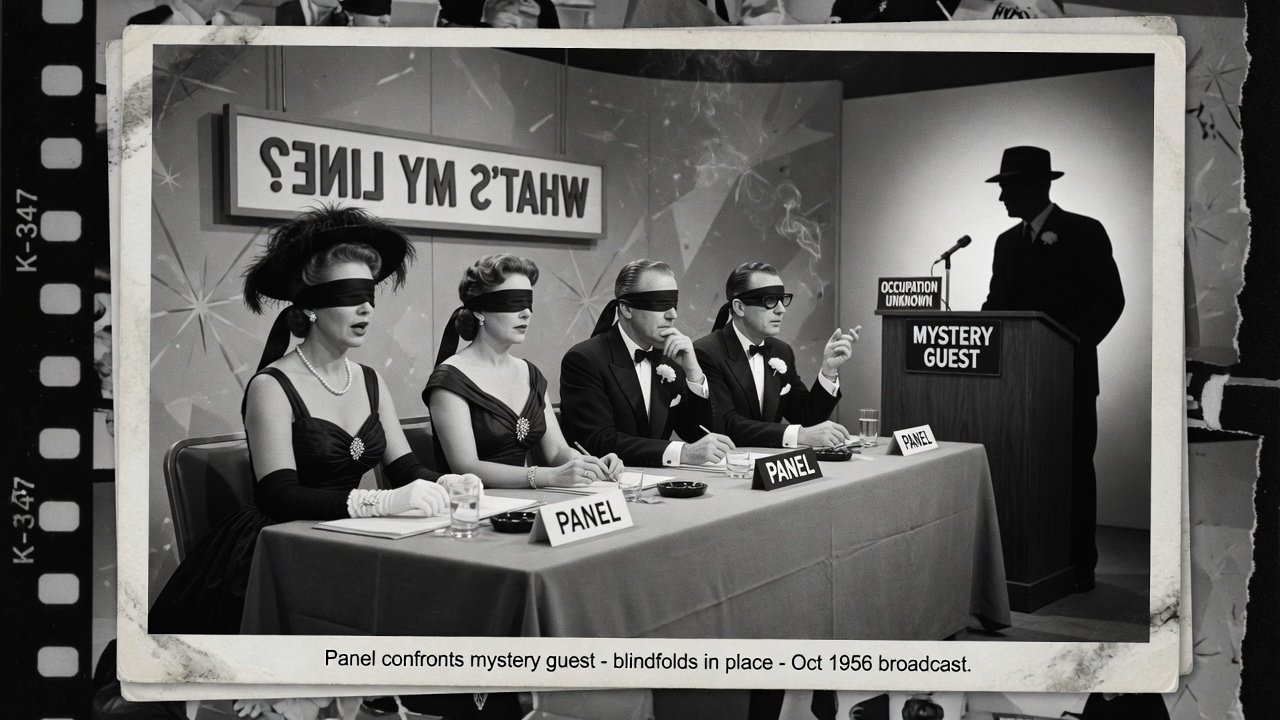
On TV Flash, the 1950s still smell like a kinescope and a living-room lamp. I Love Lucy and The Honeymooners treat the apartment as a stage with a studio audience; Leave It to Beaver and Father Knows Best keep the suburban sitcom polite enough for sponsors. The Ed Sullivan Show is Sunday variety as a national parlor: comics, guests, and whatever could fill the hour. What's My Line? makes a guessing game look like a black-tie afterparty. This is not cable swagger and it is not a streamer dump. It is three-network furniture. You sat down because the night said so, and the antenna did the rest.
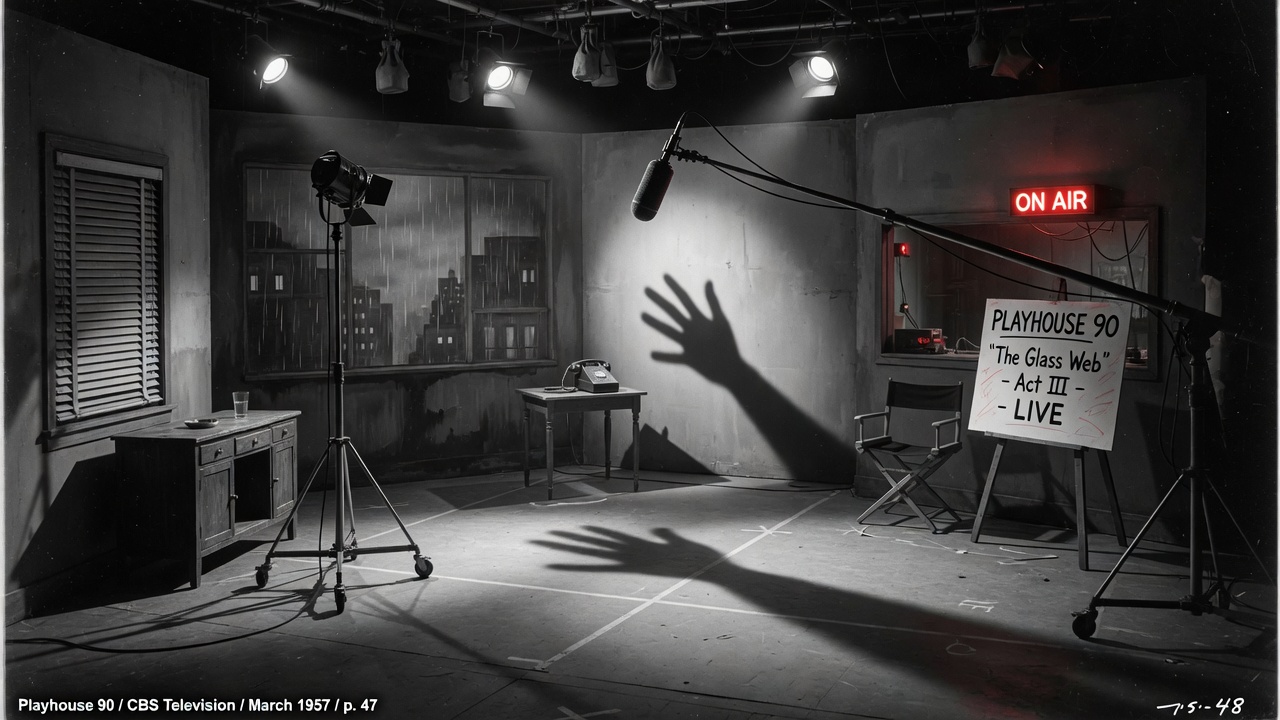
The other temperature is the badge and the prairie. Gunsmoke holds Dodge like weekly furniture; Dragnet keeps the procedural dry as a report; Perry Mason turns the courtroom into a habit. The Twilight Zone is the decade's after-hours dare, anthology as a twist rather than a franchise bible you vanish into. Catalog flavor from the same antenna includes Your Show of Shows, Playhouse 90, and Alfred Hitchcock Presents — live revue, prestige teleplay, and a silhouette with a wink. Start with Lucy or Sullivan if you want the glow. Stay for Mason or The Twilight Zone when you want the room to go quiet.
Start with I Love Lucy if you want the sitcom laugh in front of an audience, The Ed Sullivan Show if you want Sunday variety as a national parlor, or Gunsmoke if you want the prairie as weekly furniture. Then Perry Mason for the courtroom habit and The Twilight Zone for the after-hours dare. The Honeymooners is the apartment in a louder key than Father Knows Best.
Like a living room learning a schedule. Variety and quiz nights — The Ed Sullivan Show, What's My Line? — sat beside sitcoms with a studio audience (I Love Lucy, The Honeymooners) and westerns and procedurals that behaved like furniture (Gunsmoke, Dragnet). You did not binge a season. You showed up because the night said so.
Skip hunting a complete kinescope of every variety hour; the 1950s survive unevenly, and this hub is not a restoration log. Skip treating Leave It to Beaver as the whole decade when The Honeymooners, Perry Mason, and The Twilight Zone sit on the same shelf. Skip expecting a cable novel. This is live glow, not The Wire.
The 1950s is kinescope glow, prairie furniture, and variety as a parlor — Lucy, Sullivan, Gunsmoke, Mason. The 1960s leaves that parlor for color, starships, and spies: Star Trek, Mission: Impossible, Get Smart, Bewitched. Same living-room fight, different temperature — Sullivan's Sunday versus Laugh-In's party.
Highlight shows
The template for multi-cam chaos, physical comedy gold, and a star marriage the public thought it owned.
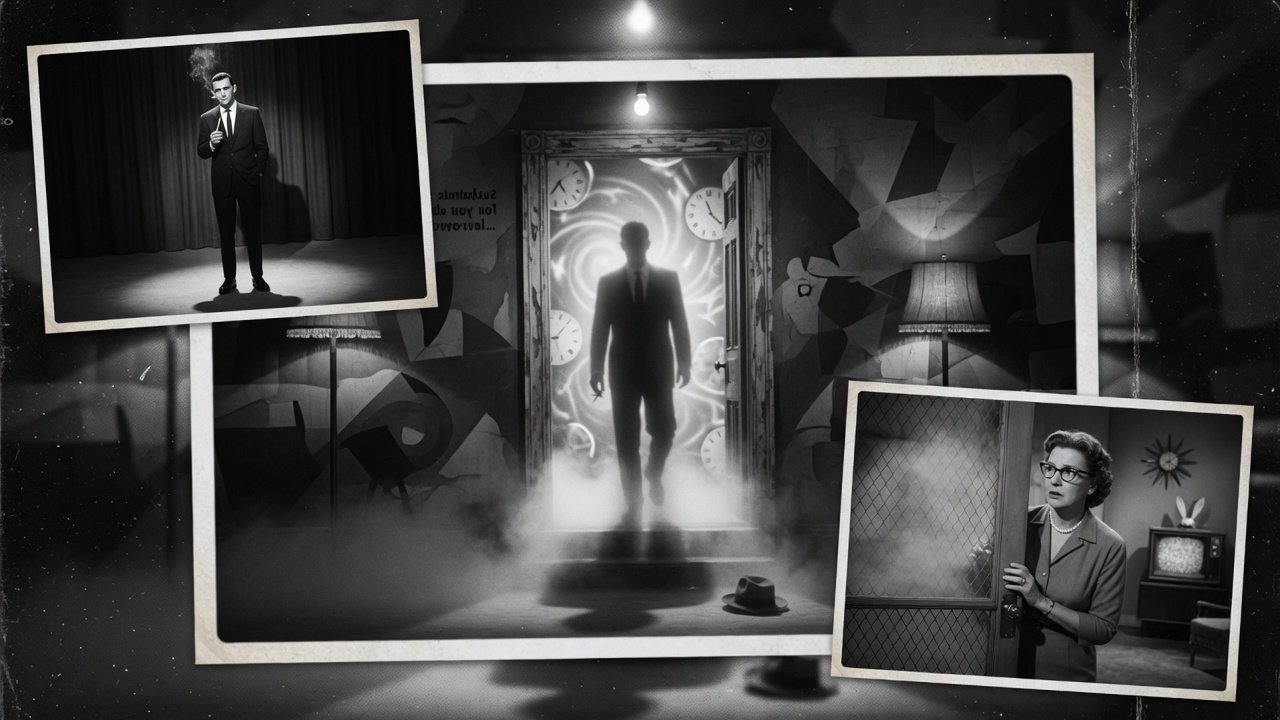
Moral fables in a black suit — twist endings that taught America to fear its own reflection.
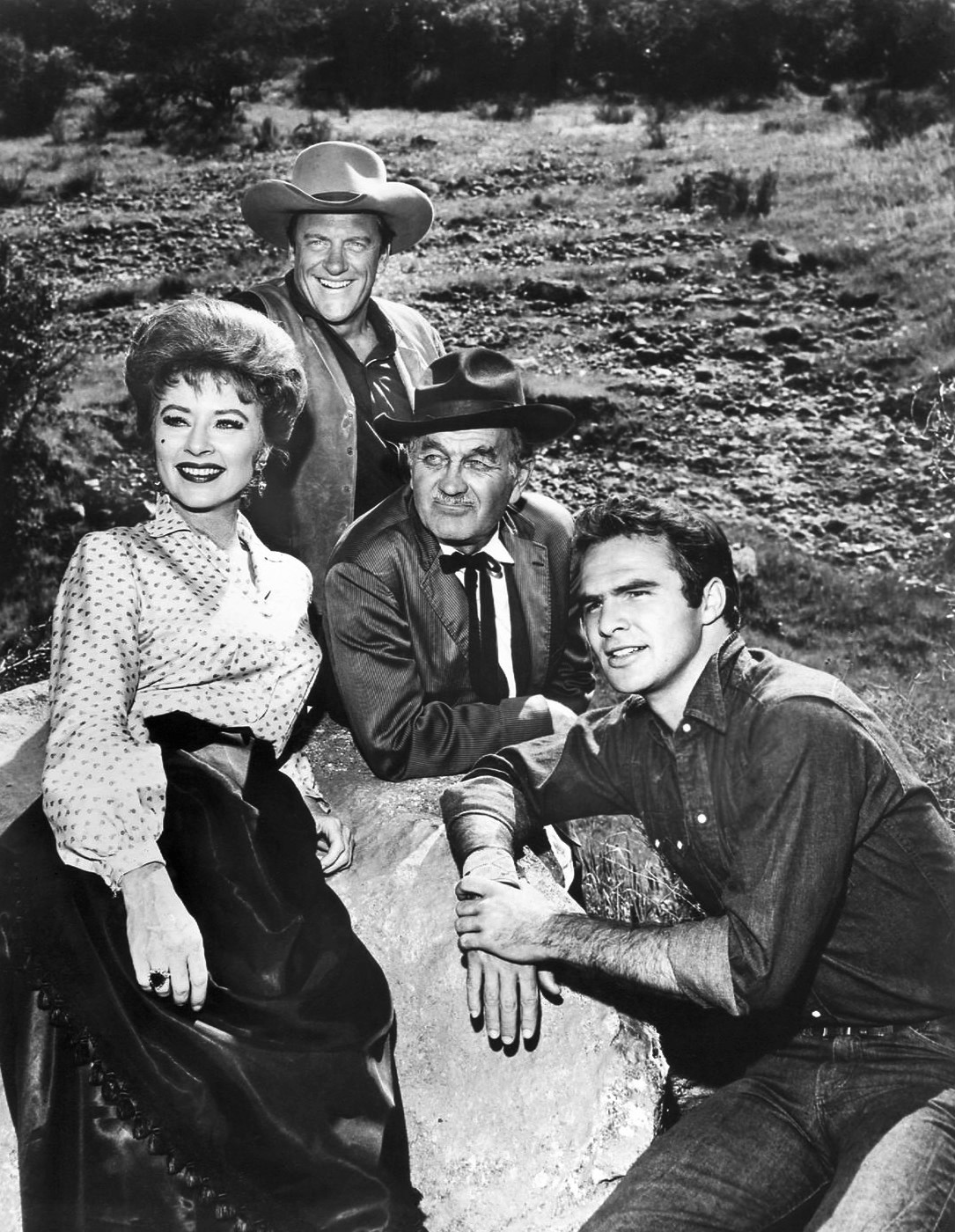
The long-running western that turned Dodge City into a weekly moral court.
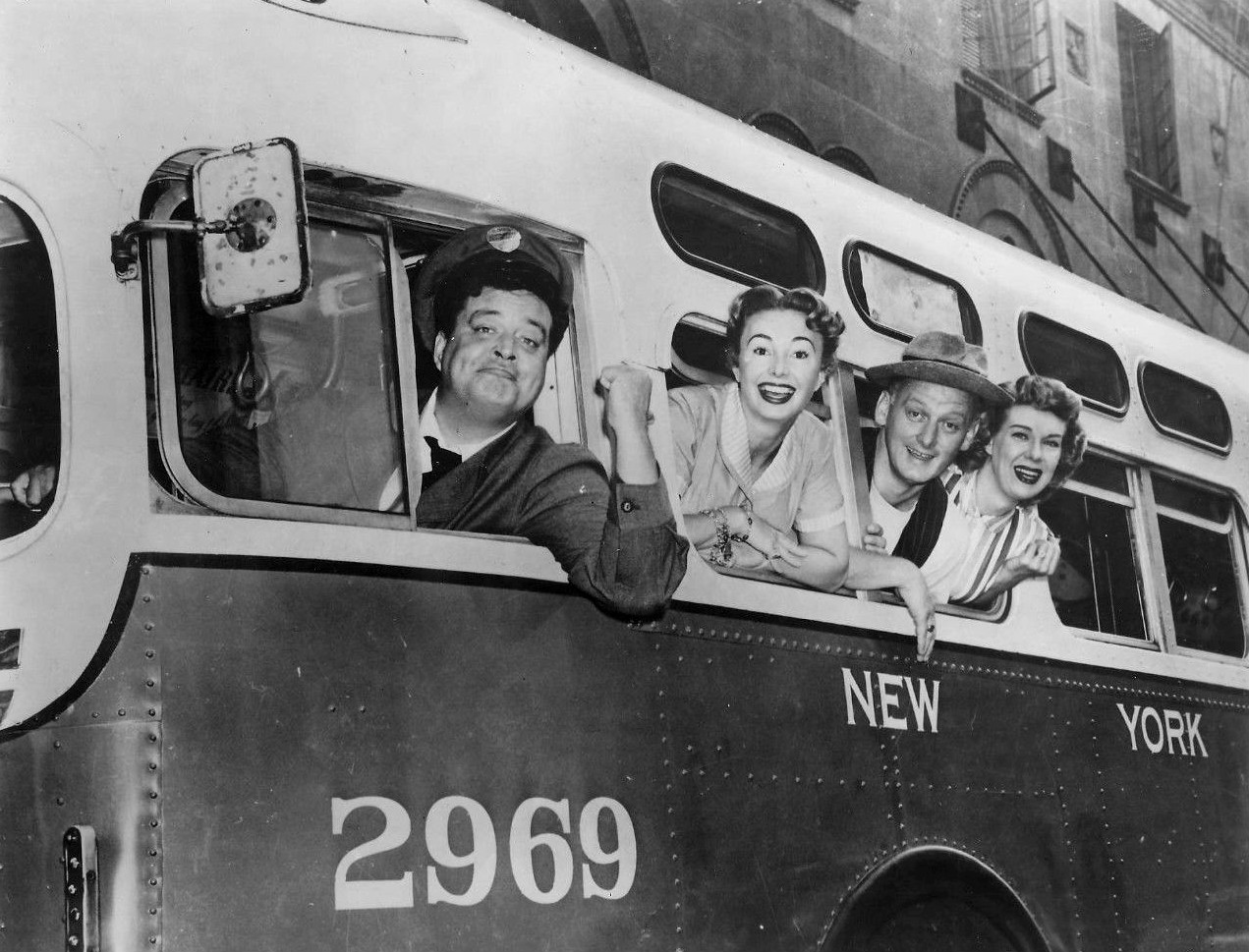
Working-class rage and love in a Brooklyn kitchen — short run, infinite influence.
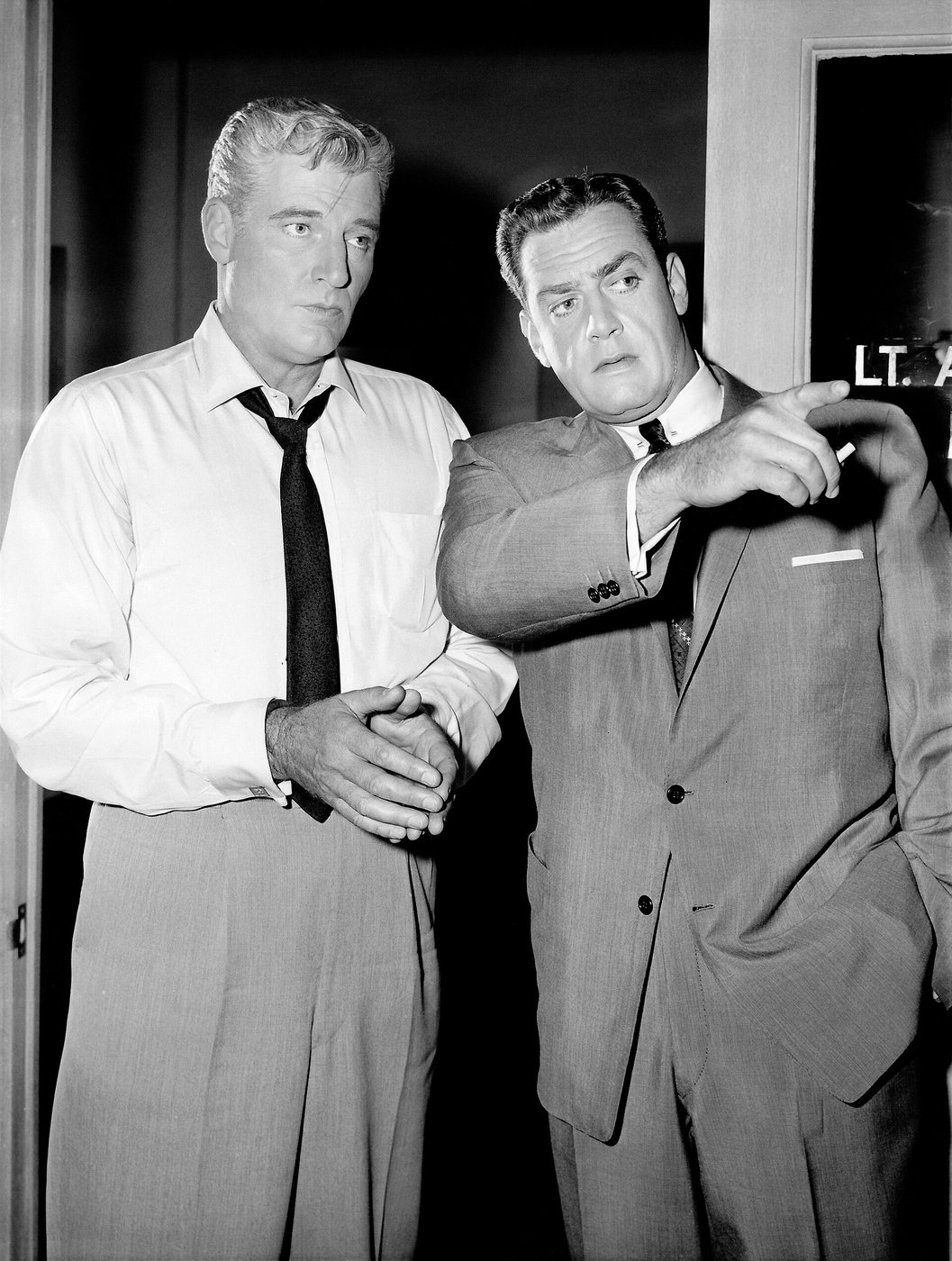
Courtroom theater where the real killer always stood up — appointment justice.
Just the facts — procedural minimalism that still sounds like authority.
Suburban innocence as national brand — and later, the punchline for every 'not like that anymore' think piece.
The Sunday night stage where America met the Beatles — and every comic who needed a break.
The polished patriarch sitcom that sold middle-class calm as destiny.
Blindfolds, witty panelists, and celebrity mystery guests — proto-reality glamour.
Top 100 catalog
Expanded ranking beyond our highlight reel — full pages, cast, and editorial links.
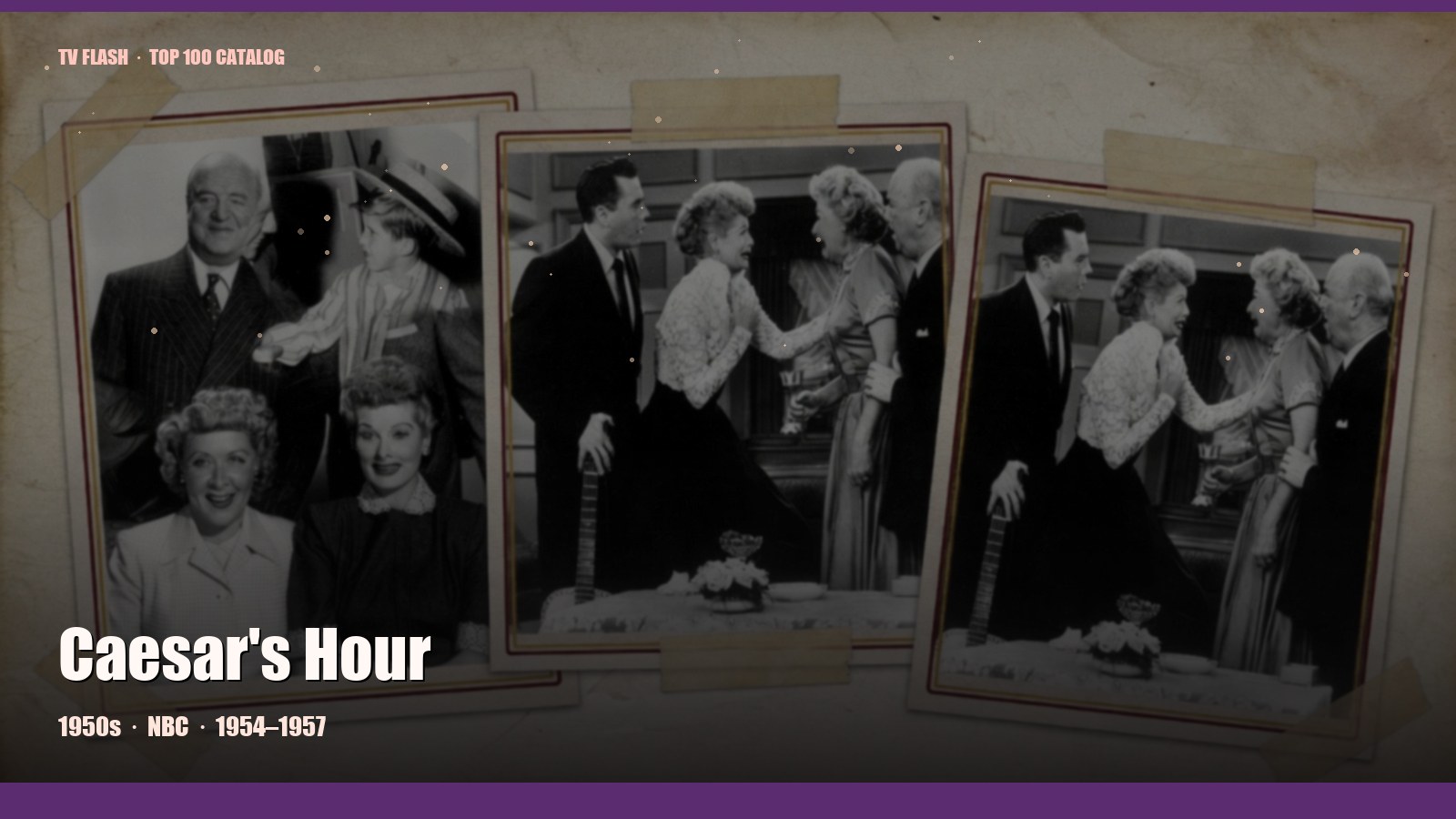
Live 90-minute sketch genius — Caesar, Coca, and a writers' room that became comedy scripture.
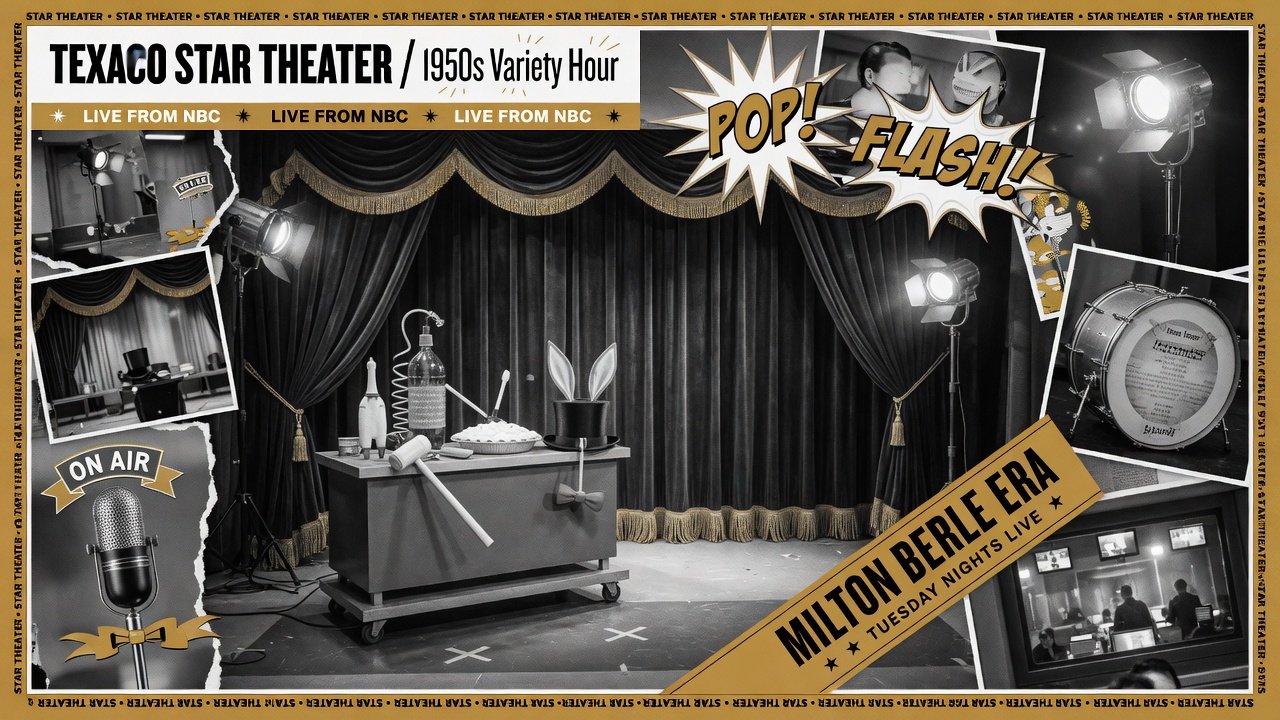
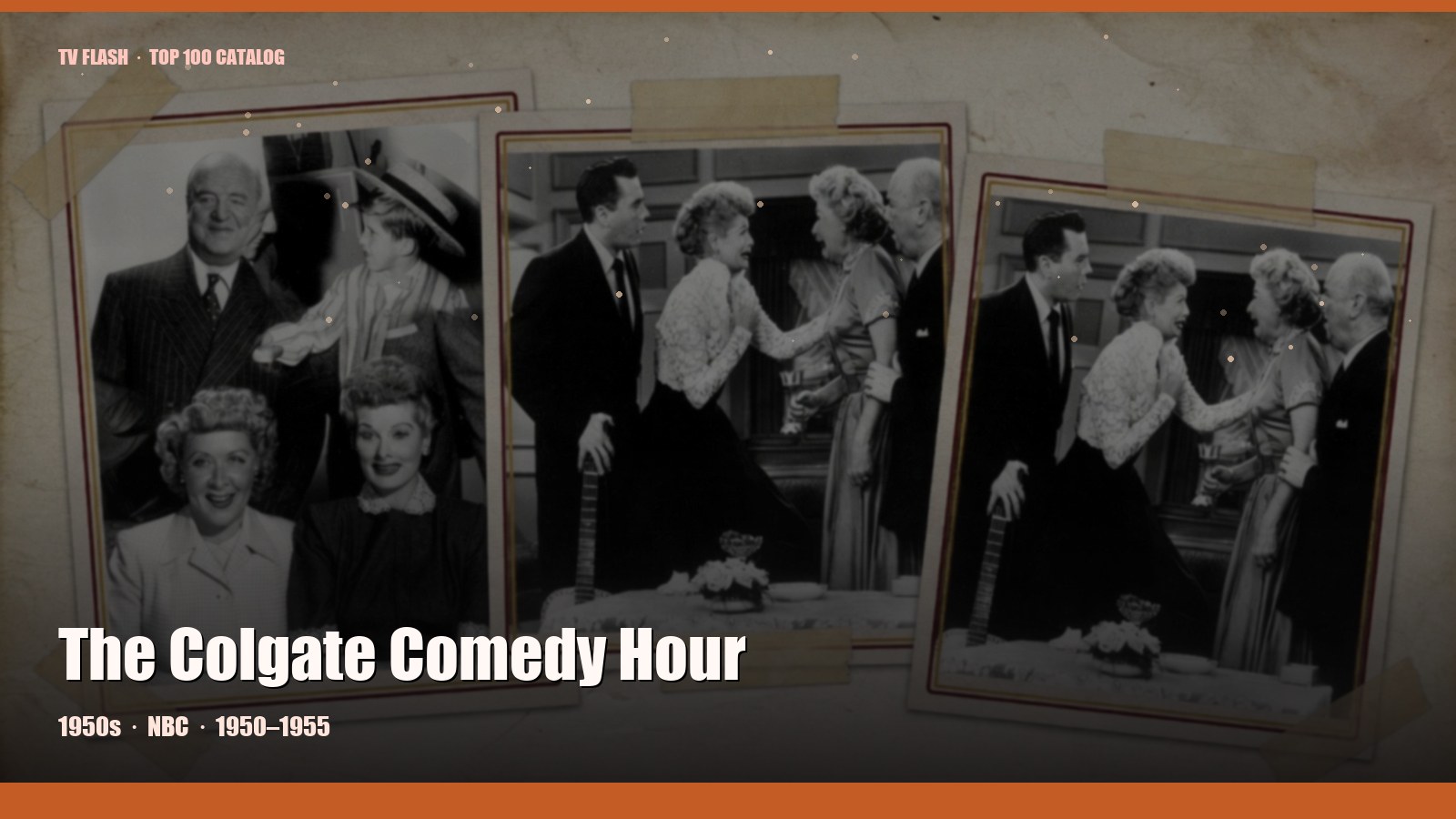
Uncle Miltie in a dress — the show so big cities emptied restaurants and tanks dropped after 9 p.m.
Live ninety-minute prestige plays — when network TV still pretended it was Broadway with better lighting.
The master of suspense as dry host — murder with a wink and a silhouette.
The world's cheapest violinist and the longest pause in comedy history.
Murrow with a cigarette and a conscience — when news still looked like a civic sacrament.
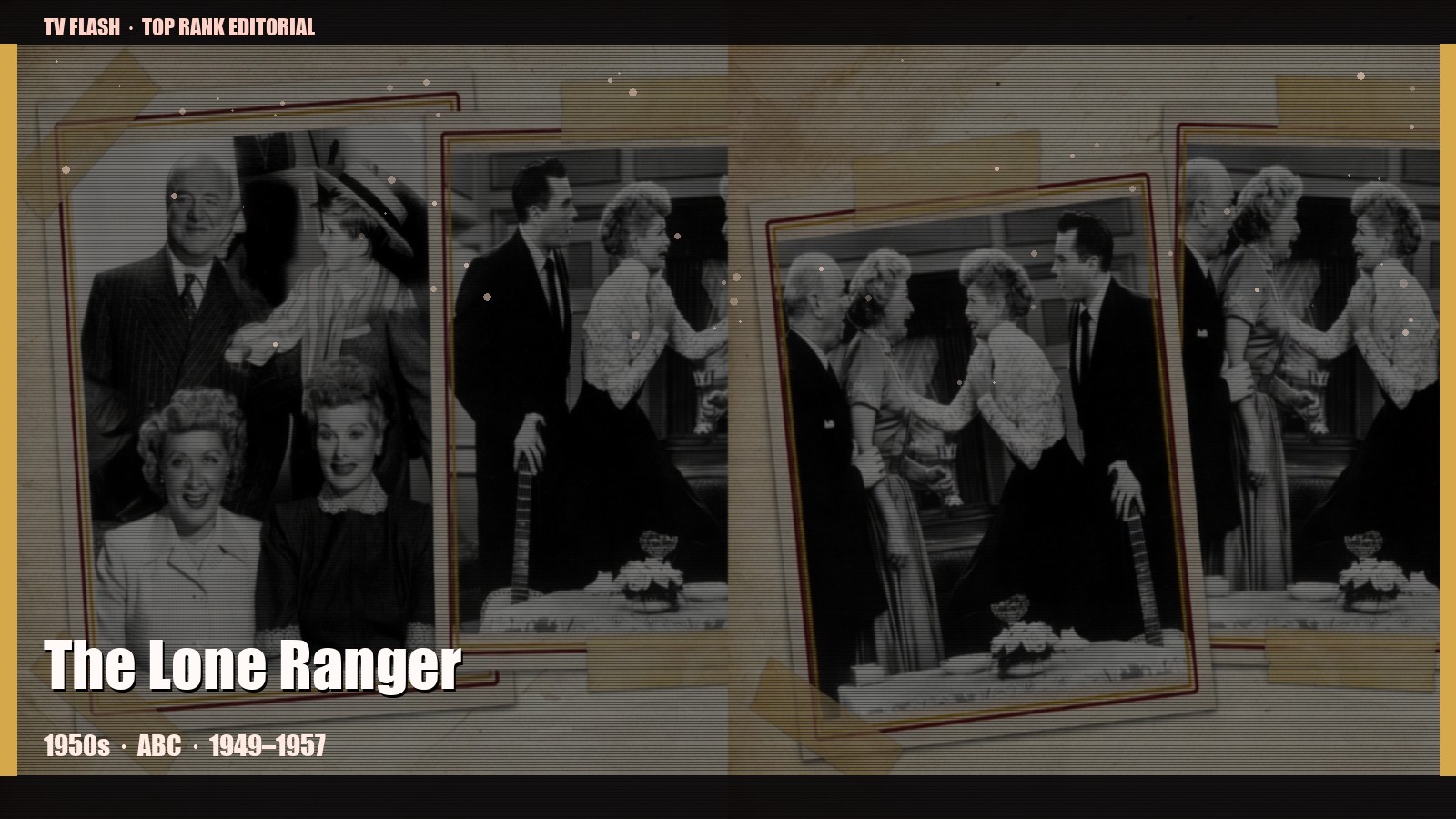
Hi-Yo Silver — masked justice, a faithful friend, and the purest kids'-western brand of the age.
It's Howdy Doody time — freckles, Peanut Gallery screams, and Clarabell's seltzer bottle.
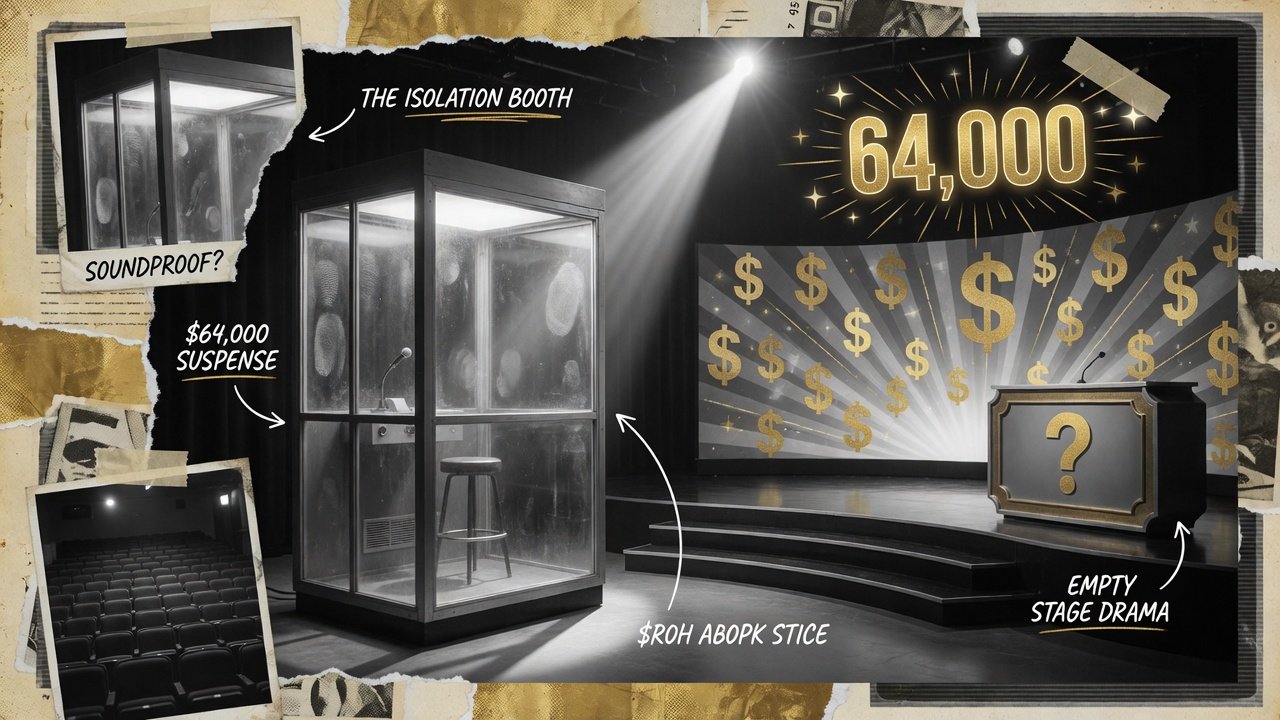
Isolation booths, big money, and the quiz boom that made America hold its breath — then file subpoenas.
The isolation-booth duel that ended in congressional hearings and a Hollywood movie.
Groucho, a duck, and the secret word — quiz structure as pure ad-lib weapon.
The real Nelson family playing themselves — meta domestic TV before anyone said 'meta.'
The collie who saved more kids than most sitcom dads — loyalty as weekly serial.
The gentle captain, Mr. Green Jeans, and a Treasure House of manners — no scream track required.
Sgt. Bilko's motor-pool hustles — the funniest con man in uniform television ever licensed.
A gambler hero who preferred cards to bullets — the western that winked.
A chess-piece knight for hire — Paladin's calling card was cooler than most heroes' faces.
A moving town of guest stars — the prairie as anthology stagecoach.
A widowed dad, a boy, and a rapid-fire Winchester — fatherhood with a lever action.
Live drama with a cheese sponsor — prestige teleplays that launched a generation of talent.
Westinghouse's live stage — where 'Twelve Angry Men' first argued on television.
Chayefsky's kitchen-sink live plays — ordinary lives, extraordinary telecasts.
Eliot Ness vs. Capone's Chicago — machine-gun morality plays in sharp suits.
Dick Clark's after-school dance floor — where kids rated records and stars paid court.
Walt himself sells a magic kingdom on Tuesday nights — TV as the world's longest commercial, and a gift.
Mouseketeers, ears, and 'M-I-C-K-E-Y' — Disney's talent school broadcast daily.
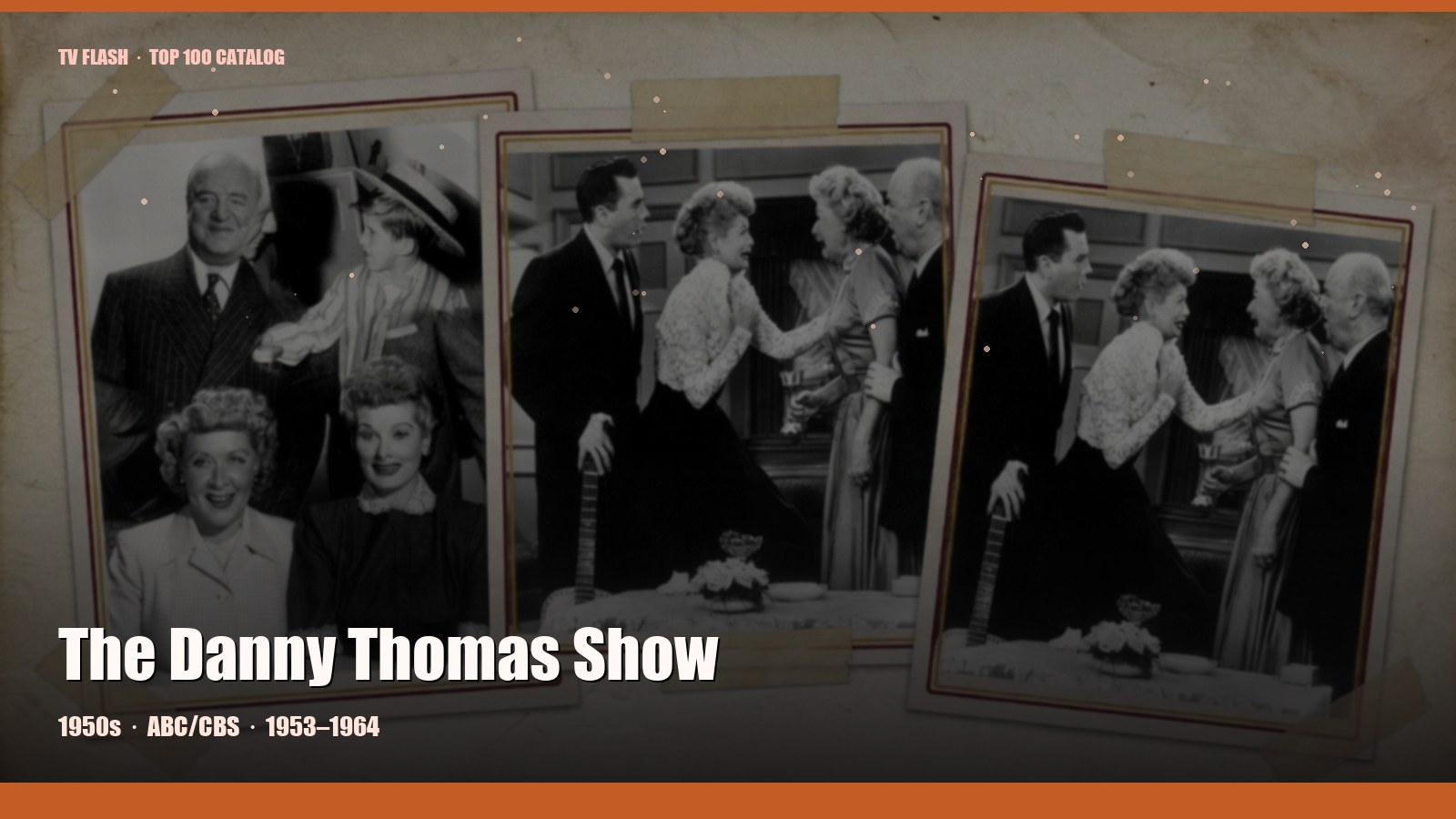
Make Room for Daddy — nightclub dad energy meets living-room warmth.
Fourth-wall George and dizzy-logic Gracie — marriage as perfected vaudeville.
TV's first hour-long western smash — Clint Walker as the drifting mountain of a hero.
Hugh O'Brian's Earp — Buntline Special justice and a badge polished for prime time.
Faster than a speeding bullet — George Reeves in the cape that defined TV heroes.
Donna Stone's perfect living room — mid-century motherhood as star vehicle.
West Virginia clan hits the California farm — rural sitcom before Green Acres made it a punchline.
Eve Arden's wisecracking teacher — the faculty lounge as comedy club.
Celebrity secrets and panelist guesses — Goodson-Todman charm with a wink.
Three claim the same identity — only one is telling the truth, and the panel sweats.
Murrow via remote camera in celebrity living rooms — intimacy as spectacle.
Garroway, J. Fred Muggs, and the invention of waking up with television.
Steve Allen invents late-night — desk, door, man-on-the-street, and jazz past midnight.
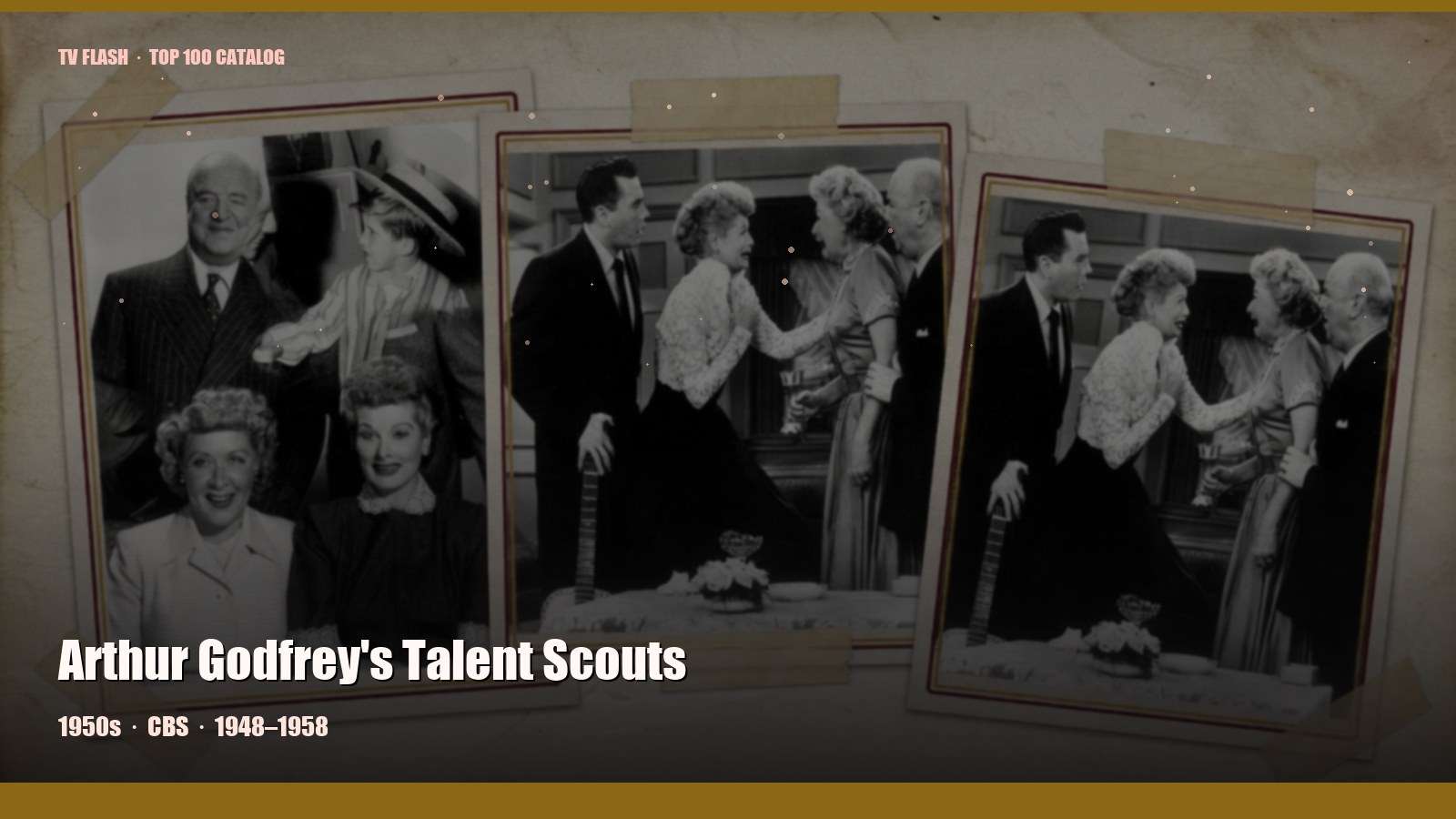
Godfrey's ukulele empire discovers stars — and teaches America how a host can own a network night.
Clem Kadiddlehopper and Freddie the Freeloader — pantomime pathos with a clown's tear.
Rotating comedy kings — Martin & Lewis, Abbott & Costello, and Sunday-night mayhem.
After Show of Shows — Caesar's gang keeps the live sketch flame alive.
The Great One's variety palace — where the Honeymooners were born between production numbers.
Head 'em up, move 'em out — trail-drive western that gave Eastwood his sneer.
Steve McQueen and a sawed-off Mare's Leg — bounty-hunter cool before he was a movie king.
Disney's masked caballero — Z's carved into California legend and kids' hearts.
A-one and a-two — champagne music for America in a bubble of pure polka polish.
Broderick Crawford's bark and a dispatch radio — 'Ten-four' as national grammar.
True western tales hosted by a string of future governors and old pros.
Michael Anthony delivers a tax-free million — then we watch money ruin or redeem a stranger.
Lloyd Bridges in scuba gear — underwater action that made divers of a generation.
Cool jazz PI, blonde nightclub, and a Henry Mancini score that outlived the plots.
There are eight million stories — and this one was shot on the real New York streets.
William Boyd's white-hat Hoppy — the lunchbox that taught Hollywood TV merchandising.
O. Henry's robin-hood caballero in early color — 'Oh, Pancho!' 'Oh, Cisco!'
A boy and his German shepherd at Fort Apache — military kid adventure with bark.
Cardboard sets, cosmic justice — DuMont's low-budget space opera that kids believed completely.
Space Academy cadets learning the solar system — homework with rocket ships.
Commander Buzz Corry vs. the universe — ray guns, brainagraphs, and 30th-century justice.
Trumpeter host, 'plausible' science wonders — sci-fi for grown-ups in a lab coat.
Smile — you're on hidden camera. Allen Funt's prank sociology as entertainment.
Ralph Edwards ambushes a guest with their entire biography — tissues mandatory.
Applause-meter misery pageant — the most 1950s show that ever 1950s'd.
Wrong answer? Do the stunt. Ralph Edwards's radio chaos, now with cameras.
Bill Cullen and the art of the bid — pricing game as mid-century consumer fantasy.
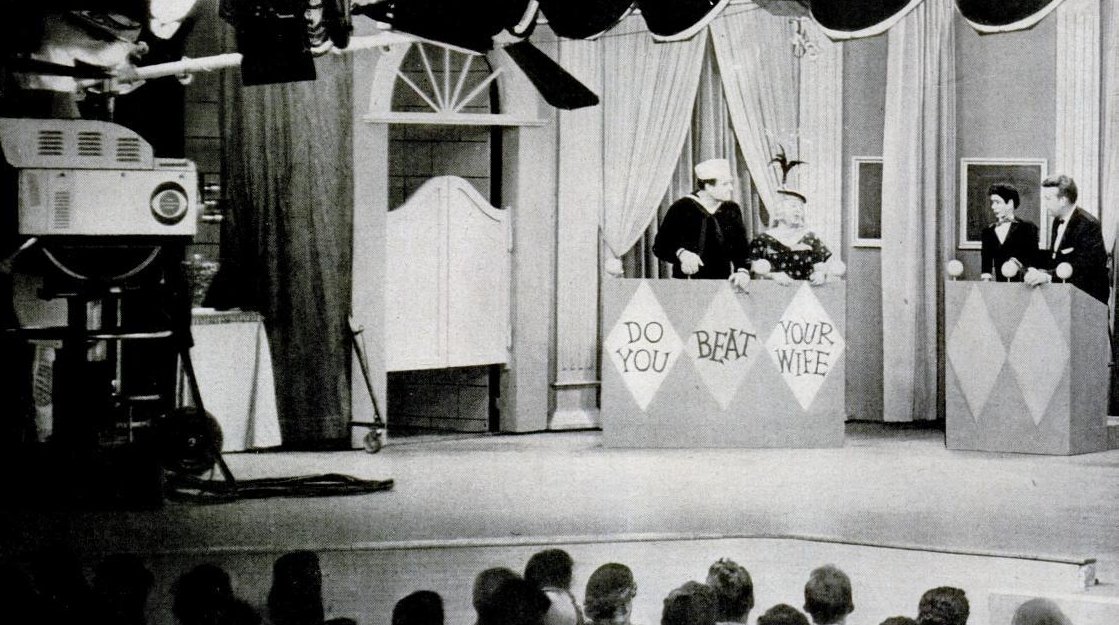
Married couples vs. messy stunts and a ticking clock — proto-Fear Factor in formal wear.
Spring Byington's merry widow — mother-in-law chaos as warm sitcom engine.
Gale Storm's scheming daughter vs. dad's blood pressure — screwball sitcom fizz.
What a revoltin' development! — blue-collar dad comedy with a catchphrase for the ages.
Norwegian immigrant family warmth — live family drama before sitcoms ate the hour.
Hugely popular, deeply fraught — the sitcom that forces the conversation about race and early TV.
Velvet voice, broken barrier — a Black superstar hosting network variety without national sponsors.
Aloft culture for the masses — Leonard Bernstein, Orson Welles, and Sunday seriousness.
Greeting-card prestige — specials that made quality drama a brand promise.
Industrial giant, theatrical punch — live drama with a steel-hard production sheen.
Early filmed anthology giant — Jane Wyman's later host era and massive 1950s ratings.
Dale Robertson as a Wells Fargo agent — corporate cowboy justice on the frontier circuit.
Derby hat, gold-tipped cane — Gene Barry's dandy lawman who fought with style.
Arizona rancher with a Cessna — aviation adventure for kids who wanted wings.
Ad-lib puppets and Fran Allison — gentle absurdity that adults watched without irony.
Richard Greene's Robin — British export that American kids treated like native folklore.
A flying squirrel, a moose, and Cold War satire — Jay Ward's anarchic gift at decade's end.
Lee Marvin's hard cop in a hard Chicago — noir procedural with a jazz bite.
Visual gags, blackouts, and Nairobi Trio — the medium inventing itself for laughs.
Bishop Sheen vs. Milton Berle in the ratings — a chalkboard and a cape beat vaudeville some weeks.
The longest-running show in television history — Sunday panel combat as civic ritual.
British rocket horror on a shoestring — the serial that terrified a nation and taught TV to do dread.