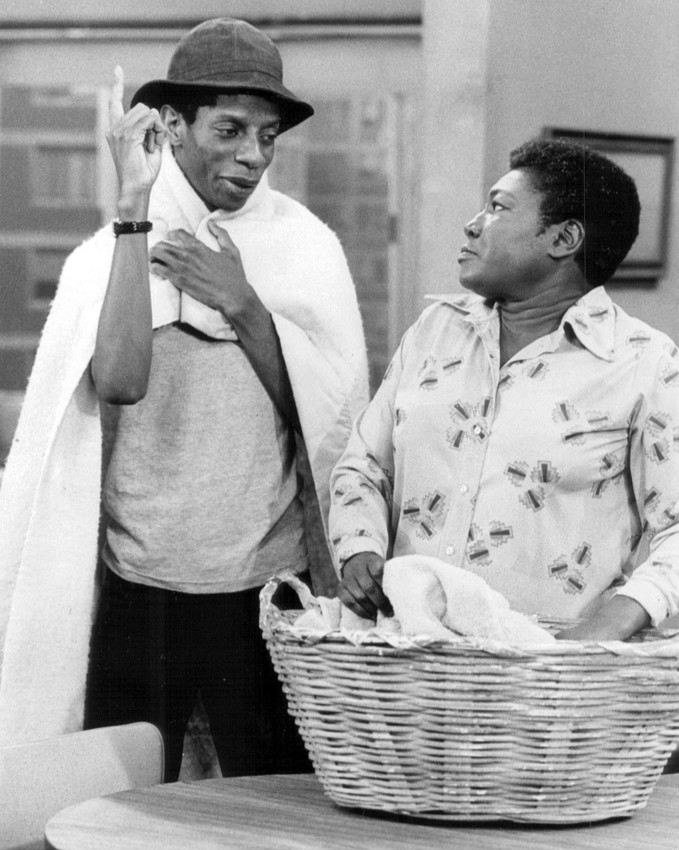
Black family sitcom landmark — and a case study in creative control battles.
Why it matters
From the desk
Dy-no-mite Was Never Amicable
A Chicago projects sitcom that became a catchphrase factory, a creative-control war, and a family America watched while the set was already on fire.
Flash: February 8, 1974, Too Old Blues, a living room that is not Queens, and a laugh track trying to hold a family that has to make rent before the second commercial. Esther Rolle's Florida, John Amos's James, Jimmie Walker's J.J. already loading the catchphrase that will eat the table. Norman Lear's factory had spun this one off Maude, which had spun off All in the Family, which is the kind of family tree a publicist calls a universe and a shop steward calls a job. The afterglow is warmth. The leak is that warmth was never the whole deal.
Good Times is the projects on CBS, which in 1974 is both a landmark and a fight. Eric Monte and Mike Evans built a Black family sitcom that wanted dignity and jokes in the same half-hour. The country bought J.J. The country bought dy-no-mite. Rolle and Amos wanted the rent, the kids, the bruise. I am not the museum guard; I will not pretend the catchphrase was a misunderstanding. It was a hit. Hits have collateral. Getting Up the Rent is the hour that still photographs as the premise the merchandising later tried to drown: a family scrambling, not a sketch troupe in a high-rise.
They are not amicable. Amos is gone after season three; James dies offscreen, which is the kind of exit a press release calls a storyline and a cast calls a firing with extra steps. The Big Move is the hangover premiere — a new apartment and a missing father, sold as progress. Rolle sits out season five; the Evans Get Involved hours arrive with Janet Jackson as Penny and a house missing its moral center. Florida's Homecoming is the return as a four-part event, which is to say the show had to restage a reunion to remember what it was. If you only watch the dy-no-mite clips, you will think this was a party. The party had empty chairs.
Who was where, beat sheet, not a table of contents. Rolle holding the dignity line like a shop steward. Amos already halfway out the door. Walker as the heat the affiliates could sell. Ja'Net DuBois's Willona as the neighbor who sees everything, which is the assistant energy this desk always clocks. BernNadette Stanis's Thelma trying to be a person in a catchphrase economy. Ralph Carter's Michael as the kid who still wants the argument. A PA named Jess, probably, holding the only rundown that listed who was speaking to whom that week. The museum wants representation as a plaque. The lobby wanted to know who still had a dressing room.
The End of the Rainbow is the catalog's last night, 1979, a wedding-adjacent bow after six seasons of a show that had already survived its own fame. Is the finale a hug. Of course it is a hug. Sitcoms end in hugs the way carpets end in a town car. The deleted Story is the control war: clownish versus dignified, which is a boring binary until you notice it decided who got written off. Last flash: the catchphrase outlived the living room, which is the oldest Hollywood math. Ask me how I know. I watched a family sitcom become a single joke and still have to put the kids to bed.
Episode guide
How this series is filed
TV Flash files Good Times (1974–1979) on CBS as the episode guide: 133 listed hours across 6 seasons, 1974-02-08–1979-08-01 from “Too Old Blues” (S01E01) to “The End of the Rainbow” (S06E24).
Open the episode guide · S01E01 Too Old Blues · S06E24 The End of the Rainbow
Essential episodes
Five half-hours from the rent to the missing chairs — the hours the catchphrase cannot cover. Filed by Vivian Cross (The Carpet Report).
- S01E01 Too Old Blues
The promised family. Before the merchandising, a living room that still has to negotiate work, pride, and a laugh track.
- S01E03 Getting Up the Rent
The premise the clips later drown: rent as plot, not as flavor. The hour that still photographs as the show they said they were making.
- S02E02 J.J. Becomes a Man (1)
J.J. as event. The heat the affiliates could sell — watch it as industrial fact, not as the whole series.
- S04E01 The Big Move (1)
The hangover premiere. A new apartment and a missing father, sold as a move up.
- S05E01 The Evans Get Involved (1)
Florida out, a new kid in. The season the moral center had to be recast as a storyline.
At a glance
The Evans family scrapes and jokes through life in a Chicago housing project with heart, catchphrases, and hard turns. J.J.’s fame inside the show mirrored real industry arguments about representation. Sitcom warmth with stakes that bite.
Network & studio
- CBS — broadcast network
Why watch now
For the heat under the hug: a projects sitcom that became a catchphrase, a firing, a sit-out, and a family that still had to make rent on CBS while America bought the one joke the affiliates could sell.
Cultural impact
Good Times put projects life on network primetime and sparked lasting debates about clownish vs. dignified representation. Norman Lear-era politics never left the set.
Creators
Eric Monte · Mike Evans
Key cast
- Esther Rolle as Florida Evans
- John Amos as James Evans
- Jimmie Walker as J.J. Evans
- Ja'Net DuBois as Willona Woods
- BernNadette Stanis as Thelma Evans
Flash facts
- CBS sitcom created by Eric Monte and Mike Evans, developed by Norman Lear; aired February 8, 1974–August 1, 1979 (6 seasons, 133 episodes).
- Spin-off of Maude (itself from All in the Family); first African American two-parent family sitcom on U.S. network TV.
- Set in a Chicago public-housing project; produced by Tandem Productions.
FAQ
Where should I start?
Too Old Blues, then Getting Up the Rent. The first season is the family the series promised before the catchphrase ate the table.
Why does the show feel different after season three?
Because James is gone. John Amos left; the father dies offscreen. Later seasons are a different household, sometimes a different moral center when Florida is out too.
Can I just watch the J.J. highlights?
You can, and you will miss the fight the series is actually famous for. The catchphrase is the heat. The rent hours are the show.
Is the finale worth it?
As a bow, yes. The End of the Rainbow is a sitcom hug after a bruising run. Come for the family still standing, not for a last political speech.
Do I need All in the Family or Maude first?
No. The family tree is industrial gossip, not homework. This living room stands on its own — and then has to.
Cultural eras
Official & further reading
External sites for further reading — TV Flash is not affiliated with these networks or studios.
Back to the decade
Also on the dial
More after Good Times
- Related showThe Paper ChaseLaw school as blood sport — Professor Kingsfield terrifies a generation of pre-law kids.
- Related showThe Sonny & Cher Comedy HourI got you babe — marital sparring as variety gold before the divorce plot twist.
- Related showThe Young and the RestlessGenoa City boardrooms and bedrooms — youth, wealth, and that theme song.
- Related showHee HawCornfield vaudeville — country music, cornball sketches, and rural syndication power.
- Related showMatch GameBlank the blank — celebrity panel innuendo as daytime sport.
- Related showThe White ShadowWhite coach, mostly Black high-school team — gym class as social drama.