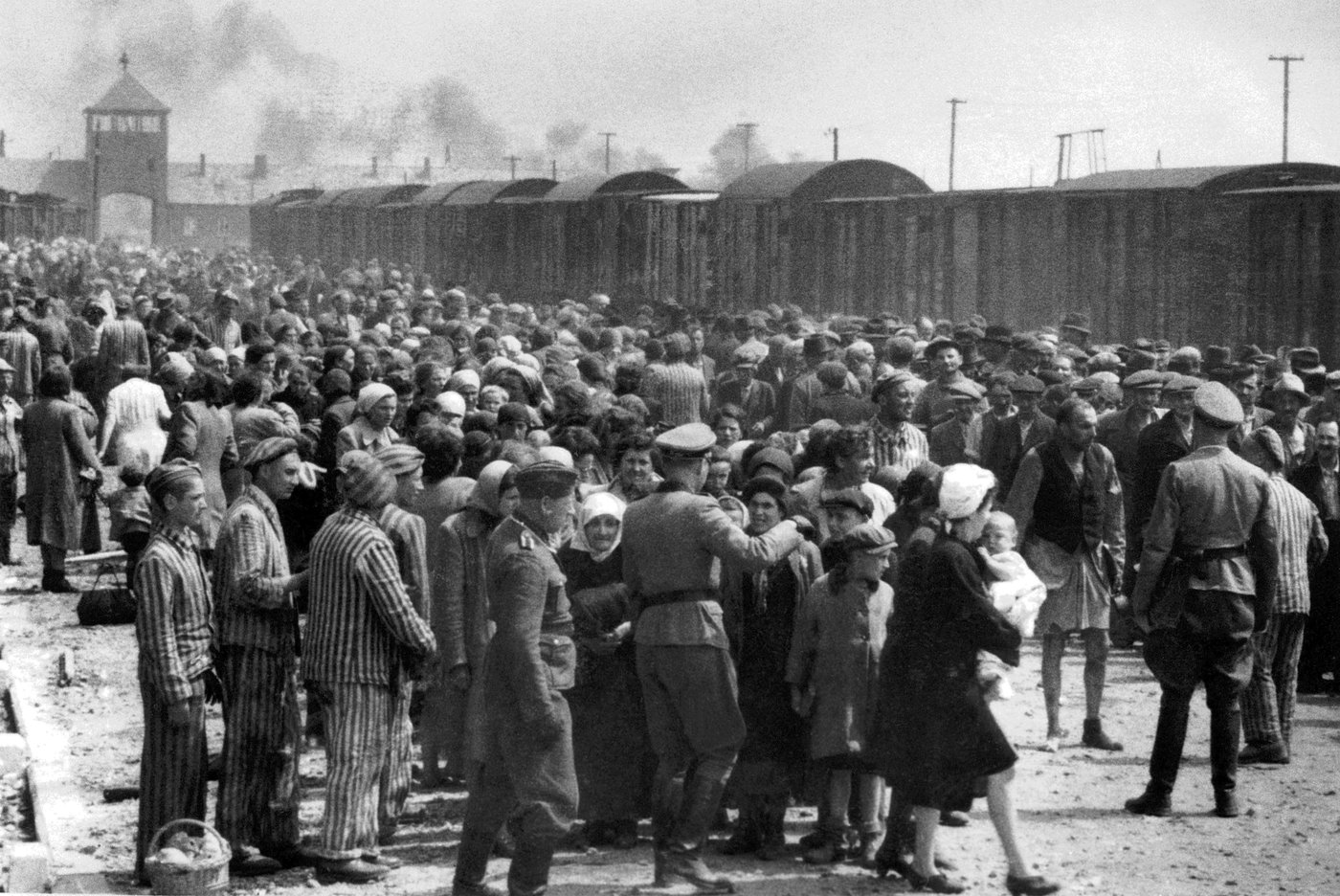
Landmark of televised historical reckoning; education-by-event-series.
Why it matters
From the desk
Why Holocaust still plays
Calendar first: four nights, 1978, NBC, the Shoah in American living rooms as an appointment, commercials included. Holocaust, from Gerald Green, did not hide in a documentary slot. It booked the week. Interwoven families — Jewish victims and a rising SS officer — trace the machinery of Nazi genocide across the war years with Meryl Streep's Inga, James Woods's Karl Weiss, Michael Moriarty's Erik Dorf, Fritz Weaver, and Rosemary Harris. **Watched by tens of millions in the U.S.**, with major European impact and German broadcast debates that followed. That is not a vibe. That is a window.
Rex will call this a museum night and mean it as a compliment. Fine. Inventory is culture here: event-series education, messy and massive, the form networks usually ducked. Multiple Emmys; early screen heat for careers that would become film-famous. Melodrama as civic education. The commercials remain part of the uneasy historical record — the break as a business model sitting on top of a reckoning. Nostalgia for 'when TV mattered' skips that the spots still ran. The spots are the point and the problem.
How the week was stacked: 1. The Gathering Darkness — night one, living-room enlistment. 2. The Road to Babi-Yar — a killing site as a title, homework as appointment drama. 3. The Final Solution — the policy said aloud. 4. The Saving Remnant — survival language. 5. The Liberation — catalog hour titled as an ending. Five hours in the pack. One season. The conversation was the metric that outlived the credits.
Watch it as that civic dare, knowing the form is network miniseries melodrama, not a classroom filmstrip. Landmark of televised historical reckoning: education-by-event-series rather than a quiet PBS special hiding from the spots. If they bury the finale in a row of tiles now, you will know who lost the room. In 1978 the room was the week. A projection: every later limited series that wants to matter is still bidding against this window. Watch the nights in order. Then watch who still pretends a dump is the same as a national argument — Rex's museum night, Max's calendar. The calendar won.
Episode guide
How this series is filed
TV Flash files Holocaust (1978) on NBC as the episode guide: 5 listed hours across 1 seasons, 1978-04-16–1978-04-20 from “The Gathering Darkness” (S01E01) to “The Liberation” (S01E05).
Open the episode guide · S01E01 The Gathering Darkness · S01E05 The Liberation
Essential episodes
Four-night Shoah as civic television: NBC event hours that forced a conversation the networks usually ducked. Filed by Max Sterling (Streaming Confidential).
- S01E01 The Gathering Darkness
The Gathering Darkness is night one of NBC's living-room Shoah. Melodrama as civic education, messy and massive: the miniseries already forcing a conversation networks usually ducked.
- S01E02 The Road to Babi-Yar
The Road to Babi-Yar is the second night named as a killing site. Event television using a place-title as homework: Streep among the early heat, commercials still in the breaks.
- S01E03 The Final Solution
The Final Solution is the third-night title saying the policy aloud. Civic education as appointment drama: the German broadcast fight still ahead, the American living room already enlisted.
- S01E04 The Saving Remnant
The Saving Remnant is the survival-language hour. Four-night structure still the point: messy, massive, the miniseries as a national argument rather than a quiet documentary slot.
- S01E05 The Liberation
The Liberation is the fifth catalog hour, titled as an ending. NBC's Shoah event closing the calendar: living-room history, commercial breaks included, the conversation already louder than the credits.
At a glance
Interwoven families — Jewish victims and a rising SS officer — trace the machinery of Nazi genocide across the war years. NBC's Holocaust (1978), from Gerald Green, put the Shoah in American living rooms as a four-night event with Meryl Streep's Inga Helms Weiss, James Woods's Karl Weiss, Michael Moriarty's Erik Dorf, Fritz Weaver's Dr. Josef Weiss, and Rosemary Harris's Berta. Watched by tens of millions in the U.S., with major European impact and German broadcast debates that followed. Multiple Emmys; early screen heat for careers that would become film-famous. Melodrama as civic education, messy and massive — commercials and all.
Network & studio
- NBC — broadcast network
Why watch now
NBC puts the Shoah in American living rooms as a four-night event, with Meryl Streep among the early heat and a German broadcast fight that followed. Melodrama as civic education, messy and massive. The miniseries that forced a national conversation networks usually ducked, commercials and all.
Cultural impact
Holocaust was a landmark of televised historical reckoning: education-by-event-series rather than a classroom filmstrip. Tens of millions watched in the U.S.; major European impact and German broadcast debates followed. Credited with revitalizing public Holocaust education conversations networks usually ducked, commercials and all. Multiple Emmys; careers that would become film-famous used this as early heat.
Creators
Gerald Green
Key cast
- Meryl Streep as Inga Helms Weiss
- James Woods as Karl Weiss
- Michael Moriarty as Erik Dorf
- Fritz Weaver as Dr. Josef Weiss
- Rosemary Harris as Berta Palitz Weiss
Flash facts
- NBC miniseries (1978) created by Gerald Green; a four-night event.
- Cast included Meryl Streep, James Woods, Michael Moriarty, Fritz Weaver, and Rosemary Harris.
- Watched by tens of millions in the U.S.; major European impact and German broadcast debates.
- Credited with revitalizing public Holocaust education conversations.
- Won multiple Emmys; launched major film careers.
FAQ
Is this a documentary?
No. It is a 1978 NBC miniseries: interwoven fictional families inside historical machinery. Melodrama as civic education, not a newsreel.
Do I watch all four nights?
It is built as an event. The four-night structure is the civic dare — appointment chapters, not a sample-and-skip procedural.
Is the German broadcast fight part of watching it?
Extra-textual weather, and historically real. U.S. living rooms plus European impact are why it is remembered as more than a ratings stunt.
Prestige history or network melodrama?
Both, uneasily. Landmark reckoning in commercial miniseries form — messy, massive, and designed to force a conversation.
Official & further reading
External sites for further reading — TV Flash is not affiliated with these networks or studios.
Back to the decade
Also on the dial
More after Holocaust
- Related showSCTVSecond City Television — Melonville media satire for comedy nerds who quote deep cuts.
- Related showBuck Rogers in the 25th CenturyDisco-era space hero thawed out for laser fights and Twiki sidekick comedy.
- Related showCHiPsPonch and Jon on freeways of gold — California Highway Patrol as sunshine action.
- Related showLand of the LostSleestak nightmares — Saturday-morning pocket universe with real craft.
- Related showAdam-12One-Adam-12 — black-and-white patrol as Jack Webb moral clarity.
- Related showMcCloudNew Mexico marshal in New York — boots on asphalt fish-out-of-water crime.