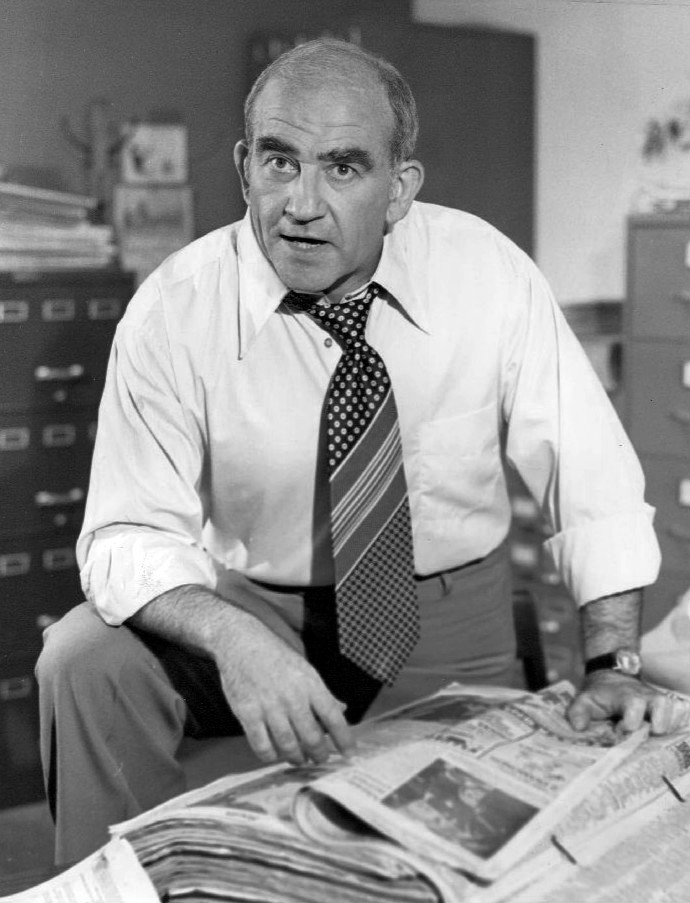
Rare sitcom-to-drama spin-off success; prestige newspaper drama before prestige was a brand.
Why it matters
From the desk
Why Lou Grant still plays
So about the group chat that showed up for Mary's boss and found an hour-long city desk: Lou Grant left Minneapolis laughs for Los Angeles and traded multi-cam for journalism drama. (I said spoiler-free. The cancellation politics are extra-textual weather. The paper is the show.) Edward Asner's CBS Lou Grant (1977–1982), from James L. Brooks, Allan Burns, and Gene Reynolds, ran five seasons, 114 episodes, with Robert Walden's Joe Rossi, Linda Kelsey's Billie Newman, Mason Adams's Charlie Hume, and Nancy Marchand's Margaret Pynchon working ethics, politics, and newspaper craft. Rare sitcom-to-drama spin-off that earned serious Emmy respect. Hold the front page. Workplace drama got ink-stained dignity.
Lana wants the gown. There is newsprint. I want the reply-guy who treated the end as the whole aftertaste. Cancellation collided in the public mind with controversy around Asner's activism; the end remains entangled in debates about politics and Hollywood. The series itself is journalism-themed drama. Cophouse opens the hop: Asner at a Los Angeles city desk, prestige before the word prestige. Nazi is the one-word title doing the civic dare, laugh track gone on purpose. Hollywood is the L.A. paper covering its own town — still a newsroom, not a backlot cameo show. Campesinos files farmwork as news, not scenery. Charlie is the 1982 closer, named like a colleague.
What the timeline decided at 1 a.m.: it's a reunion in longer pants. No, it's prestige. The activism is the plot. No, the desk is the plot. Item four collapses; we deserve it. Helpful to know the face from The Mary Tyler Moore Show, not required for the hour. Start when Grant is at the paper with the reporter ensemble. Issue-and-ethics hours are the diet.
Prestige newspaper drama before prestige was a streaming brand. Mission and craft, not gossip serialization. The character could headline a serious hour. That was the dare, and the paper held.
I need sleep and a city-desk rewatch without the cancellation thread. Tell me if you needed Mary first. See you in the tags. Bring CWs if your friend thinks spin-off means sitcom continuation and you want to be kind. Ink-stained prestige before prestige was a brand — the paper held.
Episode guide
How this series is filed
TV Flash files Lou Grant (1977–1982) on CBS as the episode guide: 114 listed hours across 5 seasons, 1977-09-20–1982-09-13 from “Cophouse” (S01E01) to “Charlie” (S05E24).
Essential episodes
Asner leaves Mary's newsroom for L.A. ink: sitcom-to-drama spin-off, city desk, journalism as hour-long heat. Filed by Tessa Quinn (Spoiler-Free (Mostly)).
- S01E01 Cophouse
Cophouse opens the rare sitcom-to-drama hop. Asner leaves Minneapolis laughs for a Los Angeles city desk; journalism as hour-long craft, ink-stained prestige before the word prestige.
- S01E05 Nazi
Nazi is the one-word title doing the city-desk dare. Lou Grant treating a newsroom hour as civic argument: the spin-off already serious, the laugh track gone on purpose.
- S03E12 Hollywood
Hollywood is the L.A. paper covering its own town. Title as beat: the series still a newsroom, not a backlot cameo show — watercooler journalism with a city-desk spine.
- S04E16 Campesinos
Campesinos is the labor beat as an hour. Ink-stained drama filing farmwork as news, not scenery: the activism-and-cancellation fog still extra-textual, the desk still reporting.
- S05E24 Charlie
Charlie is the 1982 closer, named like a colleague. Five seasons of city-desk prestige, then a first-name bow: the spin-off that traded multi-cam for journalism and paid for it.
At a glance
Lou Grant left Mary's Minneapolis newsroom for Los Angeles and traded multi-cam laughs for hour-long journalism drama. Edward Asner's CBS Lou Grant (1977–1982) followed a city editor and his reporters through ethics, politics, and the newspaper craft. It was the rare sitcom-to-drama spin-off that earned serious Emmy respect. Cancellation collided with controversy around Asner's activism in the public mind. Hold the front page: workplace drama got ink-stained dignity.
Network & studio
- CBS — broadcast network
Why watch now
Ed Asner leaves Mary's Minneapolis newsroom for a Los Angeles city desk and trades multi-cam laughs for hour-long journalism. Rare sitcom-to-drama spin-off that earned serious awards, then ended in a fog of activism-and-cancellation argument. Ink-stained prestige before prestige was a brand.
Cultural impact
Lou Grant proved a comedy character could headline a serious drama and became a high-water mark for newspaper TV. It influenced later journalism series' sense of mission. The show's end remains entangled in debates about politics and Hollywood.
Creators
James L. Brooks · Allan Burns · Gene Reynolds
Key cast
- Ed Asner as Lou Grant
- Robert Walden as Joe Rossi
- Linda Kelsey as Billie Newman
- Mason Adams as Charlie Hume
- Nancy Marchand as Margaret Pynchon
Flash facts
- CBS drama spin-off of The Mary Tyler Moore Show; aired 1977–1982.
- Starred Edward Asner as Lou Grant, now a Los Angeles newspaper city editor.
- Shifted the character from sitcom newsroom comedy to hour-long dramatic storytelling.
- Won major awards and critical praise for journalism-themed episodes.
- Ensemble included reporters and editors navigating ethics and city stories.
FAQ
Do I need The Mary Tyler Moore Show first?
Helpful for the face, not required for the hour. This is a drama about a Los Angeles city editor, not a sitcom continuation.
Is the cancellation the whole aftertaste?
The activism-and-cancellation argument is real extra-textual weather. The series itself is journalism-themed drama with awards-level craft.
Where should I start?
Start when Grant is at the Los Angeles paper with the reporter ensemble. Issue-and-ethics hours are the diet; no laugh-track map required.
Newsroom soap or prestige drama?
Prestige newspaper drama before prestige was a streaming brand. Mission and craft, not gossip serialization.
Official & further reading
External sites for further reading — TV Flash is not affiliated with these networks or studios.
Back to the decade
Also on the dial
More after Lou Grant
- Related showThe Paper ChaseLaw school as blood sport — Professor Kingsfield terrifies a generation of pre-law kids.
- Related showThe Sonny & Cher Comedy HourI got you babe — marital sparring as variety gold before the divorce plot twist.
- Related showThe Young and the RestlessGenoa City boardrooms and bedrooms — youth, wealth, and that theme song.
- Related showHee HawCornfield vaudeville — country music, cornball sketches, and rural syndication power.
- Related showMatch GameBlank the blank — celebrity panel innuendo as daytime sport.
- Related showThe White ShadowWhite coach, mostly Black high-school team — gym class as social drama.