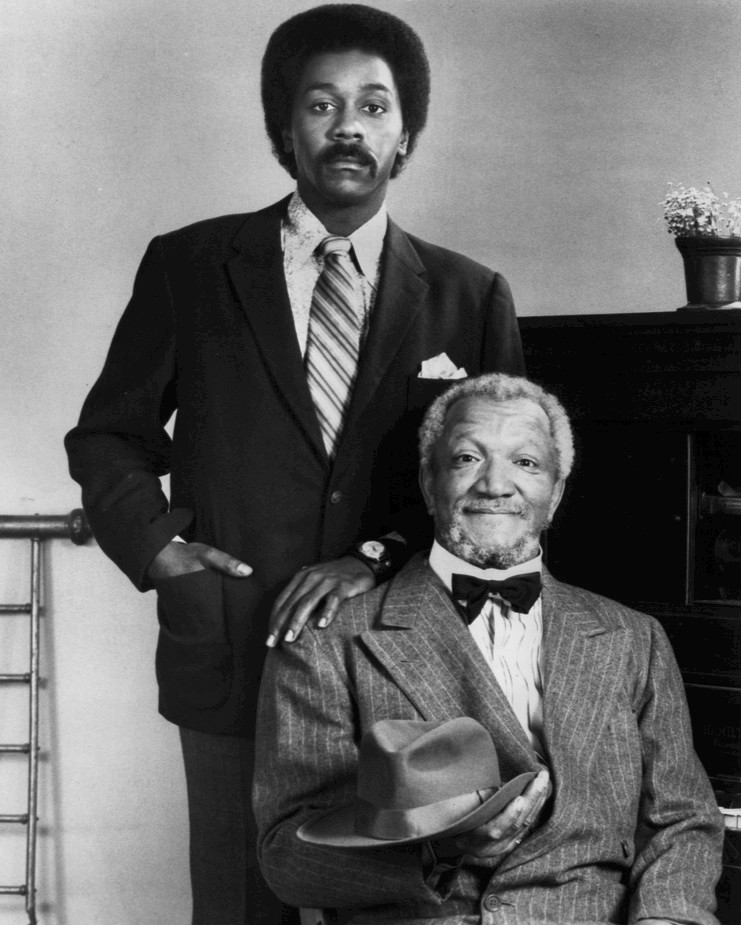
Brought a Black working-class father-son comedy to Nielsen heaven and made Redd Foxx a network superstar.
Why it matters
From the desk
Why Sanford and Son still plays
NBC dropped a Watts salvage yard into the early-1970s night and watched a Black lead sitcom own the chart. Sanford and Son (1972–1977) ran six seasons, 136 episodes — a short, high-velocity window, not an eleven-season mountain. Adapted from Britain's Steptoe and Son, the American hour buried the import bones under Redd Foxx gravel-and-lightning. Demond Wilson's Lamont is the long-suffering counterweight from Crossed Swords on. Norman Lear and Bud Yorkin helped the working-class roast hit status. Rex can toast the British original like a museum label. Cute. The Nielsen night belonged to the junkyard.
The metric that matters: a Black lead sitcom dominating early-to-mid-1970s charts and minting Foxx as a mainstream superstar. Walkouts and salary fights are the production weather — the quiet-cancel analog of a hit that knew its leverage. I'm coming, Elizabeth! is the catchphrase that never quite takes him. LaWanda Page's Aunt Esther brings Bible thunder as the recurring antagonist; Whitman Mayo's Grady fills the yard. Insult comedy inside a family sitcom, not a polite living-room hug.
How the window actually worked: Crossed Swords opens the throne. Lamont as Othello lets the salvage sitcom put on culture-clash clothes while father-son heat stays the engine. Home Sweet Home for the Aged is the yard as trap and kingdom — Foxx faking leverage, the salvage business the only honest real estate. Fred Sanford Has a Baby is late-run scheme comedy at full volume. School Daze is the 1977 closer; six seasons, then the yard goes quiet. The insults outlived the British bones.
If you are waiting for a completionist oath, you already lost the room. Sample freely. The chemistry does not require a syllabus. Catchphrases are weapons, not the product page. The engine is a father-son salvage business in Watts: Foxx, Wilson, Page as righteous opposition. Working-class Black comedy as a national event, not a polite living-room hug the network could merchandize as warmth.
Watch the Thursday analog: a hit that proved inventory and culture were the same argument on NBC, then ended before the formula could be buried on page four. The junkyard is as iconic as any sitcom living room. If they only clip the fake heart attack, you'll know who lost the yard.
Episode guide
How this series is filed
TV Flash files Sanford and Son (1972–1977) on NBC as the episode guide: 136 listed hours across 6 seasons, 1972-01-14–1977-03-25 from “Crossed Swords” (S01E01) to “School Daze” (S06E25).
Open the episode guide · S01E01 Crossed Swords · S06E25 School Daze
Essential episodes
Watts salvage-yard roast: Foxx, Lamont, and the father-son hours that weaponize the catchphrase. Filed by Max Sterling (Streaming Confidential).
- S01E01 Crossed Swords
Crossed Swords opens the junkyard throne. British Steptoe bones vanish under Foxx insult comedy; Wilson's Lamont is already the long-suffering counterweight.
- S03E01 Lamont as Othello
Lamont as Othello lets the salvage-yard sitcom put on culture-clash clothes. Father-son heat stays the engine; the title does the prestige joke.
- S02E21 Home Sweet Home for the Aged
Home Sweet Home for the Aged is the yard as trap and kingdom. Foxx fakes leverage; the salvage business remains the sitcom's only honest real estate.
- S05E16 Fred Sanford Has a Baby
Fred Sanford Has a Baby is late-run scheme comedy at full volume — catchphrase as weapon, Wilson as straight man, the junkyard still the set that matters.
- S06E25 School Daze
School Daze is the 1977 closer. Six seasons of Nielsen-era Black father-son roast, then the yard goes quiet; the insults outlived the British bones.
At a glance
Junk dealer Fred Sanford faked heart attacks for leverage while son Lamont tried to live a life without another scheme. NBC's Sanford and Son (1972–1977), adapted from Britain's Steptoe and Son, made Redd Foxx's gravel-and-lightning delivery into a national event. Demond Wilson played the long-suffering straight man; Aunt Esther brought Bible thunder. Lear's company helped import working-class Black comedy to hit status. The Watts junkyard became as iconic as any sitcom living room.
Network & studio
- NBC — broadcast network
Why watch now
Redd Foxx's junkyard king fakes the big one while Demond Wilson's Lamont tries to live without another scheme. British Steptoe bones vanish under Watts insult comedy, Aunt Esther's Bible thunder, and Nielsen-era Black father-son heat. Catchphrases as weapons; the salvage yard as throne.
Cultural impact
Sanford and Son proved a Black lead sitcom could dominate 1970s Nielsen charts and made Redd Foxx a mainstream superstar. It expanded the texture of working-class comedy on network TV. Catchphrases and Esther/Fred wars entered rerun immortality.
Creators
Norman Lear · Bud Yorkin
Key cast
- Redd Foxx as Fred G. Sanford
- Demond Wilson as Lamont Sanford
- LaWanda Page as Aunt Esther
- Whitman Mayo as Grady Wilson
- Don Bexley as Bubba Bexley
Flash facts
- NBC sitcom adapted from the British series Steptoe and Son; aired 1972–1977.
- Starred Redd Foxx as Fred G. Sanford and Demond Wilson as Lamont Sanford.
- Produced in association with Norman Lear's sitcom wave of the 1970s.
- LaWanda Page's Aunt Esther became a major recurring comic antagonist.
- Set at a junk/salvage business in the Watts area of Los Angeles.
FAQ
Do I need the British Steptoe and Son first?
No. The NBC series is adapted from Steptoe and Son, but Foxx's junkyard roast is a different comic weather system. Watch the Watts original on its own terms.
Is it just catchphrases and fake heart attacks?
Those are the weapons. The engine is a father-son salvage business: Foxx's Fred, Wilson's Lamont, and Page's Aunt Esther as righteous opposition.
How much of the 1972–1977 run is worth it?
It is a short, high-velocity sitcom, not an 11-season mountain. Sample freely; the junkyard chemistry does not require a completionist oath.
Insult comedy or family sitcom?
Insult comedy inside a family sitcom. Working-class father-son heat, not a polite living-room hug — and one of the decade's Nielsen proofs that a Black lead could own the night.
Official & further reading
- Peacock — Sanford and Son
- Sony Pictures Television — Sanford and Son
- NBC home
- Wikipedia
- IMDb
- TMDB search
- YouTube — trailers & clips
External sites for further reading — TV Flash is not affiliated with these networks or studios.
Back to the decade
Also on the dial
More after Sanford and Son
- Related showSCTVSecond City Television — Melonville media satire for comedy nerds who quote deep cuts.
- Related showBuck Rogers in the 25th CenturyDisco-era space hero thawed out for laser fights and Twiki sidekick comedy.
- Related showCHiPsPonch and Jon on freeways of gold — California Highway Patrol as sunshine action.
- Related showLand of the LostSleestak nightmares — Saturday-morning pocket universe with real craft.
- Related showAdam-12One-Adam-12 — black-and-white patrol as Jack Webb moral clarity.
- Related showMcCloudNew Mexico marshal in New York — boots on asphalt fish-out-of-water crime.