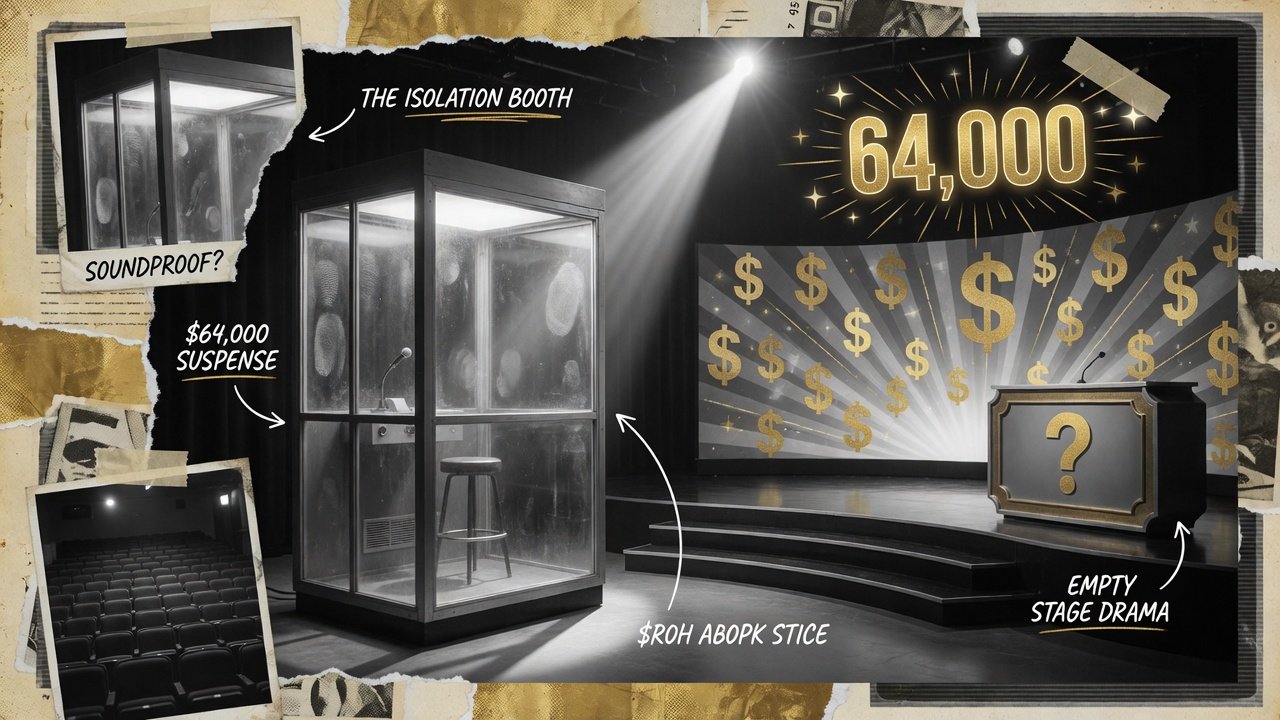
The scandal that shattered public trust in live TV games and rewrote broadcast ethics.
Why it matters
From the desk
Why Twenty-One still plays
NBC window: 1956–1958. Host: Jack Barry. Format: two contestants in isolation booths, questions climbing toward twenty-one points. Product: intellect as prime-time. Outcome: **congressional hearings** and a later Hollywood movie. That is not a golden-age parlor game. That is manufactured authenticity as a ratings strategy, then a regulatory event. Rex will call it a morality play. The chart called it a hit until the books didn't match.
Charles Van Doren — Columbia instructor, All-American brain — first appeared November 28, 1956, and became a national celebrity by defeating champion Herbert Stempel. Producers (Jack Barry and Dan Enright's shop) had been feeding answers to manufacture drama. Van Doren eventually confessed. Living-room trust in live TV games cracked. Robert Redford's 1994 film *Quiz Show* later embalmed the story in prestige amber. Van Doren's fall from intellectual golden boy to cautionary tale remains American media folklore, and *Twenty-One* became the face of the 1950s quiz-show scandals. Networks and regulators rewrote how they treated game-show integrity because the booth had been a set. Every later reality-TV honesty crisis echoes this window. Rex can call it a civic tragedy. The business lesson is uglier and more useful: drama was the product, intellect was the packaging, and the chart did not care until Congress did.
How it died, in sequence: premiere as isolation-booth duel, living-room trust not yet on the hearing docket; Van Doren era peak as the manufactured-authenticity sin later filmed, less a game than a morality-play title card; hearings; industry reform of quiz programming. Two episodes in this catalog pack. The scandal is the rest of the inventory.
Jack Barry kept score while producers kept a different set of books. **Answers were fed.** That is the metric. Nostalgia for live games without the ethics rewrite is cosplay. Broadcast rules changed because this window taught the country that a booth could be a set.
Dare: if a later unscripted hit buries the production notes, you will know who lost the room. *Twenty-One* already ran the original sin of manufactured authenticity — Stempel versus Van Doren, answers fed, living-room trust shattered, then a Hollywood movie to embalm the booth. Watch it as the hearing, not the hymn. The window was 1956–1958. The ethics rewrite is still the afterlife.
Episode guide
How this series is filed
TV Flash files Twenty-One (1956–1958) on NBC as a desk landmark file, not a complete episode guide, 1956-09-12–1957-01-01 from “Series premiere” (S01E01) to “Charles Van Doren era peak” (S01E02).
Open the episode guide · S01E01 Series premiere · S01E02 Charles Van Doren era peak
Essential episodes
Stempel, Van Doren, fed answers — two booth hours of television's original authenticity scandal. Filed by Max Sterling (Streaming Confidential).
- S01E01 Series premiere
Series premiere: isolation-booth duel as prime-time product, living-room trust not yet on the hearing docket.
- S01E02 Charles Van Doren era peak
Charles Van Doren era peak — the manufactured-authenticity sin later filmed, less a game than a morality-play title card.
At a glance
NBC's Twenty-One (1956–1958) looked like pure intellect: two contestants in isolation booths, questions climbing toward twenty-one points, host Jack Barry keeping score. Then Charles Van Doren — Columbia instructor, All-American brain — became a national celebrity by defeating champion Herbert Stempel, only for the whole match to emerge as theater. Producers had been feeding answers to manufacture drama; Van Doren eventually confessed, and the quiz-show scandals detonated across Washington hearings and living-room trust. Robert Redford's 1994 film Quiz Show later embalmed the story in prestige amber. Twenty-One is less a game show than TV's original sin of manufactured authenticity.
Network & studio
- NBC — broadcast network
Why watch now
Twenty-One is the isolation-booth duel that ended in congressional hearings and a Hollywood movie: Stempel versus Van Doren, answers fed, living-room trust shattered. Watch it in 2026 as television's original manufactured-authenticity sin — less a game than the morality play later prestige film embalmed.
Cultural impact
Twenty-One became the face of the 1950s quiz-show scandals and permanently changed how networks and regulators treated game-show integrity. Van Doren's fall from intellectual golden boy to cautionary tale remains American media folklore. Every later authenticity crisis in reality TV echoes this booth.
Creators
Jack Barry · Dan Enright
Key cast
- Jack Barry as Host
- Charles Van Doren as Contestant
- Herb Stempel as Contestant
Flash facts
- NBC quiz show that aired 1956–1958, hosted by Jack Barry.
- Charles Van Doren first appeared November 28, 1956, and became a national celebrity contestant.
- Producers rigged outcomes, including the famous Van Doren–Herbert Stempel rivalry.
- The scandal fueled congressional hearings and industry reform of quiz programming.
- Dramatized in Robert Redford's 1994 film Quiz Show.
FAQ
Where should I start?
Start with the Stempel–Van Doren rivalry as the record frames it: isolation booths, Jack Barry, and the celebrity contestant who became the scandal's face.
What can I skip?
Skip hunting a 'fair' complete season. The series is now a media-history document; you are watching the duel that ended in hearings, not a trivia archive.
Is it still worth it?
Yes, as media history. The Van Doren arc is still the genre's founding morality play, later filmed as Quiz Show.
Game show or scandal document?
A quiz duel that history treats as a morality play — manufactured authenticity, then congressional aftershock.
Official & further reading
External sites for further reading — TV Flash is not affiliated with these networks or studios.
Back to the decade
Also on the dial
More after Twenty-One
- Related showMeet the PressThe longest-running show in television history — Sunday panel combat as civic ritual.
- Related showThe Ernie Kovacs ShowVisual gags, blackouts, and Nairobi Trio — the medium inventing itself for laughs.
- Related showM SquadLee Marvin's hard cop in a hard Chicago — noir procedural with a jazz bite.
- Related showKukla, Fran and OllieAd-lib puppets and Fran Allison — gentle absurdity that adults watched without irony.
- Related showSky KingArizona rancher with a Cessna — aviation adventure for kids who wanted wings.
- Related showBat MastersonDerby hat, gold-tipped cane — Gene Barry's dandy lawman who fought with style.