
Perry Mason
William Hopper
William Hopper’s Paul Drake is Perry Mason’s investigator as a kept promise — nine seasons of courtroom architecture, Raymond Burr’s stillness, a killer who almost always rises, delay as pleasure. On TV Flash he is the last-witness economy’s fieldwork: court as stage, justice as appointment theater.
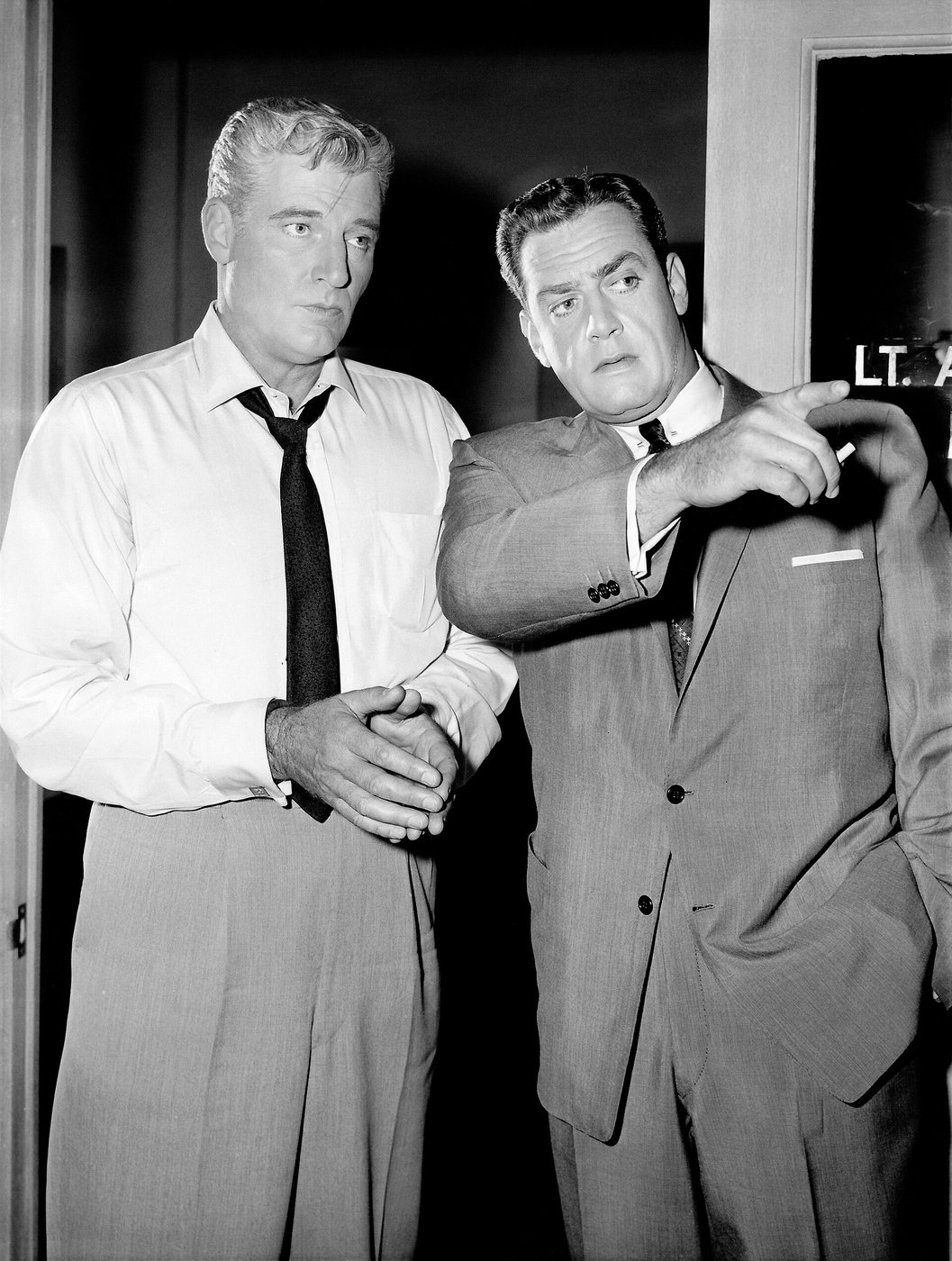
William Hopper plays Paul Drake on Perry Mason, the weekly legal machine that made justice appointment theater. CBS, 1957–1966. Burr’s stillness is the camera’s argument; Hopper’s Drake is the fieldwork — the look, the file, the reason the second confession has somewhere to come from. Nine seasons of a formal contract. The rare hour the rails fail is how you learn the contract was always a contract. Investigator as a kept promise.
s01e01 is the grammar lesson: stillness, corridor, courtroom as destination. s01e38 is first-season style at full tightness, the closed system discovering elegance. s02e30 is plant-and-payoff as comfort, not gasp-chasing; the title still photographs as classic Mason. Drake is courtroom architecture you can photograph outside the walnut. Last-witness economy. Fieldwork as a duet with the defense.
On TV Flash he is why investigation is not a subplot. We file Paul Drake with the hours that treated the look and the file as the reason the second confession can arrive. Delay as pleasure. A killer who almost always rises. Court as stage.
Start at the corridor if you want the grammar; stay for the tight first-season style if you want the elegance. He is not extra in someone else’s walnut. He is why a nine-season promise still photographs as fieldwork, and why justice as appointment theater needed a man who could leave the courtroom and come back with the hour. The rails are the point. The file is the duet. Nine seasons of a formal contract, a killer who almost always rises: Drake is the look and the file, fieldwork as a duet with the defense.
FAQ
Where should I start with William Hopper on Perry Mason?
s01e01 — stillness, corridor, courtroom as destination. Paul Drake is the fieldwork: the look, the file, the reason the second confession has somewhere to come from. Nine seasons, CBS 1957–1966.
Lead, supporting, or ensemble?
Ensemble investigator with lead file. Burr’s stillness is the camera’s argument; Hopper’s Drake is the duet outside the walnut — last-witness economy, not a subplot. Kept promise.
What hour still shows the turn?
s01e38 — first-season style at full tightness, the closed system discovering elegance. s02e30 is plant-and-payoff as comfort. Drake weather: delay as pleasure, investigation as architecture.
Networks & studios
- CBS — via catalog credits
On the dial
Shows in our catalog
On the web
External sites for further reading — TV Flash is not affiliated with these networks or studios.
Stay on this channel
More with William Hopper
- ShowPerry MasonCourtroom theater where the real killer always stood up — appointment justice.
- The Binge BriefThe Last Witness Stands Up — Comfort as a Formal ContractNine seasons of courtroom architecture: Raymond Burr’s stillness, a killer who almost always rises, and a procedural that taught America to wait for the second confession.
← All actors · All shows · Networks · Studios