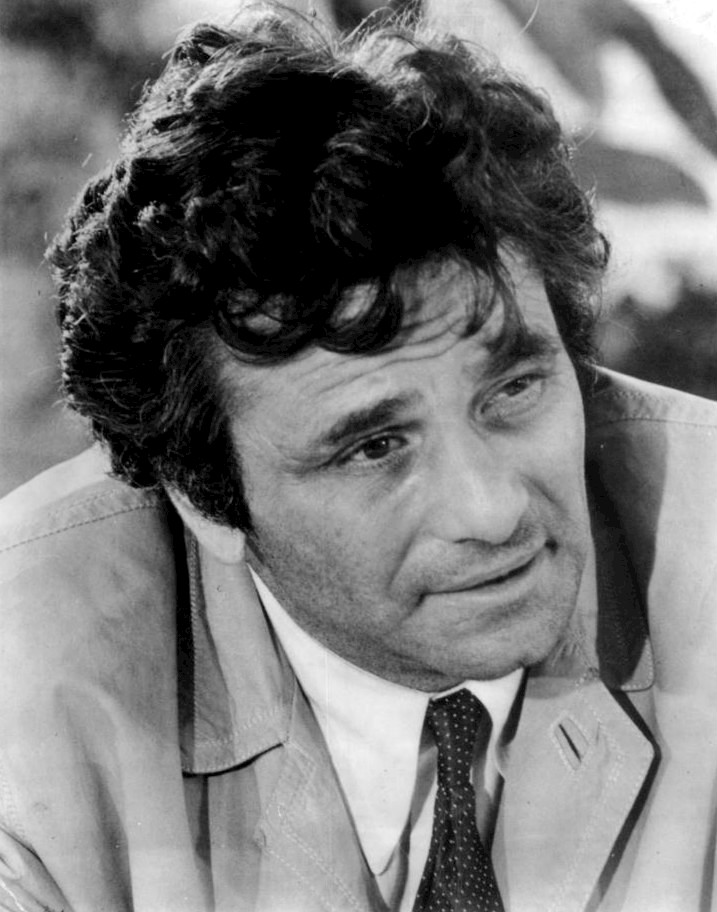
Mystery structure that stars loved; TV acting showcase format.
Why it matters
From the desk
The Howdunit Was the Prestige
Peter Falk's rumpled trap: an inverted mystery that showed you the killer first, then treated guest-star ego as the actual puzzle — television as a closed argument, not a clue hunt.
The opening is a murder you are allowed to watch. That is the thesis, not a twist. Richard Levinson and William Link built Columbo as an inverted detective story: the killer's competence is the first act, Peter Falk's rumple is the second, and the third is a trap made of manners. If you came for a whodunit, the series has already spoiled itself on purpose. The pleasure is structural. How does a man in a raincoat talk a movie star into a mistake. The cut is the polite question that is not polite.
Prescription: Murder, 1968, is the pilot movie — a two-hour audition for a form NBC would later hang a night on. Ransom for a Dead Man follows as another film. Murder by the Book, 1971, is where the weekly machine starts, and the craft footnote is real: a young Steven Spielberg directing a writer-killing-a-writer hour that already understands the show is about professional vanity. Falk's Columbo is not an eccentric for merchandising. He is a method. The cigar, the raincoat, just one more thing: devices in the service of letting a guest villain underestimate the camera.
People treating television like a crime blotter will remember the guest list as gossip. It is gossip. It is also the format. Columbo is a prestige anthology wearing a procedural's badge. The killer is the weekly lead. Falk is the house style. Any Old Port in a Storm is the hour that treats connoisseurship as the tell — a man who cannot help performing taste. A Friend in Deed puts the department itself in the trap. Now You See Him is the disguise-as-ego problem the series was built to solve. I will not recap the murders. The murders are the first ten minutes. The work is the remaining eighty.
What the season is arguing, when it is arguing well: intelligence is a costume; politeness is a weapon; class is a tell; the camera loves the killer until it doesn't. Falk's pauses do more than most prestige antiheroes' monologues. The NBC Mystery Movie years (1971–78) are the canonical run: fewer hours, more air. The ABC revival movies from 1989 through 2003 are the same raincoat in a different lighting plot — sometimes elegant, sometimes a farewell tour that forgot to end. Columbo Likes the Nightlife is the catalog's last night, 2003. It is a finale because the actor stopped, not because the form was exhausted.
Is it dated? The cars are dated. The form is not. Every modern show that tells you who did it and dares you to care anyway owes this catalog a drink. The inverted mystery is supposed to be less suspenseful. In practice it is more: suspense moves from identity to manners. That is adult. It is also why movie stars took the guest slot. They got to play guilty, rich, and undone by a man who looked like he had slept in the car.
Verdict: start at Prescription: Murder if you want the first trap, Murder by the Book if you want the weekly machine, Any Old Port if you want the series at full courtesy. The scandal will outlive the craft — Falk's contract lore, the guest-star ego Olympics. Unfortunately that is also television history. The raincoat remains the more interesting document.
Episode guide
How this series is filed
TV Flash files Columbo (1971–2003) on NBC as the episode guide: 69 listed hours across 20 seasons, 1968-02-20–2003-01-30 from “Prescription: Murder” (S1968E01) to “Columbo Likes the Nightlife” (S2003E01).
Open the episode guide · S1968E01 Prescription: Murder · S2003E01 Columbo Likes the Nightlife
Essential episodes
Five traps — first weekly machine, taste as tell, the department, the disguise, the courtesy hour. Filed by Julian Hart (The Binge Brief).
- S1971E02 Murder by the Book
The weekly machine starts. Writerly vanity as the crime; a young Spielberg already understanding the show is about ego, not clues.
- S1972E03 Étude in Black
Conductor, camera, the arts as a perfect guilty habitat. The series treating culture as a crime scene.
- S1973E06 Any Old Port in a Storm
Connoisseurship as the tell. A killer who cannot stop performing taste — the howdunit at full courtesy.
- S1974E04 A Friend in Deed
The department in the trap. When the house style turns inward, the raincoat stops being a comfort.
- S1976E02 Now You See Him
Disguise as ego problem. The series solving the kind of cleverness it exists to undo.
At a glance
Rumpled Lt. Columbo already knows who did it — the pleasure is watching him circle arrogant killers with one more question. Guest villains play prestige foils in inverted mysteries. Howdunit, not whodunit.
Network & studio
- NBC — broadcast network
Why watch now
For the manners: an inverted mystery that spoils the killer on purpose, then lets Peter Falk talk a guest star to pieces. Prestige anthology in a raincoat — ego as the puzzle, courtesy as the trap.
Cultural impact
Columbo made the inverted detective story a TV showcase format and guest-killer casting an art form. “Just one more thing” entered the culture permanent lexicon.
Creators
Richard Levinson · William Link
Key cast
- Peter Falk as Lt. Columbo
Flash facts
- Crime drama created by Richard Levinson and William Link starring Peter Falk; NBC Mystery Movie run primarily 1971–1978, later ABC revival telefilms into the 2000s.
- Inverted detective format: viewers often see the crime first, then watch Columbo trap the culprit.
- Character inspired in part by literary detectives; Falk’s rumpled raincoat and polite persistence became iconic.
FAQ
Where should I start?
Prescription: Murder for the 1968 trap, then Murder by the Book for the weekly form. If you only have one night, take Any Old Port in a Storm.
Do I watch in order?
Not required. It is an anthology of killers. Continuity is the raincoat. Skip freely; just do not skip the 1970s core if you want the house style at full strength.
Whodunit or howdunit?
Howdunit, on purpose. The series usually shows the murder first. The puzzle is how Columbo closes, not who did it.
Are the later ABC movies worth it?
Some are graceful; some are leftover lighting. Treat them as encore nights, not as a second novel. The 1971–78 run is the argument.
Is the last one a real finale?
Columbo Likes the Nightlife is the catalog's last film, 2003. The form could have continued. The actor did not. That is an honest end.
Official & further reading
External sites for further reading — TV Flash is not affiliated with these networks or studios.
Back to the decade
Also on the dial
More after Columbo
- Related showSCTVSecond City Television — Melonville media satire for comedy nerds who quote deep cuts.
- Related showBuck Rogers in the 25th CenturyDisco-era space hero thawed out for laser fights and Twiki sidekick comedy.
- Related showCHiPsPonch and Jon on freeways of gold — California Highway Patrol as sunshine action.
- Related showLand of the LostSleestak nightmares — Saturday-morning pocket universe with real craft.
- Related showAdam-12One-Adam-12 — black-and-white patrol as Jack Webb moral clarity.
- Related showMcCloudNew Mexico marshal in New York — boots on asphalt fish-out-of-water crime.