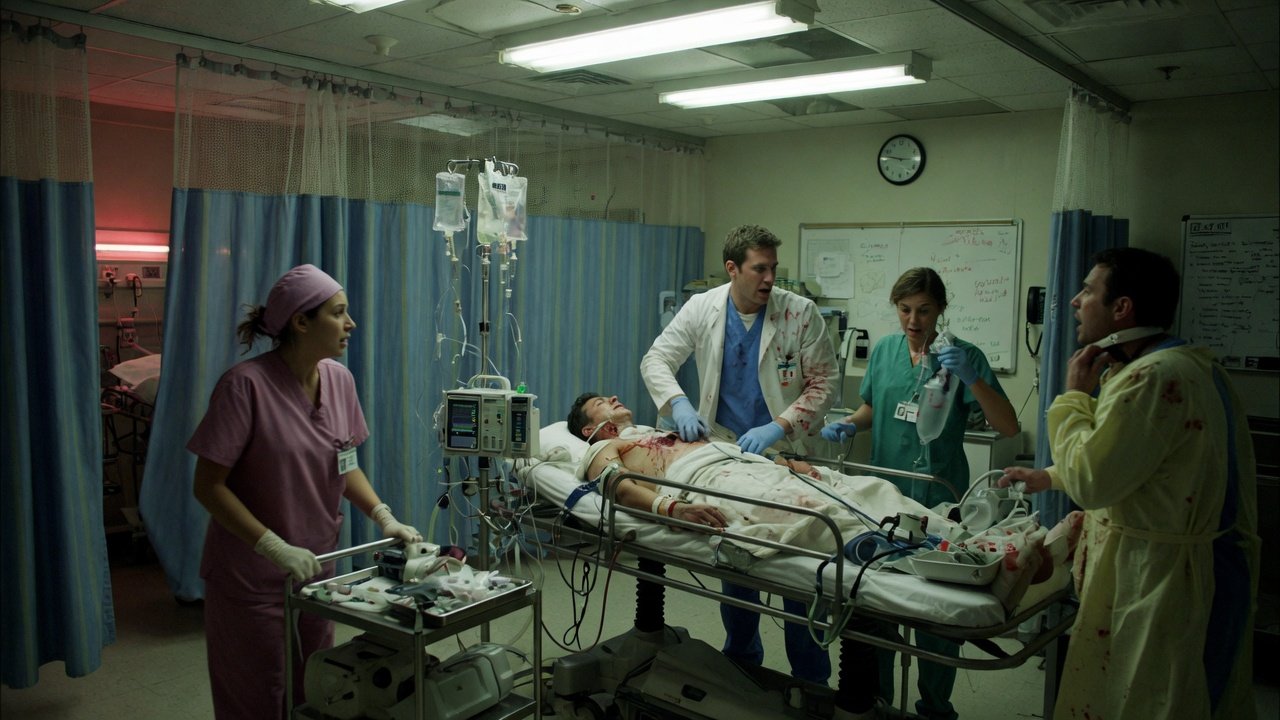
Modern medical drama velocity and star factory.
Why it matters
From the desk
Steadicam as a Moral Instrument
Fifteen seasons of County General: trauma-bay velocity, a star factory that actually cost something, and the hours that still teach medical drama how to move.
The first thing ER does, on September 19, 1994, is refuse to stand still. 24 Hours is not a premiere that introduces characters so much as a thesis about attention: overlapping cases, a camera that behaves like a person who cannot leave, and a county hospital that will still be there when the guest star is a movie. Michael Crichton put a novelist’s procedural brain under Warner Bros. television lights; NBC put it on Thursday. The gossip is Clooney. The text is velocity. If you only remember the exit economics, you missed the argument the Steadicam was making: medicine as simultaneous systems, not a solo close-up.
Love's Labor Lost (season 1) is the hour that proves the camera can devastate without becoming a soap aria. Mark Greene — Anthony Edwards, the show's actual spine — takes a case that will not forgive distraction. Craft as tragedy: the mistake is clinical and therefore moral. Hell and High Water (season 2) is the Clooney hour people mean when they say the show minted a movie star. Watch it as television first. The set piece works because the series already taught you the bay's rules; the water is spectacle, the cost is the point. Ambush (season 4) is a live experiment, a documentary crew inside the chaos — form arguing with itself, network television showing off without quite winking. On the Beach (season 8) is the bill. Greene's last movement is the star factory paying a debt instead of shipping a trailer.
People who treat television like a crime blotter will lead with who left, who got the film career, who lost the contract cycle. That is not nothing. ER ran fifteen seasons because it could replace a face and keep the bay's grammar. Julianna Margulies, Eriq La Salle, Noah Wyle, later arrivals who became weather systems of their own — the churn is industrial. The hours that still teach are the ones where the churn does not erase consequence. A medical drama that only mints celebrities is a factory tour. A medical drama that lets a spine leave and still hurts is an institution.
What the long run is arguing: early seasons (1994–99) invent the modern American medical hour — Hill Street overlapping talk, plus blood, plus a camera that jogs. The middle is the factory at full employment, still capable of a live stunt and a farewell that felt like a public death. The late seasons are the show as a municipal service: new doctors, same county, diminishing returns that are honest rather than cynical. And in the End... (April 2, 2009) is a closer, not a relaunch. It invites people back into the bay and lets the building have the last look. I will not pretend every season after Clooney is required. I will pretend even less that the first five are a movie with commercials.
Rewatch as syllabus. Start at 24 Hours for the contract. If you only have two more, Love's Labor Lost and On the Beach will teach you whether the show was adrenaline or ethics with better lighting. Grey's Anatomy took the soap and the soundtrack. House took the puzzle. The Pitt and every handheld descendant still rent the jog. Verdict: it is worth the binge through the Greene years and selective after; the full fifteen is a city, not a novel. The scandal of who became famous will outlive the cut. That is, unfortunately, also part of this hospital's history. Put the work first anyway.
Episode guide
How this series is filed
TV Flash files ER (1994–2009) on NBC as the episode guide: 331 listed hours across 15 seasons, 1994-09-19–2009-04-02 from “24 Hours” (S01E01) to “And in the End...” (S15E22).
Open the episode guide · S01E01 24 Hours · S15E22 And in the End...
Essential episodes
Trauma-bay syllabus — hours that still teach velocity, cost, and the camera's job. Filed by Julian Hart (The Binge Brief).
- S01E01 24 Hours
The thesis in motion: overlapping cases, no still frame, a hospital that will outlast any one face.
- S01E19 Love's Labor Lost
Craft as tragedy. Greene's worst hour is clinical, therefore moral — the show refusing soap aria.
- S02E07 Hell and High Water
The Clooney set piece that still works as television: spectacle built on rules the bay already taught.
- S04E01 Ambush
Live experiment. A documentary crew inside the chaos — form showing off without quite winking.
- S08E21 On the Beach
The bill. A spine leaves and the factory, for once, does not treat the exit as a trailer.
At a glance
Chicago ER staff run trauma cases at steadicam velocity while personal lives crash in the bay. Cast breakouts become movie stars; the hospital never sleeps. Medical drama as weekly adrenaline.
Network & studio
- NBC — broadcast network
Why watch now
For the handheld contract that still governs medical TV: overlapping trauma, a camera that cannot leave, and a star factory that — in the hours that matter — pays a human bill instead of shipping a trailer. Velocity first; the famous exits are footnotes.
Cultural impact
ER made handheld medical chaos appointment TV and Clooney exit economics industry lore. Contract cycles and cast churn became the show’s off-screen serial.
Creators
Michael Crichton
Key cast
- Anthony Edwards as Dr. Mark Greene
- George Clooney as Dr. Doug Ross
- Eriq La Salle as Dr. Peter Benton
- Julianna Margulies as Nurse Carol Hathaway
- Noah Wyle as John Carter
- Gloria Reuben as Jeanie Boulet
- Laura Innes as Dr. Kerry Weaver
- Maura Tierney as Abby Lockhart
Flash facts
- NBC medical drama (1994–2009) created by Michael Crichton.
- Fast-cut trauma-bay realism and long ensemble run defined 1990s/2000s network drama.
- Helped make George Clooney a global star before his film peak.
- 15 seasons; among the longest-running U.S. primetime medical dramas.
- Executive producers over time included John Wells among key creative leaders.
FAQ
Do I need all fifteen seasons?
No. The first five (1994–99) are the contract and the star-factory peak. Seasons 6–8 still pay debts, including Greene's exit. After that, graze by cast you care about. The 2009 closer works as a building farewell even if you skipped late innings.
Is it a soap or a procedural?
A trauma procedural that learned soap without surrendering velocity. Cases overlap; personal lives crash in the bay. If you want a single puzzle per hour, this is the wrong hospital. If you want systems under pressure, start at the pilot.
Is George Clooney the whole show?
He is the exit everyone remembers. Anthony Edwards's Mark Greene is the spine the series actually breaks. Watch Love's Labor Lost and On the Beach before you decide the movie star was the point.
Where should I start if I already know the memes?
24 Hours (1994) for the camera contract, then Hell and High Water if you need the Clooney set piece, then On the Beach if you need the cost. Ambush is extra credit: a live hour, not a plot dump.
Is the finale a victory lap?
And in the End... (April 2, 2009) is a reunion-tinged closer that lets County General have the last look. It is warmer than the first season's ethics exam. Watch it as a building, not as a twist.
Official & further reading
External sites for further reading — TV Flash is not affiliated with these networks or studios.
Back to the decade
Also on the dial
More after ER
- Related showBlossomHats, fourth-wall bits, and Very Special Episodes — Mayim Bialik’s first era.
- Related showJAGNavy lawyers with jet fuel — procedural that quietly built a franchise navy.
- Related showUnsolved MysteriesRobert Stack’s trench coat and that theme — true crime as living-room séance.
- Related showWingsNantucket airline brothers — Cheers-adjacent comfort with a one-plane airline.
- Related showNewsRadioWNYX workplace farce — Phil Hartman perfection in a radio station madhouse.
- Related show3rd Rock from the SunAliens in human suits discover emotions, bureaucracy, and Jane Curtin.