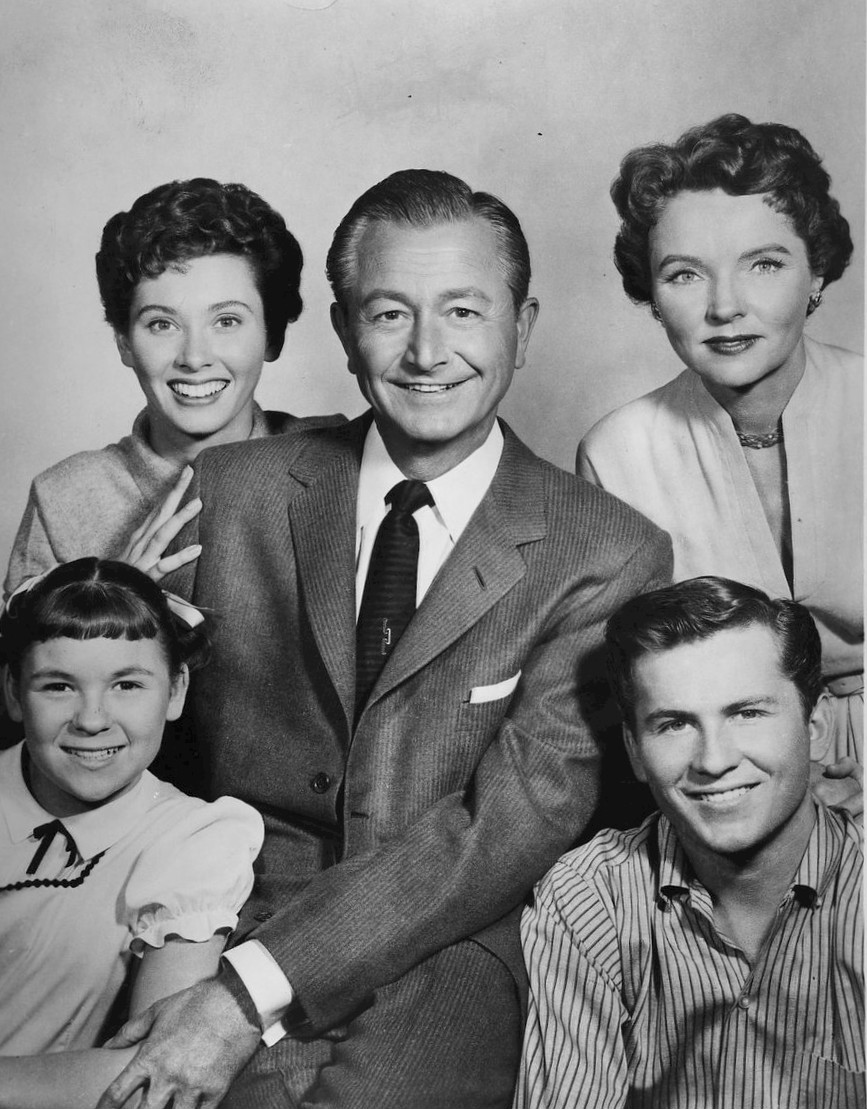
Codified domestic sitcom hierarchy — and gave later satire a perfect target.
Why it matters
From the desk
The Polished Speech Later Satire Had to Answer
Robert Young’s Springfield as destiny: a patriarch sitcom that sold middle-class calm on two networks, then became the target every later family comedy needed.
October 1954: a boy takes up dancing, a father prepares the correct attitude, and television files a claim on the American living room that later writers would spend careers contesting. Father Knows Best had already lived on radio. The TV version is the polished object — Robert Young as Jim Anderson, a Springfield that looks like a furniture catalog, three children as case studies in how to grow up without scuffing the brand. The title is the argument. Not a question. A verdict. Max’s era will sell you messy families as authenticity. Cute. This was authenticity’s predecessor: calm as production design.
On the palate: pipe smoke, good shoes, and a three-act that ends in counsel. Margaret keeps the house running so the speeches have a stage. Betty is the show’s most interesting pressure point — college, work, the idea that a daughter might want a life the title did not budget for. Bud is boyhood as sitcom labor. Kathy is the cute remainder. The historical claim the room forgets: you cannot understand the later wrecking balls (the loud living rooms, the working moms, the fathers who do not know best) unless you have sat through the original polish. Satire needs a target that actually landed. This one landed like mahogany.
What a network night looked like around this household:
1. Radio-to-TV respectability — a property safe enough to move between CBS and NBC like a trusted brand of coffee.
2. Sponsor-friendly domestic order as a civic product, not just a joke engine.
3. A daughter’s graduation as a series button, which is how you close a myth: the child leaves, the title remains.
Watch it as craft, not as a scolding. Lesson in Citizenship is the civic handbook hour, useful as anthropology. Betty, Girl Engineer is the show brushing against a future it is not ready to move into — and that brush is more revealing than any later parody of pearls. Betty’s career problem, late in the run, is the title negotiating with the 1960s a minute before the 1960s arrive. The graduation closer is tidy on purpose. Tidy was the point. If you only know this series as a punchline, you have seen the poster, not the blocking. The blocking is competent, warm, and occasionally more anxious than the speeches admit.
Old-Hollywood dirt is fair game in measured pours. Young’s private weather did not always match the pipe-and-counsel brand, which is the oldest star math there is: the father who knows best is an actor with a call time. No cruelty. Just the deflating detail that keeps ancestor worship from curdling. Patterns are old. Sell a household as destiny. Bury the hours that do not fit the furniture. Hype the warmth. The warmth is real enough to photograph. The destiny was a network note.
A toast to Springfield, which never had to survive a real argument about money, and to the daughter the scripts kept almost letting grow a career. Start with the dance lesson. Stay for the engineer hour. Leave at graduation, when the title gets the last word and the culture starts taking it back. Linear television made this calm a weekly appointment. The argument about whether father knew best did not end in 1960. It just changed timeslots.
Episode guide
How this series is filed
TV Flash files Father Knows Best (1954–1960) on CBS/NBC as the episode guide: 203 listed hours across 6 seasons, 1954-10-03–1960-05-23 from “Bud Takes Up the Dance” (S01E01) to “Betty's Graduation” (S06E32).
Open the episode guide · S01E01 Bud Takes Up the Dance · S06E32 Betty's Graduation
Essential episodes
Handbook tone, the daughter’s pressure points, and a graduation handshake. Filed by Rex Fontaine (Golden Age Dispatch).
- S01E01 Bud Takes Up the Dance
Boyhood versus the correct attitude — the title already working in the first dance lesson.
- S01E02 Lesson in Citizenship
Civic-handbook hour: Springfield as a broadcast idea of citizenship.
- S02E30 Betty, Girl Engineer
The daughter brushes a future the title did not budget for — more revealing than later parody.
- S06E29 Betty's Career Problem
Late-run negotiation with a career the 1960s are about to demand.
- S06E32 Betty's Graduation
A tidy closer: the child leaves, the patriarch brand remains.
At a glance
Jim Anderson’s household runs on polished patriarchal calm as Betty, Bud, and Kathy learn mid-century middle-class lessons. Domestic problems resolve with warmth and tidy speeches. It’s the sitcom hierarchy codified as comfort.
Network & studio
Why watch now
Mahogany calm as a weekly product: Young’s counsel, a daughter the scripts almost let have a career, a title that is a verdict. Watch the polish later satire needed as a target — then notice the anxious edges the speeches only partly mop up.
Cultural impact
Father Knows Best helped sell middle-class calm as destiny on network TV. Generations of family comedy either imitated its polish or spent airtime dismantling it.
Creators
Ed James
Key cast
- Robert Young as Jim Anderson
- Jane Wyatt as Margaret Anderson
- Elinor Donahue as Betty Anderson
- Billy Gray as Bud Anderson
- Lauren Chapin as Kathy Anderson
Flash facts
- Family sitcom starring Robert Young; began on radio (1949) and aired on TV 1954–1960 across NBC and CBS (6 seasons, 203 episodes).
- Produced by Rodney-Young Productions and Screen Gems.
- Centered on the Anderson family of Springfield and mid-century domestic ideals.
FAQ
Where should I start?
Start with the 1954 opener, then Lesson in Citizenship. Those two teach the civic-handbook tone. Jump to a Betty-forward hour if you want the polish to crack.
What can I skip?
Skip treating two hundred hours as a dare. Mid-run weeks are the brand repeating itself, which is useful once and wallpaper after. Sample by the daughter’s pressure points.
Is the finale worth it?
Yes, as a tidy button. Betty’s graduation is how a patriarch sitcom closes: the child leaves, the title remains. Not a twist. A handshake.
Do I need the radio show?
No. Radio is origin context. The television Springfield is the polished object later satire actually answers.
Is it only a target for parody?
It became one because it landed. Watch the blocking before you ironize it — competent warmth, anxious edges, a title that is a verdict rather than a question.
Cultural eras
Official & further reading
External sites for further reading — TV Flash is not affiliated with these networks or studios.
Back to the decade
Also on the dial
More after Father Knows Best
- Related showMeet the PressThe longest-running show in television history — Sunday panel combat as civic ritual.
- Related showThe Ernie Kovacs ShowVisual gags, blackouts, and Nairobi Trio — the medium inventing itself for laughs.
- Related showM SquadLee Marvin's hard cop in a hard Chicago — noir procedural with a jazz bite.
- Related showKukla, Fran and OllieAd-lib puppets and Fran Allison — gentle absurdity that adults watched without irony.
- Related showSky KingArizona rancher with a Cessna — aviation adventure for kids who wanted wings.
- Related showBat MastersonDerby hat, gold-tipped cane — Gene Barry's dandy lawman who fought with style.