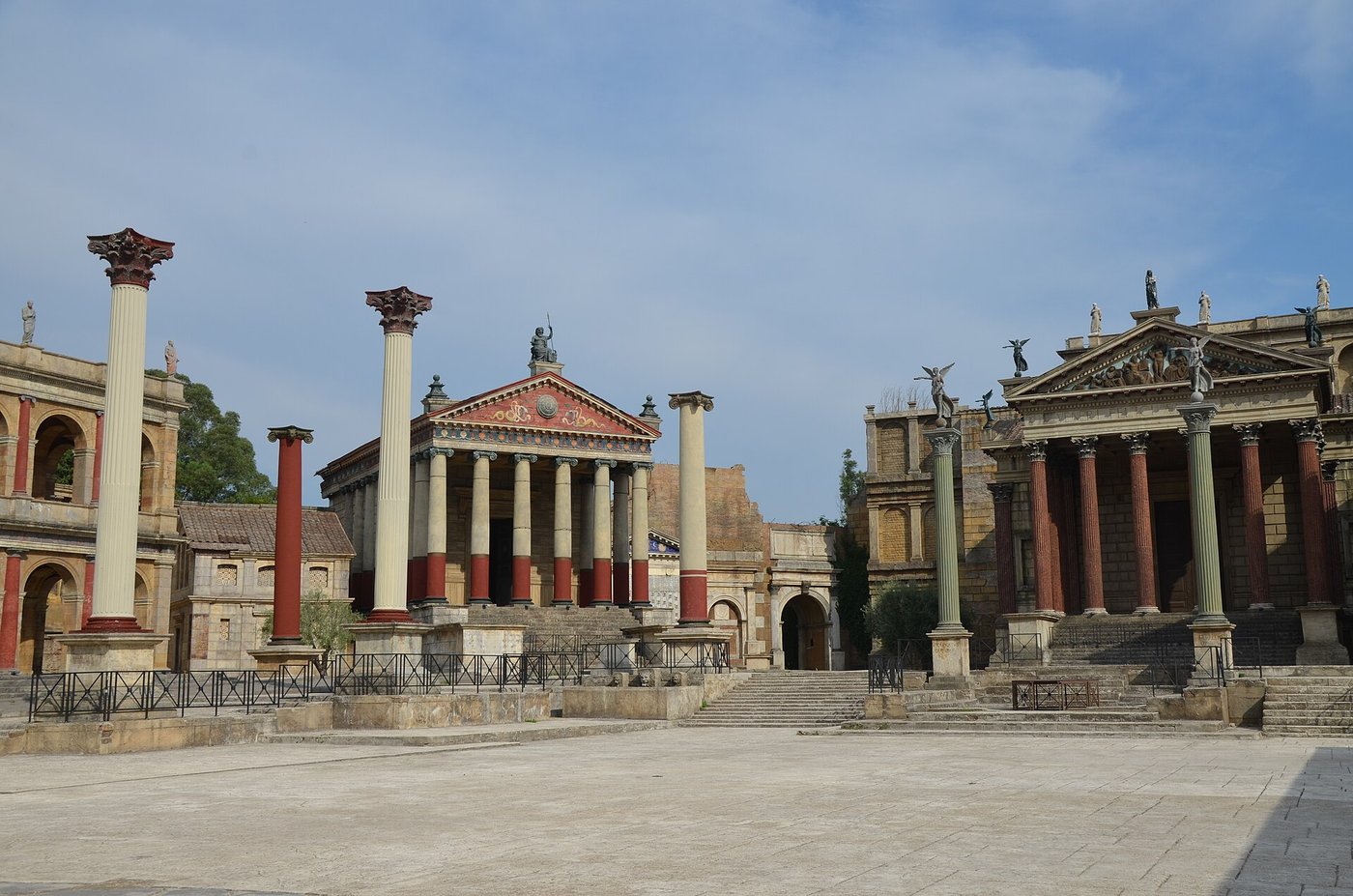
Set a production bar for historical TV before dragons ruled Sundays.
Why it matters
From the desk
Why Rome still plays
Two soldiers, Vorenus and Pullo, watching the Republic fall from the street, and the group chat still doing "what if more seasons" like it's a ship war. (I said spoiler-free. The cancellation is the spoiler.) Bruno Heller, John Milius, and William J. MacDonald's HBO/BBC co-production premiered in 2005 and lasted two seasons through 2007 despite major production scale — twenty-two episodes, mud and marble, blood and backroom empire. Kevin McKidd and Ray Stevenson lead a street-level view of epochal events beside Polly Walker's Atia, Ciarán Hinds's Caesar, James Purefoy's Antony, and Tobias Menzies's Brutus. Sex, daily labor, elite chess. Only two seasons, lavish enough to become a warning about prestige budgets. Grit-first historical drama with Shakespearean shadows.
*The Stolen Eagle* opens from the dirt, not the statue. *How Titus Pullo Brought Down the Republic* is the joke-title hour: street-level farce beside epochal politics, Heller's thesis in one credit line. *Kalends of February* is the season-one closer named like a Roman diary entry, Republic weather breaking. *Passover* reopens year two on a sacred-calendar title, Caesar's world rewritten, the soldiers still the camera's witnesses. *De Patre Vostro (About Your Father)* closes the too-short run with a Latin bow. Not a Caesar biopic. Famous events of the late Republic seen through labor and loyalty. Accuracy is in the dirt, not a textbook recitation.
Expensive cancellation and endless what-if talk are the fandom's forever thread — cost-versus-ambition lore as a discourse genre. The gown people will talk production design like it's the whole lookbook. The replies want more seasons that do not exist. Vorenus and Pullo remain a model for ground-level eyes on history. It set a visual and tonal bar for later ancient epics before dragons ruled Sundays. This is the complete surviving series: lavish, adult, unfinished in the way HBO budgets now get mythologized.
Watch both seasons. Do not wait for a complete epic that isn't coming — high production costs and network decisions cut short a planned longer canvas, and that cut is now part of the lore. History lesson and soap in the same mud. See you in the tags arguing the knife. (The soldiers were the show.) I need a rewatch and a better map of the Forum.
Episode guide
How this series is filed
TV Flash files Rome (2005–2007) on HBO/BBC as the episode guide: 22 listed hours across 2 seasons, 2005-08-28–2007-03-25 from “The Stolen Eagle” (S01E01) to “De Patre Vostro (About Your Father)” (S02E10).
Open the episode guide · S01E01 The Stolen Eagle · S02E10 De Patre Vostro (About Your Father)
Essential episodes
Five tactile-history hours: Vorenus, Pullo, and the Republic falling at street level. Filed by Tessa Quinn (Spoiler-Free (Mostly)).
- S01E01 The Stolen Eagle
The Stolen Eagle opens Bruno Heller's HBO/BBC mud-and-politics epic: two soldiers witnessing epochal events from the street, not the marble.
- S02E10 De Patre Vostro (About Your Father)
De Patre Vostro (About Your Father) closes the too-short run — ancient history as tactile craft, the co-production taking a Latin bow.
- S02E01 Passover
Passover reopens year two on a sacred-calendar title: Caesar's world rewritten, Vorenus and Pullo still the camera's street-level witnesses.
- S01E12 Kalends of February
Kalends of February is the season-one closer named like a Roman diary entry — Republic weather breaking, prestige history as appointment TV.
- S01E02 How Titus Pullo Brought Down the Republic
How Titus Pullo Brought Down the Republic is the joke-title hour: street-level farce beside epochal politics, Heller's thesis in one credit line.
At a glance
Two soldiers, Lucius Vorenus and Titus Pullo, witness the fall of the Republic as Caesar, Antony, and Octavian rewrite the world. Bruno Heller's HBO/BBC co-production made ancient history tactile: mud, politics, sex, and street-level views of epochal events. Ciarán Hinds, Kevin McKidd, Ray Stevenson, and Polly Walker power a cast that treats empire as daily labor and elite chess at once. Only two seasons, lavish enough to look like a warning about prestige budgets. It is grit-first historical drama with Shakespearean shadows.
Network & studio
Why watch now
Two soldiers, Vorenus and Pullo, witness the fall of the Republic as Caesar, Antony, and Octavian rewrite the world. Bruno Heller's HBO/BBC co-production made ancient history tactile: mud, politics, street-level views of epochal events. Only two seasons, lavish enough to become a warning about prestige budgets.
Cultural impact
Rome set a visual and tonal benchmark for later ancient epics on prestige TV. Its early cancellation became part of HBO cost-vs-ambition lore. Vorenus and Pullo remain a model for "ground-level eyes on history."
Creators
Bruno Heller · John Milius · William J. MacDonald
Key cast
- Kevin McKidd as Lucius Vorenus
- Ray Stevenson as Titus Pullo
- Polly Walker as Atia of the Julii
- Ciaran Hinds as Julius Caesar
- James Purefoy as Mark Antony
- Tobias Menzies as Marcus Junius Brutus
Flash facts
- Created by Bruno Heller, John Milius, and William J. MacDonald; HBO/BBC premiere 2005.
- Two seasons (2005–2007) despite major production scale.
- Follows historical events of late Republican Rome through soldiers Vorenus and Pullo.
- Known for expensive production design and adult historical dramatization.
- Influenced later prestige historical series' street-level approach to famous events.
FAQ
How much Rome is there?
Two seasons (2005–2007). High production costs and network decisions cut short a planned longer historical canvas.
Is it a Caesar biopic?
Famous events of the late Republic are seen through soldiers Vorenus and Pullo — street-level labor and elite chess, not marble-statue homework.
Should I wait for a complete epic?
This is the complete surviving series: lavish, adult, unfinished in the way HBO cost-versus-ambition lore now describes. The two seasons still set a texture bar.
History lesson or soap?
Grit-first historical drama: mud, politics, sex, Shakespearean shadows. Accuracy is in the dirt, not a textbook recitation.
Official & further reading
External sites for further reading — TV Flash is not affiliated with these networks or studios.
Back to the decade
Also on the dial
More after Rome
- Related showThe Thick of ItPolitical spin as verbal artillery — Malcolm Tucker invents new swearing.
- Related showExtrasGervais does Hollywood bit players and celebrity cameo cruelty.
- Related showPlanet EarthHD nature spectacle that made Earth look like an alien planet.
- Related showDoctor Who (2005 revival)The TARDIS returns — timey-wimey as global soft power.
- Related showThe Office (U.K.)David Brent invents the modern mockumentary cringe bible.
- Related showJohn AdamsFounding Father prestige with Giamatti grit and period dust.