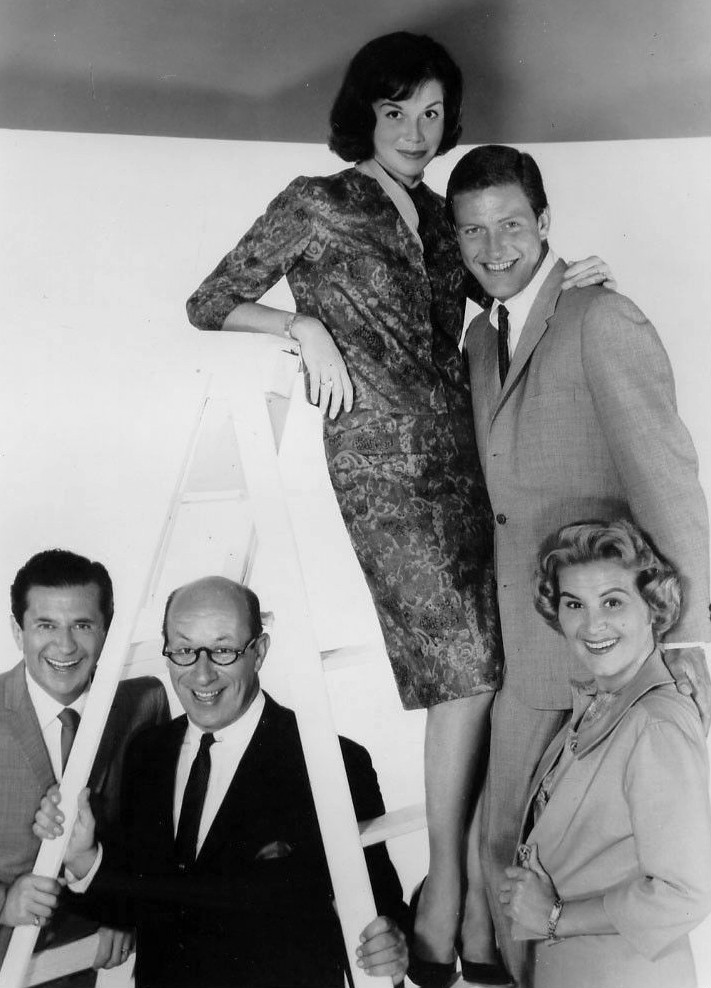
Modern workplace/home hybrid sitcom DNA starts in that New Rochelle living room.
Why it matters
From the desk
The Ottoman Was the Thesis
Five seasons of workplace/home hybrid comedy in a New Rochelle living room — writers-room farce, capri pants as a scandal, and timing so clean it still humiliates prestige multi-cams.
In medias res, 1961, CBS: a comedy writer trips over an ottoman and a nation decides that is character. The Dick Van Dyke Show does not invent the sitcom. It invents the commute between the joke factory and the marriage, which is the modern hybrid every workplace comedy still pretends it discovered last year. Rob Petrie writes for The Alan Brady Show; Laura Petrie keeps New Rochelle from becoming a punchline; Buddy and Sally keep the room alive. Carl Reiner built a roman à clef out of Sid Caesar's shop and then had the nerve to play the tyrant with the hairpiece. On the palate: cigarette haze in the writers'-room lore, perfect three-act farce, and a living room that could host a dance break without asking permission.
Mary Tyler Moore's capri pants were not a footnote. They were a dress-code argument that Standards & Practices had to lose. A pretty wife in trousers, a dancer's line, a voice that could puncture Rob's vanity without becoming the nag template — that is industry gender politics smuggled under a laugh track, and it still reads. Dick Van Dyke's physical comedy is Olympic sport with better posture. Rose Marie and Morey Amsterdam are vaudeville as a standing army. Reiner's Alan Brady, face finally unobscured as the seasons go, is the boss as weather system. Guest-star mythology, neighbor Jerry as dentist-confidant, Millie as the second kitchen: this is ensemble architecture, not a star vehicle that tolerated a bench.
What the network night looked like: rural sitcoms blooming, westerns still thundering, and this show proving the city-suburb commute could be appointment comedy. Three habits that would trend today: a recap of the marriage told in flashback without becoming a clip-show surrender; a dream/sci-fi hour (the walnut one) that lets a multi-cam steal anthology clothes; a finale that is a memoir, not a stunt. Max's drop culture would call five seasons a limited series and bury the craft in a tile. Linear television let it breathe until the company chose an ending. That choice is the historical claim the room forgets: you can stop while the timing is still dangerous.
The hours that still teach are craft classes with better lighting. That's My Boy?? is a flashback that weaponizes a running joke about who the baby looks like — race-era sitcom nerve that modern desks still cite. Coast to Coast Big Mouth is Laura versus a secret, Mary Tyler Moore turning nationwide television into a farce engine. It May Look Like a Walnut! is the show admitting it can do nightmare comedy without leaving New Rochelle. October Eve is the portrait scandal as marriage text. Where Did I Come From? is origin-story farce that treats parenthood as timing, not treacle. You do not need all 158. You need to watch the blocking.
The Last Chapter closes as a memoir inside the memoir: Rob finishes a book, the series finishes a five-year sentence it had already won. No stadium, no "who shot" gimmick. A curtain that knows the form is undefeated. That is adult. Streaming will sell you a vending machine with a PR department and eight more seasons of the same ottoman. This shop said goodnight in 1966 and left the dance break in the rerun forever.
Raise a glass to the writers' room that let the wife be funny, to the star who could fall down on purpose, and to the boss who was also the creator hiding in a toupee. Glory's deflating detail: the show is about writing television, which means it is about vanity, panic, and the check. The ottoman was never an accident. It was the thesis, weekly, in a living room that only had three choices and still chose grace.
Episode guide
How this series is filed
TV Flash files The Dick Van Dyke Show (1961–1966) on CBS as the episode guide: 158 listed hours across 5 seasons, 1961-10-03–1966-06-01 from “The Sick Boy and the Sitter” (S01E01) to “The Last Chapter” (S05E32).
Open the episode guide · S01E01 The Sick Boy and the Sitter · S05E32 The Last Chapter
Essential episodes
Five hours of commute comedy — office, living room, and the ottoman as thesis. Filed by Rex Fontaine (Golden Age Dispatch).
- S01E15 Where Did I Come From?
Origin-story farce that treats parenthood as timing, not treacle — the marriage as a closed comic system.
- S02E20 It May Look Like a Walnut!
Nightmare comedy without leaving New Rochelle. A multi-cam stealing anthology clothes and keeping the laugh.
- S03E01 That's My Boy??
Flashback as nerve: a running joke about the baby that still gets cited when sitcoms try to grow up.
- S03E28 October Eve
The portrait scandal as marriage text — vanity, art, and a living room that can host both.
- S05E01 Coast to Coast Big Mouth
Laura versus a secret on national television. Moore turning a talk-show farce into a season engine.
At a glance
Comedy writer Rob Petrie juggles a New Rochelle home life with Laura and a writers’ room full of ego and timing. Office farce and domestic dance breaks share the same perfect comic engine. Meta sitcom DNA starts in that living room.
Network & studio
- CBS — broadcast network
Why watch now
Watch the blocking and the writers' room: a New Rochelle living room that invented the workplace/home sitcom commute. Capri pants, ottoman trips, and timing so clean it still humiliates prestige multi-cams that think they discovered the hybrid last year.
Cultural impact
Carl Reiner’s series rewired sitcom structure for the modern era and launched Mary Tyler Moore into industry history. Every writers’-room sitcom owes rent.
Creators
Carl Reiner
Key cast
- Dick Van Dyke as Rob Petrie
- Mary Tyler Moore as Laura Petrie
- Rose Marie as Sally Rogers
- Morey Amsterdam as Buddy Sorrell
- Carl Reiner as Alan Brady
Flash facts
- CBS workplace/family sitcom created by Carl Reiner; aired 1961–1966 (5 seasons, 158 episodes).
- Dick Van Dyke plays comedy writer Rob Petrie; Mary Tyler Moore’s Laura Petrie became a breakout role.
- Partly inspired by Reiner’s experience writing for Your Show of Shows / Sid Caesar.
FAQ
Do I need to watch The Dick Van Dyke Show in order?
Mostly hop-friendly. Recurring marriage and office threads reward sequence, but the hours are self-contained farces. A handful of famous episodes will teach the music; the rest is pleasure, not homework.
Is it a workplace comedy or a domestic sitcom?
Both, on purpose. The writers' room and the New Rochelle living room share the week. That commute is the template later hybrids keep rediscovering.
Why do people mention Laura's pants?
Mary Tyler Moore's capri pants were a dress-code fight with the era's idea of a TV wife. The silhouette is craft and politics. Watch the line, not only the joke.
Is the finale worth it?
“The Last Chapter” is a memoir curtain, not a stunt. If you have lived with the Petries for even a dozen hours, the bookend pays. If you only sampled, it still plays as a graceful stop.
Five seasons — is that the complete show?
Yes. 1961–1966, then a chosen ending. No revival required. The rerun is the afterlife.
Cultural eras
Official & further reading
External sites for further reading — TV Flash is not affiliated with these networks or studios.
Back to the decade
Also on the dial
More after The Dick Van Dyke Show
- Related showDennis the MenaceGood ol' Mr. Wilson! — comic-strip kid chaos in midcentury suburbia.
- Related showMister EdA horse is a horse, of course — talking-animal sitcom that shouldn't work and did.
- Related showMy Favorite MartianUncle Martin the antennaed alien — sci-fi sitcom before Trek made space serious.
- Related showRoute 66Two guys, a Corvette, and America as open-road anthology.
- Related showScooby-Doo, Where Are You!Meddling kids, a cowardly Great Dane, and monsters who are always Mr. Whoever.
- Related showPetticoat JunctionShady Rest Hotel, three daughters, and the Cannonball train — rural comedy's cozy hub.