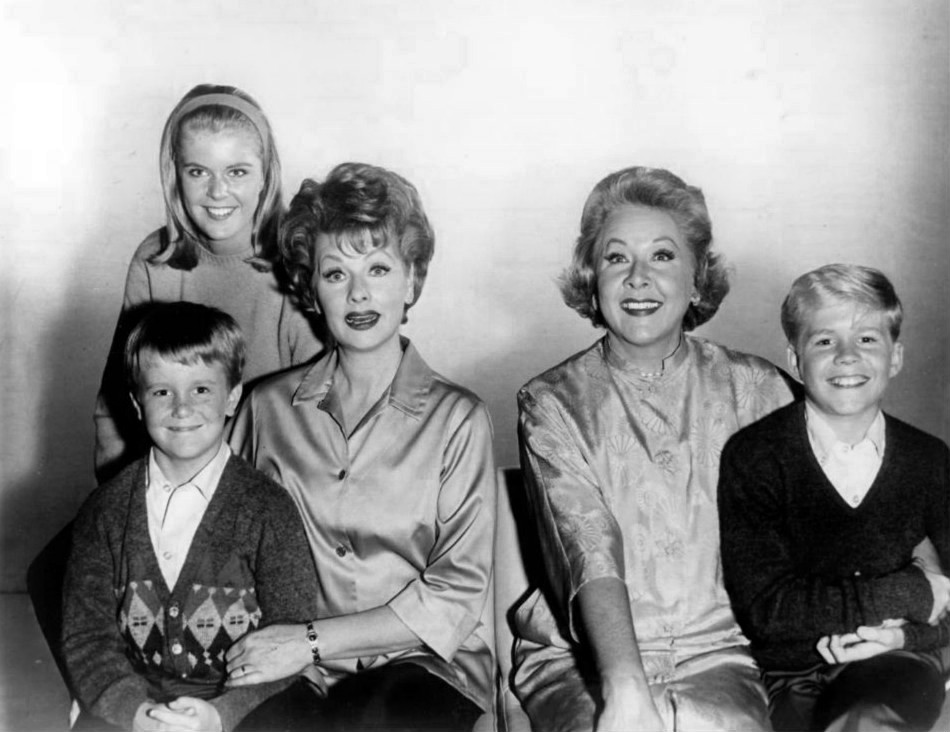
Proved Ball's stardom outlived I Love Lucy's marriage brand.
Why it matters
From the desk
Why The Lucy Show still plays
The body is still the instrument. After *I Love Lucy*, Lucille Ball returned on CBS (1962–1968) as widow Lucy Carmichael — later Lucy Carter — and kept a physical-comedy empire running without Desi as co-star. Six seasons. Vivian Vance co-starred in the early years before departing the regular cast. Gale Gordon's volcanic Mr. Mooney became the key foil. Bank hijinks, celebrity cameos, still-Olympic slapstick. The star brand outlived the original marriage premise. That is the craft argument, not the reunion lore.
It was less cultural earthquake than professional victory lap — and still funnier than most of its competition. Gordon's slow-burn fury became a second language of Lucy lore. Mary Jane Croft held a corner of the frame. The series led into *Here's Lucy* (1968–1974). The redhead didn't need a reintroduction; she needed a time slot. The blotter will want the Desi absence as a crime scene. The hours file it as a new sitcom framework: widow, work, money, mayhem.
*Lucy Waits Up for Chris* reopens the redhead: widow sitcom, Vance across the hall. *Lucy Drives a Dump Truck* is physical craft as title — Olympic slapstick still the assignment, not nostalgia for the 1950s apartment. Season two opens as a costume dare (*Lucy Plays Cleopatra*), Ball's body comedy treating history as a prop closet. *Lucy and George Burns* is guest-star wattage against Mooney, the bank years fully formed. *Lucy and The Boss of the Year Award* closes six seasons of hijinks.
Permission: more Lucy without living forever in the 1950s apartment. Multi-camera physical-comedy dominance continued because Ball's instrument did not retire with the first marriage brand. Desilu-era production power extended into the 1960s sitcom market. The people who want only the leak miss the dump-truck hour, which is the text.
Watch it as Ball's post-*Lucy* laboratory. You do not need all 156. Sample the widow contract, one slapstick title, one Mooney-era guest hour. Verdict: elite physical comedy with Vance and then Gordon as foils, a durable comic star confirmed beyond the first series, and an honest catalog stop before *Here's Lucy* continued the run. Six seasons of the redhead's 1960s time slot. The apartment changed. The timing did not.
Episode guide
How this series is filed
TV Flash files The Lucy Show (1962–1968) on CBS as the episode guide: 156 listed hours across 6 seasons, 1962-10-01–1968-03-11 from “Lucy Waits Up for Chris” (S01E01) to “Lucy and The Boss of the Year Award” (S06E24).
Open the episode guide · S01E01 Lucy Waits Up for Chris · S06E24 Lucy and The Boss of the Year Award
Essential episodes
Widow Lucy, Vance, then Mooney — six seasons of bank hijinks and still-Olympic slapstick. Filed by Julian Hart (The Binge Brief).
- S01E01 Lucy Waits Up for Chris
Lucy Waits Up for Chris reopens the redhead after I Love Lucy: widow sitcom, Vance across the hall, stardom outliving the marriage brand.
- S01E24 Lucy Drives a Dump Truck
Lucy Drives a Dump Truck is physical craft as title: Olympic slapstick still the assignment, not nostalgia for the 1950s apartment.
- S02E01 Lucy Plays Cleopatra
Lucy Plays Cleopatra — season-two opener as costume dare, Ball's body comedy treating history as a prop closet.
- S05E01 Lucy and George Burns
Lucy and George Burns: guest-star wattage against Gale Gordon's volcanic Mr. Mooney, the bank years fully formed.
- S06E24 Lucy and The Boss of the Year Award
Lucy and The Boss of the Year Award closes six seasons of hijinks — more Lucy without living forever in the 1950s apartment.
At a glance
After I Love Lucy, Lucille Ball returned as widow Lucy Carmichael (later Lucy Carter) opposite Vivian Vance and then Gale Gordon's volcanic Mr. Mooney. The Lucy Show (CBS, 1962–1968) kept Ball's physical comedy empire running without Desi as co-star, proving the star brand outlived the original marriage premise. Bank hijinks, celebrity cameos, and Ball's still-Olympic slapstick filled six seasons. It was less cultural earthquake than professional victory lap — and still funnier than most of its competition. The redhead didn't need a reintroduction; she needed a time slot.
Network & studio
- CBS — broadcast network
Why watch now
After I Love Lucy, Lucille Ball returned as a widow opposite Vivian Vance and then Gale Gordon's volcanic Mr. Mooney. Six seasons of bank hijinks and still-Olympic slapstick proved the redhead's stardom outlived the marriage brand. More Lucy without living forever in the 1950s apartment.
Cultural impact
The Lucy Show confirmed Lucille Ball as television's most durable comic star beyond I Love Lucy. It extended Desilu-era production power into the 1960s sitcom market. Gale Gordon's slow-burn fury became a second-language of Lucy lore.
Creators
Lucille Ball
Key cast
- Lucille Ball as Lucy Carmichael / Lucy Carter
- Vivian Vance as Vivian Bagley
- Gale Gordon as Theodore J. Mooney
- Mary Jane Croft as Mary Jane Lewis
Flash facts
- CBS sitcom starring Lucille Ball; aired 1962–1968 (6 seasons).
- Vivian Vance co-starred in early seasons; Gale Gordon became the key foil as Mr. Mooney.
- Ball played a widow navigating work, money, and mayhem in a new sitcom framework.
- Continued Ball's multi-camera physical-comedy dominance after I Love Lucy.
- Led into Ball's later series Here's Lucy (1968–1974).
FAQ
Is this the same as I Love Lucy?
No. It is Ball's 1960s follow-up with a widow premise, Vance in the early years, and Gordon's Mr. Mooney as the later foil. Same slapstick engine, new household.
Where should I start?
Early Vance-era episodes if you want the old partnership in a new frame; Mooney-era bank chaos if you want Gordon's authority-figure slow burn. Either on-ramp is real Lucy.
Do I need all six seasons?
No. Multi-camera physical comedy, weekly. Sample both supporting setups if you care about the cast change; otherwise a handful of set pieces is the laboratory.
Is it worth it if I already know the 1950s series?
Yes, if you want more Ball without living forever in the original apartment. Empire 2.0, not a remake.
Official & further reading
External sites for further reading — TV Flash is not affiliated with these networks or studios.
Back to the decade
Also on the dial
More after The Lucy Show
- Related showDennis the MenaceGood ol' Mr. Wilson! — comic-strip kid chaos in midcentury suburbia.
- Related showMister EdA horse is a horse, of course — talking-animal sitcom that shouldn't work and did.
- Related showMy Favorite MartianUncle Martin the antennaed alien — sci-fi sitcom before Trek made space serious.
- Related showRoute 66Two guys, a Corvette, and America as open-road anthology.
- Related showScooby-Doo, Where Are You!Meddling kids, a cowardly Great Dane, and monsters who are always Mr. Whoever.
- Related showPetticoat JunctionShady Rest Hotel, three daughters, and the Cannonball train — rural comedy's cozy hub.