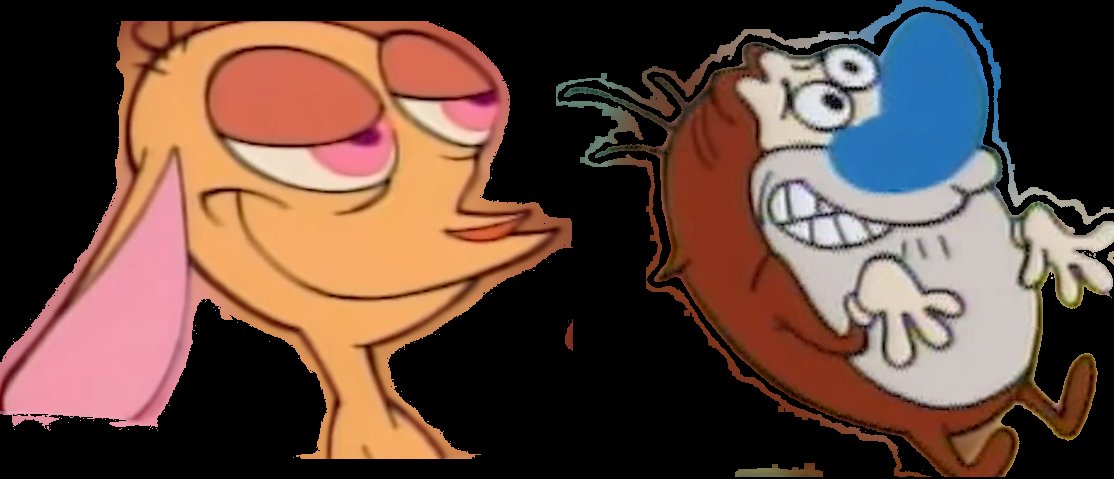
The Ren & Stimpy Show
Gross-out expressionism for kids — Nicktoons’ deranged art film.
Gross-out expressionism for kids — Nicktoons’ deranged art film.
Expanded what kids’ animation could look and feel like; influenced a generation of cartoonists.
Why it matters
From the desk
Nickelodeon, 1991–1996: a psychotic Chihuahua and a dimwitted cat endure disgusting, painterly misadventures — close-ups of gums, gravy, and nervous breakdowns in a kids' timeslot. John Kricfalusi created one of the original three Nicktoons (with *Rugrats* and *Doug*) and married beautiful animation to chaos and bodily fluids. Kricfalusi voiced early Ren; Billy West voiced Stimpy and later Ren. Harris Peet in the various file. Gross-out as high art collided with Nickelodeon's brand until the network flinched. Famous production turmoil and a creator departure mid-run are not side notes. They are the production history. Linear kids' night still knew how to flinch.
Max's world will file this as a banned SKU with a cult window. Cute. **Creator firings and "banned" episodes are an old pattern** — Standards, a brand that wants the heat and not the mess, a network that blinks. *The Ren & Stimpy Show* expanded what kids' animation could look and feel like and influenced a generation of cartoonists. Banned-episode lore, the gross-out arms race, an aesthetic still visible across later adult and kids' animation. The vending machine did not invent the warning label. The timeslot did. Ugly treated as beautiful on purpose.
What that Nick night actually looked like: expressionism in a kids' hour. s01e01 Stimpy's Big Day, gums and gravy colliding with the brand. s02e01 In the Army, deranged close-ups as house style, Nickelodeon already flinching on schedule. s02e04 Man's Best Friend, the banned hour: history as a warning label, ugly still beautiful on purpose. s04e01 Hermit Ren, post-flinch era craft, nervous breakdowns still the actual cartoon. s05e19 The Last Temptation, closer as a last grotesque — the Nicktoon that taught a generation of cartoonists to stay ugly. Ninety-three episodes, five seasons.
On the palate: painterly slime and perfect hurt pacing. A Chihuahua's scream as a legitimate punchline. Comfort is not the point. The remote stayed because the drawing hurt. Max can keep the drop. The flinch was the culture.
A toast, then a deflating detail: the network wanted a Nicktoon and got an art film that would not behave. The creator left mid-run. The aesthetic stayed. That is television history, not a platform parable — and the gums, to their credit, never apologized.
Episode guide
TV Flash files The Ren & Stimpy Show (1991–1996) on Nickelodeon as the episode guide: 93 listed hours across 5 seasons, 1991-08-11–1996-10-20 from “Stimpy's Big Day” (S01E01) to “The Last Temptation” (S05E19).
Open the episode guide · S01E01 Stimpy's Big Day · S05E19 The Last Temptation
Gross-out as high art — the Nicktoon hours that still teach ugly as a style guide. Filed by Rex Fontaine (Golden Age Dispatch).
Stimpy's Big Day: gums, gravy, and expressionism in a kids' timeslot — Kricfalusi colliding with the Nickelodeon brand.
In the Army: deranged close-ups as house style, the Nickelodeon brand already flinching right on schedule.
Man's Best Friend, the banned hour: history as a warning label, ugly still treated as beautiful on purpose.
Hermit Ren: post-flinch era craft, nervous breakdowns still the actual cartoon, kids' slot or not.
The Last Temptation: closer as a last grotesque — the Nicktoon that taught a generation of cartoonists to stay ugly.
A psychotic Chihuahua and a dimwitted cat endure disgusting, painterly misadventures: close-ups of gums, gravy, and nervous breakdowns in a kids' timeslot. John Kricfalusi created one of the original three Nicktoons (1991–1996, with Rugrats and Doug) and married beautiful animation to chaos and bodily fluids. Kricfalusi voiced early Ren; Billy West voiced Stimpy and later Ren. Gross-out as high art collided with Nickelodeon's brand until the network flinched. Famous production turmoil and a creator departure mid-run are not side notes — they are the production history. Ugly could be beautiful; pacing could hurt; a Chihuahua's scream was a legitimate punchline.
Gross-out as high art: close-ups of gums, gravy, and nervous breakdowns in a kids’ timeslot. John Kricfalusi’s deranged expressionism colliding with Nickelodeon’s brand until the network flinched. The Nicktoon that taught a generation of cartoonists that ugly could be beautiful, that pacing could hurt, and that a Chihuahua’s scream was a legitimate punchline.
Ren & Stimpy expanded what kids' animation could look and feel like and influenced a generation of cartoonists. One of the original three Nicktoons, it pushed gross-out expressionism until the network flinched. Production turmoil, creator departure, and banned-episode lore became part of the legend. The aesthetic still shows up across later adult and kids' animation — deranged art-film energy in a merch brand's living room.
John Kricfalusi
Yes — with Rugrats and Doug, it launched the brand in 1991, then spent the run colliding with what a kids' network would air.
Turmoil, a creator departure mid-run, and "banned" episode lore. The deranged look and the network flinch are the same story.
Kids' timeslot, art-film guts: painterly gross-out that later adult animation still copies. Not a gentle Nick half-hour.
Gross-out expressionist cartoon: beautiful frames, bodily fluids, pacing that hurts.
External sites for further reading — TV Flash is not affiliated with these networks or studios.
Also on the dial