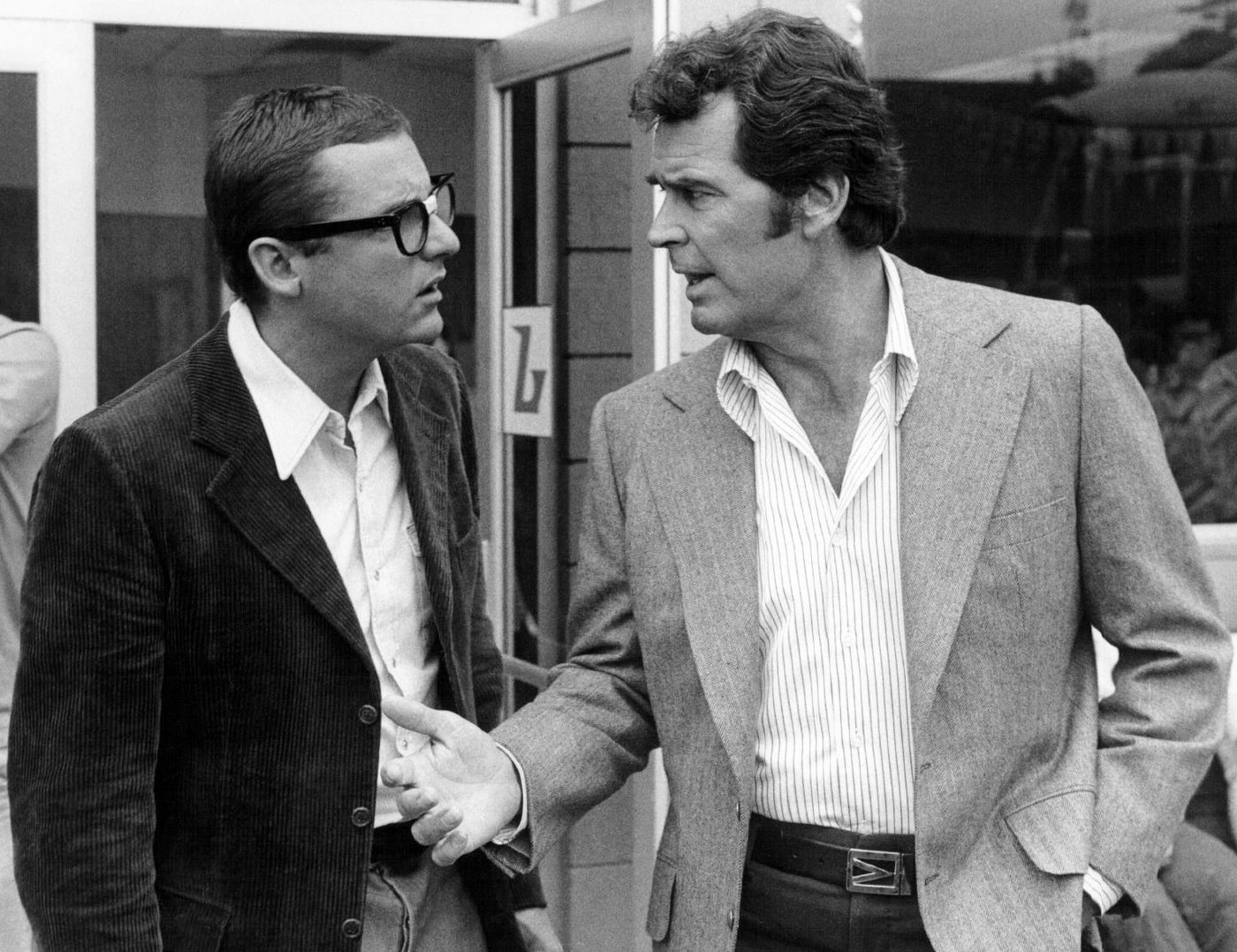
Character-first crime TV that aged into cool.
Why it matters
From the desk
The Answering Machine Was the Style Guide
James Garner's anti-hardboiled PI: a beaten Firebird, a beach trailer, and crime television that treated exhaustion as craft — then spent years in court proving the studio had not.
The opening is a machine that picks up. Not a gun. Not a skyline. An answering machine, a joke, a man who is already tired before the A-story starts. The Kirkoff Case, September 1974, teaches the contract: Jim Rockford will take a beating, cash a small check, and fail to look like a fantasy of competence. Roy Huggins and Stephen J. Cannell built a private-eye hour against the hardboiled poster. Garner is the argument. If you came for a cool car, you can have the Firebird. The cut is how often he would rather not go through the door.
NBC crime of the mid-1970s usually wanted swagger. Rockford wanted errands. Noah Beery Jr. as Rocky, Joe Santos as Becker, Stuart Margolin as Angel: a supporting world that treats the PI as a person with a father, a cop friend, and a snitch who will get him arrested. That is structure, not color. The series is character-first because the plots refuse to make him a superhero. He gets played. He gets stiffed. He files a report anyway. The tabloids will tell you about Garner versus Universal, the lawsuit that became Hollywood folklore. Fine. The text was already a labor document. Watch how often the job does not pay.
Craft: the answering-machine cold opens as a weekly essay in tone. The car chases as comedy of physics, not fetish. The Malibu trailer as a set that tells the truth about the fee. The Italian Bird Fiasco is the hour people cite when they mean the show could do Los Angeles as farce without losing the bruise. The Hammer of C Block is the hour that lets the job get morally expensive. White on White and Nearly Perfect brings Tom Selleck's Lance White in as a walking parody of the PI the series refused to be — which is criticism from inside the episode, not a guest-stunt. So Help Me God turns the legal system into the client, which is the show's least romantic idea of justice.
What the run is arguing: competence is often just stamina; Los Angeles is a set of errands; friendship is the only pension. Six seasons is short for a hit this loved and long enough to get tired in public. Garner's body is part of the form. When the series ends with Deadlock in Parma in January 1980, it does not look like a franchise pausing for a movie. It looks like a man who has been punched for a living. Later TV movies exist. They are encore nights. The NBC run is the novel.
Is it dated? The collars are dated. The weariness is not. Every contemporary detective who is tired on purpose, who hates the client a little, who would rather fish, is stealing from this catalog whether they file the citation. Prestige would later call that antihero interiority. Rockford called it Tuesday.
Verdict: start at The Kirkoff Case, then The Italian Bird Fiasco if you need the Los Angeles joke at full craft, then White on White if you need the thesis stated by a prettier PI. The scandal will outlive the craft — the lawsuit, the body, the merchandising of a Firebird. Unfortunately that is also television history. The answering machine remains the more honest theme song.
Episode guide
How this series is filed
TV Flash files The Rockford Files (1974–1980) on NBC as the episode guide: 123 listed hours across 6 seasons, 1974-09-13–1980-01-10 from “The Kirkoff Case” (S01E01) to “Deadlock in Parma” (S06E12).
Open the episode guide · S01E01 The Kirkoff Case · S06E12 Deadlock in Parma
Essential episodes
Five cases that teach the fee, the farce, the moral invoice, and the prettier PI the show refused to be. Filed by Julian Hart (The Binge Brief).
- S01E01 The Kirkoff Case
The contract: a beating, a small check, a man who would rather not go through the door and does.
- S01E08 The Big Ripoff
Errand crime at full weekly craft — the hour that teaches how little swagger the series will budget.
- S02E14 The Hammer of C Block
The job getting morally expensive. A case that will not refund the bruise.
- S02E19 The Italian Bird Fiasco
Los Angeles as farce that keeps the welt. The hour people mean when they say the show could joke without going soft.
- S05E04 White on White and Nearly Perfect
Lance White as walking parody. Criticism from inside the episode: the PI Rockford refused to play.
At a glance
Private eye Jim Rockford works from a trailer, drives a battered Firebird, and solves cases with charm, stubbornness, and real exhaustion. The answering-machine gag sets the anti-hardboiled tone. Character first; punches second.
Network & studio
- NBC — broadcast network
Why watch now
For the bruise: a PI hour that treats exhaustion, small checks, and an answering machine as style. James Garner's Firebird is cool; the joke is how little the job pays — and how often he goes through the door anyway.
Cultural impact
Rockford humanized the private eye for network audiences and proved crime TV could be character-forward. Garner vs. studio battles became Hollywood folklore.
Creators
Roy Huggins · Stephen J. Cannell
Key cast
- James Garner as Jim Rockford
- Noah Beery Jr. as Joseph 'Rocky' Rockford
- Joe Santos as Sgt. Dennis Becker
- Stuart Margolin as Angel Martin
Flash facts
- NBC detective series starring James Garner; aired September 13, 1974–January 10, 1980 (6 seasons, 123 episodes plus TV movies).
- Created by Roy Huggins and Stephen J. Cannell; theme by Mike Post and Pete Carpenter won a Grammy.
- Jim Rockford is an ex-con PI who prefers scams to fists and lives in a Malibu beach trailer.
FAQ
Where should I start?
The Kirkoff Case. The answering machine, the fee, and the beating are already the series. If you bounce off the 1974 lighting, jump to The Italian Bird Fiasco and come back.
Do I need to watch in order?
Mostly no. It is a case-of-the-week with a continuing bruise. Watch season one to learn the manners, then sample. The later seasons get more tired, which is the point.
Is it a cop show or a comedy?
A crime hour with comic timing. The jokes are how Rockford survives. They are not a laugh track pretending the punches are mime.
Can I skip to the TV movies?
Not first. The 1974–80 NBC run is the novel. The movies are encores. Start with the trailer, not the reunion.
Is the last episode a real finale?
Deadlock in Parma is the series closer, January 1980. It does not throw a parade. That is honest. Garner was done being punched on a schedule.
Official & further reading
External sites for further reading — TV Flash is not affiliated with these networks or studios.
Back to the decade
Also on the dial
More after The Rockford Files
- Related showSCTVSecond City Television — Melonville media satire for comedy nerds who quote deep cuts.
- Related showBuck Rogers in the 25th CenturyDisco-era space hero thawed out for laser fights and Twiki sidekick comedy.
- Related showCHiPsPonch and Jon on freeways of gold — California Highway Patrol as sunshine action.
- Related showLand of the LostSleestak nightmares — Saturday-morning pocket universe with real craft.
- Related showAdam-12One-Adam-12 — black-and-white patrol as Jack Webb moral clarity.
- Related showMcCloudNew Mexico marshal in New York — boots on asphalt fish-out-of-water crime.