Peak network prestige drama and the fantasy of competent governance as entertainment.
Why it matters
From the desk
Competence as Spectacle
Walk-and-talk idealism on NBC: the White House as workplace epic, Sorkin’s music in the corridors, and a post-Sorkin hangover the fandom never stopped litigating.
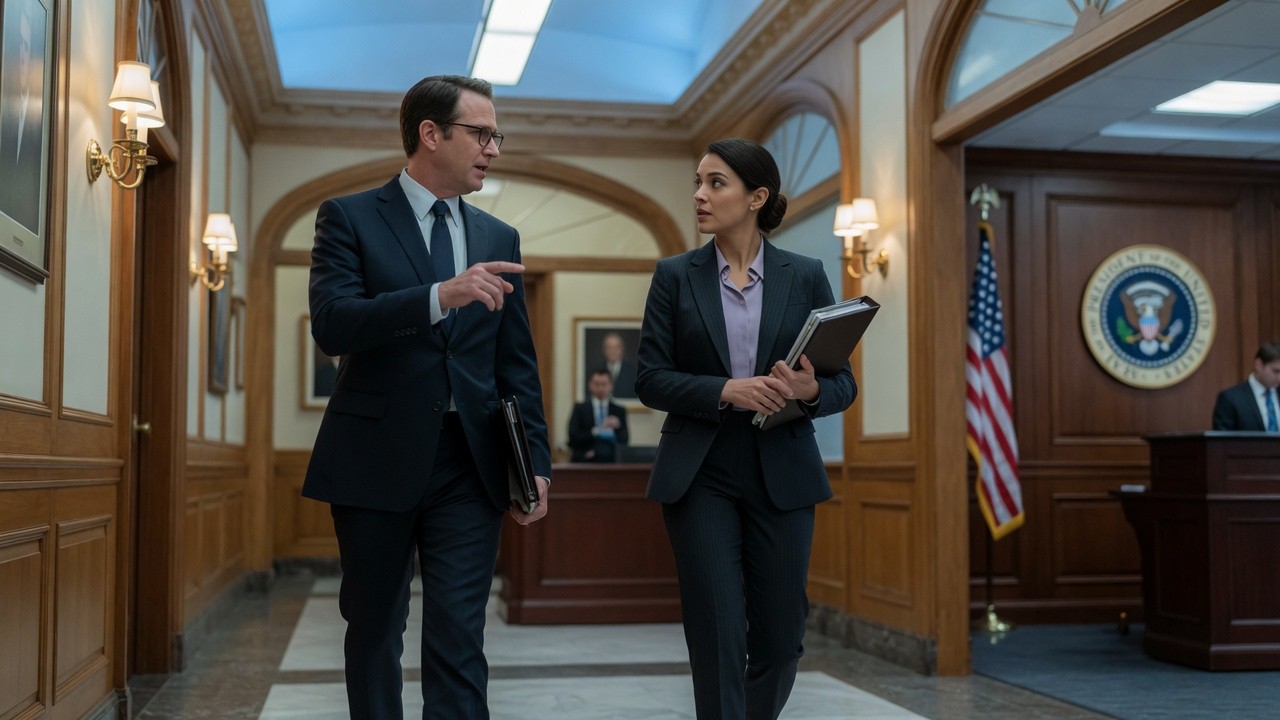
Listen to the footsteps first. The West Wing is a drama of motion: staffers cutting corners of the set as if speed were a moral quality. Aaron Sorkin did not invent the walk-and-talk, but he made it a civic rhythm — information as music, governance as a job you could love if the lighting were kind. Martin Sheen’s Bartlet is not a president so much as a conductor. The orchestra is the communications shop, the counsel’s office, the people who speak in complete sentences because the show believes they should.
The early seasons argue that intelligence can be entertainment without becoming a lecture, even when they are, in fact, lecturing. Hours like In Excelsis Deo and Noël treat policy and trauma as the same instrument. Two Cathedrals remains the series’ most complete piece of church-and-state theater: a man in a cathedral, a storm, a job that will not let him be only a father. The tabloids will talk contract wars and the Sorkin exit. Note them. Then return to whether the later seasons still walk, or merely occupy the carpet.
They occupy it, often. After Sorkin, the show is still handsomely performed and still in love with process. It is also arguing with a ghost. John Wells kept the lights on; the fandom split into people who wanted the music and people who wanted the building. Both are reasonable. Neither should pretend the other is philistine. Vivian can file the liberal-wish-fulfillment jokes. The text is wish fulfillment. That is not a gotcha. It is the genre.
What the series is arguing: that government work can be romanticized without becoming a cartoon, until it does; that ensemble talk is action; that a network drama in 1999 could still gather a country around competence as fantasy. Succession later made power ugly on purpose. This one made it lyrical on purpose. You are allowed to want both, and to notice when the lyric goes flat.
Verdict: watch the Sorkin years as a complete novel of the workplace. Sample later if you need the election machinery or the farewell. The finale is a finale. The scandal of how naive it looks in hindsight will outlive the craft. The craft, on a good hour, is still the walk.
Episode guide
How this series is filed
TV Flash files The West Wing (1999–2006) on NBC as the episode guide: 154 listed hours across 7 seasons, 1999-09-22–2006-05-14 from “Pilot” (S01E01) to “Tomorrow” (S07E22).
Essential episodes
Five hours that still teach the walk, the wound, and the goodbye. Filed by Julian Hart (The Binge Brief).
- S01E01 Pilot
The workplace contract in motion: speed as virtue, talk as action, a White House already scoring itself like a musical.
- S01E10 In Excelsis Deo
Policy and grief in the same key. Proof the series could hush the walk without losing the argument.
- S02E10 Noël
Aftermath as form — an hour that treats trauma as unfinished business, not a very special episode sticker.
- S02E22 Two Cathedrals
The cathedral hour. Still the show’s most complete piece of church, weather, and job in one frame.
- S07E22 Tomorrow
A closer that hands off the building instead of detonating it. Farewell as institutional courtesy.
At a glance
White House staff walk-and-talk through crises with idealistic competence and Sorkin rat-a-tat dialogue. Governance as workplace epic. Liberal wish fulfillment with Emmy hardware.
Network & studio
- NBC — broadcast network
Why watch now
Watch it for the music of people who still believe the job can be noble — network prestige as civic romance, not documentary. The Sorkin years are the novel; later seasons are the building after the composer leaves. If you want power ugly, that is another desk. This one wanted the walk.
Cultural impact
The West Wing made walk-and-talk directing a cliché for a reason and set a fantasy of competent governance as entertainment. Post-Sorkin debates never ended the fandom.
Creators
Aaron Sorkin
Key cast
- Martin Sheen as President Jed Bartlet
- Allison Janney as C. J. Cregg
- Bradley Whitford as Josh Lyman
- Richard Schiff as Toby Ziegler
- John Spencer as Leo McGarry
- Dulé Hill as Charlie Young
Flash facts
- Created by Aaron Sorkin; early seasons swept Emmys for Outstanding Drama Series.
- Made "walk and talk" a TV directing cliché for a reason — it worked.
- Post-Sorkin seasons still maintained a large, argumentative fandom.
FAQ
Where should I start?
The pilot. The walk-and-talk contract is the show. If the first hour’s pep talk feels like a recruitment ad, that is the thesis, not a bug.
Can I stop when Sorkin leaves?
Many people do, after season four. You will miss later election-year plotting and a proper closer, but you will have the music that made the series matter.
Is it realistic?
No, and it does not claim the documentary. It is a fantasy of competent people talking fast about hard problems. Watch it as romance, not civics class.
What can I skip?
Some mid-run standalone issues hours are homework. Keep the seasonal spines, the cathedral, and the election stretch if you continue past the Sorkin years.
Is the finale worth it?
Yes, as a workplace goodbye more than as a twist machine. Tomorrow is a handoff, not a rug-pull, and that is the honest ending for this particular fantasy.
Official & further reading
- Max — The West Wing
- Warner Bros. Television
- NBC network
- Wikipedia
- IMDb
- TMDB search
- YouTube — trailers & clips
External sites for further reading — TV Flash is not affiliated with these networks or studios.
Back to the decade
Also on the dial
More after The West Wing
- Related showSuccessionBillionaire family knife fight — insults as love language.
- Related showThe Morning ShowMorning-news meltdown as prestige soap — #MeToo hangover in HD.
- Related showThe CrownRoyal prestige with casting reincarnations and tabloid bleed.
- Related showBlossomHats, fourth-wall bits, and Very Special Episodes — Mayim Bialik’s first era.
- Related showJAGNavy lawyers with jet fuel — procedural that quietly built a franchise navy.
- Related showUnsolved MysteriesRobert Stack’s trench coat and that theme — true crime as living-room séance.