Ship culture, conspiracy TV, and Fox identity in one trench coat.
Why it matters
From the desk
The Ship That Taught the Timeline to Trust No One
Monster nights, mythology Sundays, and the trench-coat will-they that invented modern shipping — with fences for the conspiracy and the revival hangover.
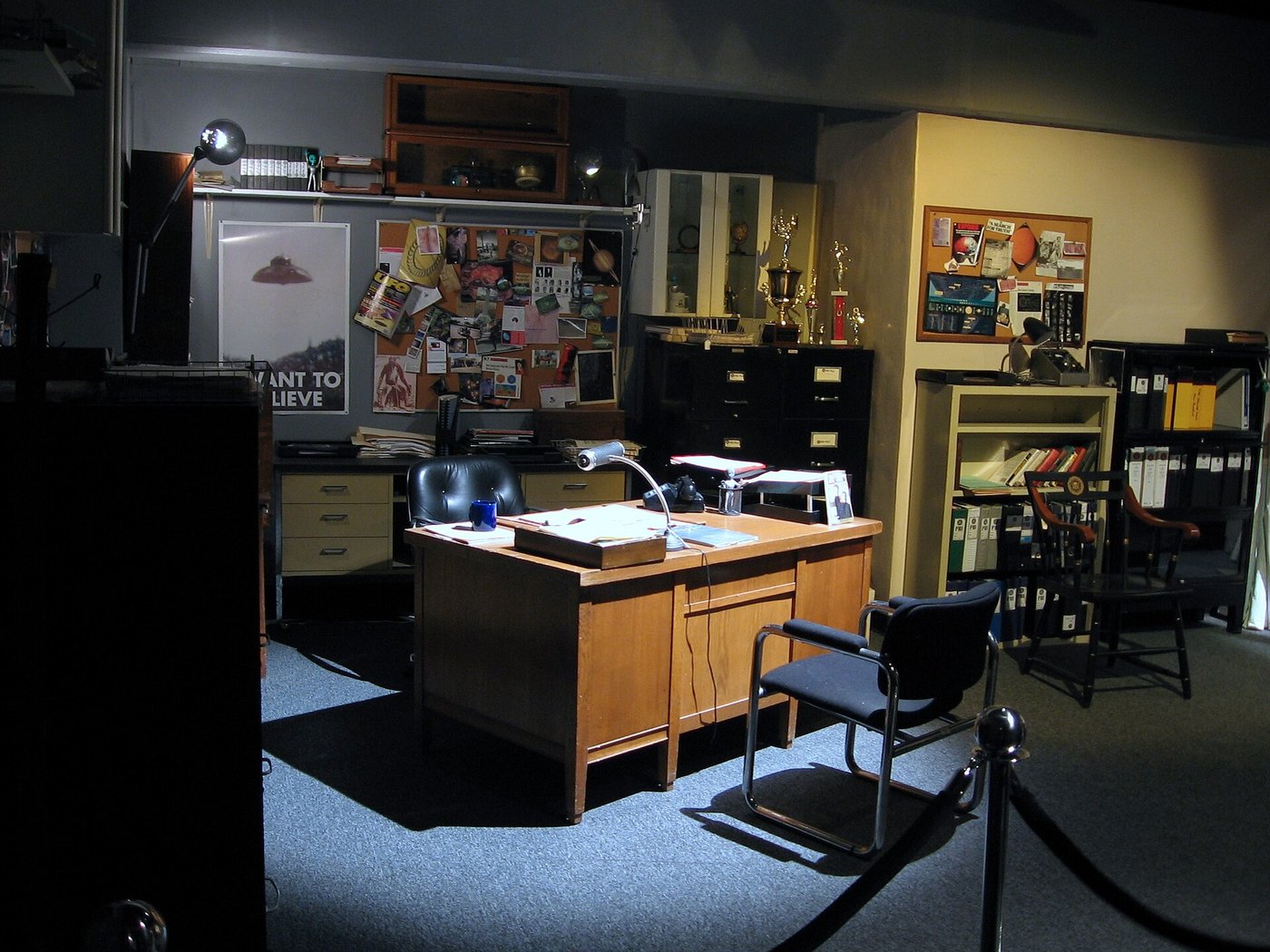
So about last night's group chat: someone said the mythology is a trap, someone else dropped a Gillian Anderson still like it was a legal document, and a third person typed MSR as if it were a blood type. (I said spoiler-free. I lied a little about the vibe, not the plot.) The X-Files is fandom as weather system. Fox, 1993, two FBI agents, a basement, a poster that is already a meme. Mulder believes. Scully has a medical degree and a spine. The rest is twenty-five years of people arguing whether the monsters were the point or the will-they was the point. Both. Obviously both. Lana can have the premiere gown. I will be in the replies where someone treated a trench coat as canon.
From here: mild. Titles, weather, no sandwiches. The Pilot (September 10, 1993) is the first fence: partnership as theology, science versus belief as chemistry, a case that is already bigger than a case. You can feel the tags being born. Monster-of-the-week nights are the friendship group chat. Mythology Sundays are the civil war. Clyde Bruckman's Final Repose (season 3) is the MOTW holy grail — Peter Boyle, death as a joke that hurts, the hour people still send as a care package. Jose Chung's From Outer Space is the show live-blogging itself: abduction testimony as Rashomon, fandom as unreliable narrator, Chris Carter letting Darin Morgan (and the room) be funny on purpose. Home (season 4) is the one you still warn people about. Not a twist. A vibe so nuclear the timeline invented content warnings before we had the phrase. Bad Blood (season 5) is the ship in two POVs — the same night, two brains, the fandom's favorite proof that these people are a sitcom trapped in a horror show.
What the timeline decided at 1 a.m. (this list will fall apart, on purpose): 1. The smoking man is the dad. 2. The smoking man is not the dad. 3. Scully was always the protagonist and Mulder was the plot device with a jawline. 4. Wait, the bees? I have to sleep. 5. The revival will fix the mythology. (It did not, and we knew, and we watched anyway.)
From here: nuclear-adjacent only if you open episode pages. The original run closes with The Truth (2) on May 19, 2002 — a trial, a door, a lot of people unsatisfied on purpose. Then feature films. Then 2016 and 2018 revival seasons that exist in this catalog as seasons 10 and 11, ending with My Struggle IV. I will not pretend the revival was a group-chat peace treaty. It was a reunion with conspiracy homework. Shippers got looks. Mythology stans got more Struggle. MOTW fans got Were-Monster and a reminder that the funny episodes were always the ones that understood the assignment. The creator-control battles and Duchovny/Anderson will-they offscreen were fuel. Fuel is not the same as a spoiler. Do not diagnose actors as obstacles to your AO3 outline.
How to watch without friendly fire: start MOTW if you want to love the show; dip into mythology when you are ready to be annoyed in a productive way. Skip nothing that Morgan wrote if you like to laugh. Fence Home. The carpet is content; the replies are the story — and the replies invented MSR as a language. I need sleep and a rewatch of Bruckman without spoiling the people still on season 1. Tell me how your chat ranks MOTW vs myth: treaty, exile, or chaotic neutrality. See you in the tags. Bring CWs. Trust no one, including me, when I say I can talk about this without starting a fight.
Episode guide
How this series is filed
TV Flash files The X-Files (1993–2002) on Fox as the episode guide: 218 listed hours across 11 seasons, 1993-09-10–2018-03-21 from “Pilot” (S01E01) to “My Struggle IV” (S11E10).
Open the episode guide · S01E01 Pilot · S11E10 My Struggle IV
Essential episodes
Fandom docket — hours the tags still treat as scripture, warnings, or both. Filed by Tessa Quinn (Spoiler-Free (Mostly)).
- S01E01 Pilot
The first fence. Partnership as theology; the poster is already a meme; the tags are being born.
- S03E04 Clyde Bruckman's Final Repose
MOTW holy grail. Death as a joke that hurts — the care-package hour people still send at 1 a.m.
- S03E20 Jose Chung's 'From Outer Space'
The show live-blogging itself. Abduction as Rashomon; fandom as unreliable narrator on purpose.
- S04E02 Home
The warning. Not a twist — a tone so nuclear the timeline invented content warnings.
- S05E12 Bad Blood
The ship in two POVs. Same night, two brains: proof they were a sitcom trapped in a horror show.
At a glance
FBI agents Mulder and Scully investigate paranormal cases while a deeper conspiracy mythology coils underneath. Monster-of-the-week nights balance trust-no-one Sundays. Ship culture invents itself in trench coats.
Network & studio
- Fox — broadcast network
Why watch now
For the partnership that taught the internet how to ship: MOTW as weekly friendship, mythology as civil war, and two revival seasons that proved the trench coats were a brand stronger than any single answer. Fence the nuclear stuff. Stay for Bruckman.
Cultural impact
The X-Files defined 90s paranoia pop and online shipping culture. Revivals keep proving the mythology is a brand stronger than any single answer.
Creators
Chris Carter
Key cast
- David Duchovny as Fox Mulder
- Gillian Anderson as Dana Scully
- Mitch Pileggi as Walter Skinner
- Robert Patrick as John Doggett
- Annabeth Gish as Monica Reyes
Flash facts
- Fox sci-fi drama created by Chris Carter; original run 1993–2002 with later revival seasons.
- FBI agents Mulder and Scully investigate paranormal “X-Files” cases.
- Two feature films: The X-Files (1998) and I Want to Believe (2008).
- Revival seasons aired in 2016 and 2018; total episode count reached the 200s.
- Major 1990s pop-culture touchstone for conspiracy and monster-of-the-week TV.
FAQ
Should I start with monster-of-the-week or the conspiracy?
Start with the 1993 Pilot, then graze MOTW. Mythology is a long argument, not a homework packet. If you only follow the conspiracy you will burn out. If you only watch monsters you will miss why the ship became a language.
How spoiler-fenced is the Mulder/Scully relationship?
This package stays mild: partnership, tension, the name of the ship. Nuclear details live on episode pages. If your friend is mid-season 3, do not be the reply guy who ruins a look.
Can I skip mythology episodes?
You can. You will miss the 1990s paranoia plot and the 2002 closer's homework. Many fans treat MOTW as the actual show and myth as optional weather. That is a valid watch. It is also how civil wars start.
Is the 2002 finale the end?
The original series ends with The Truth (2) on May 19, 2002. This catalog also includes the 2016 and 2018 revival seasons, closing with My Struggle IV. Treat 2002 as the first door and 2018 as the last one in the pack — they are not the same night.
What about the revival — worth it?
Optional. Were-Monster is the fan-care package. The Struggle arc is for mythology completionists and people who like to argue. If you loved seasons 3–5, you are not owed a revival that feels like 1998. See you in the tags either way.
Is Home actually that bad?
It is that intense. Not a twist hour — a tone hour. Watch with a CW for rural horror and family violence. It is essential as fandom folklore; it is not a first-date episode.
Cultural eras
Spy-Fi & Space Race · Mystery-Box Watercooler
Official & further reading
External sites for further reading — TV Flash is not affiliated with these networks or studios.
Back to the decade
Also on the dial
More after The X-Files
- Related showFuturamaDelivery boy of the future — Groening sci-fi pathos under the jokes.
- Related showX-Men: The Animated SeriesMutants on Saturday mornings — comic continuity for a mass kid audience.
- Related showMighty Morphin Power RangersMorphin time — Japanese footage, American teens, merch supernova.
- Related showCOPSBad boys theme, ride-along camera — policing as vérité spectacle.
- Related showMartinMartin Lawrence’s radio-host swagger — character comedy as Fox counterprogramming.
- Related showLiving SingleBrooklyn brownstone friend group — Black Friends before Friends was a comparison.