1964–1973
Spy-Fi & Space Race
Gadgets, galaxies, and Cold War cool
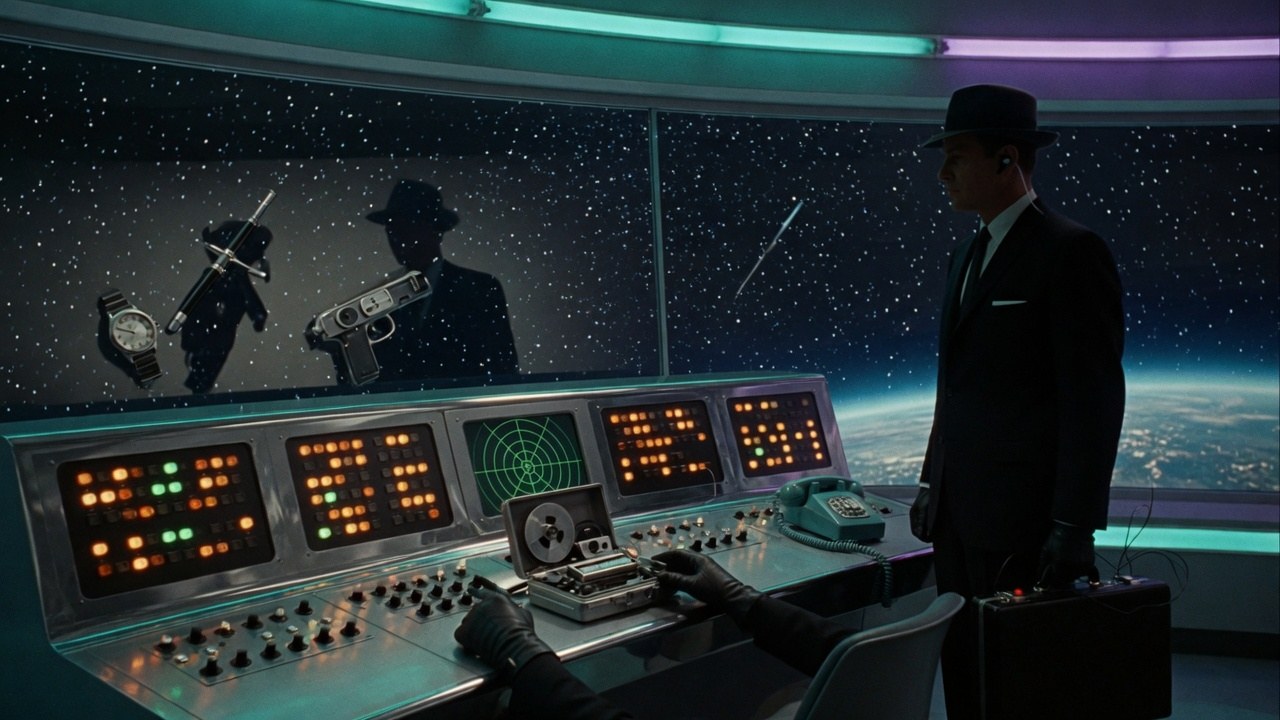
Spy-Fi & Space Race is a lineage, not a closed decade: Star Trek and Mission: Impossible as starship and briefing, Get Smart as the farce that winks at the same gadgets. The X-Files inherits the flashlight. Andor and Slow Horses keep the chrome after the optimism wears off.
chrome, intrigue, optimistic futurism
Calendar decades: 1960s , 1970s , 2020s
Treat Spy-Fi & Space Race as a family tree that starts in chrome and refuses to stay in the 1960s. Star Trek sells the missile age as earnest utopia — a starship as a civic argument. Mission: Impossible is the briefing that might eat itself. Get Smart is the same gadget drawer played as farce. The Fugitive is the other Cold War weather: a man on the run, no spaceship required, intrigue as a weekly chase instead of a planet.
The later titles are not guests. They are the lineage doing what lineages do. The X-Files takes the flashlight into the woods and makes conspiracy the adventure. Andor spends a galaxy on paperwork, revolt, and the cost of a briefing that is no longer a lark. Slow Horses keeps the spy shop stained, the opposite of optimistic futurism. On TV Flash, start with Trek or Mission: Impossible if you want the chrome. Stay for Get Smart when you want the wink, The Fugitive when you want the chase, and the later shelf when you want to see the gadgets after the glow.
FAQ
What was Spy-Fi & Space Race if it is not only a 1960s list?
It is television processing the missile age as adventure, camp, and earnest utopia — then refusing to stop. Star Trek, Mission: Impossible, Get Smart, and The Fugitive are the chrome generation. The X-Files, Andor, and Slow Horses are the same lineage after the optimism thins: flashlight, revolt, and a spy office that looks used.
Where should I start with Spy-Fi & Space Race on TV Flash?
Start with Star Trek for the starship civic, Mission: Impossible for the briefing, or Get Smart if you want the gadgets as a joke. The Fugitive is the chase without a galaxy. Then the lineage: The X-Files for flashlight paranoia, Andor for a galaxy treated as politics, Slow Horses for spies who have already lost the chrome.
What did this era displace as adventure television?
The prairie ritual and the courtroom habit as the default hour of danger. Golden Age Live had already made the holster and the trial weekly furniture; Spy-Fi & Space Race swapped them for briefings, starships, and a man on the run. Get Smart proved the same drawer of gadgets could be camp. The western did not vanish. It stopped being the only map.
What came after the chrome — and why are later titles here?
The lineage kept going. The X-Files made the briefing a conspiracy file. Andor and Slow Horses are 2020s titles on purpose: the starship and the spy shop after utopia, paperwork instead of gleam. TV Flash files them here so the gadget era reads as an argument that never closed, not a costume party stuck in 1967.
Further reading
External sites for further reading — TV Flash is not affiliated with these networks or studios.