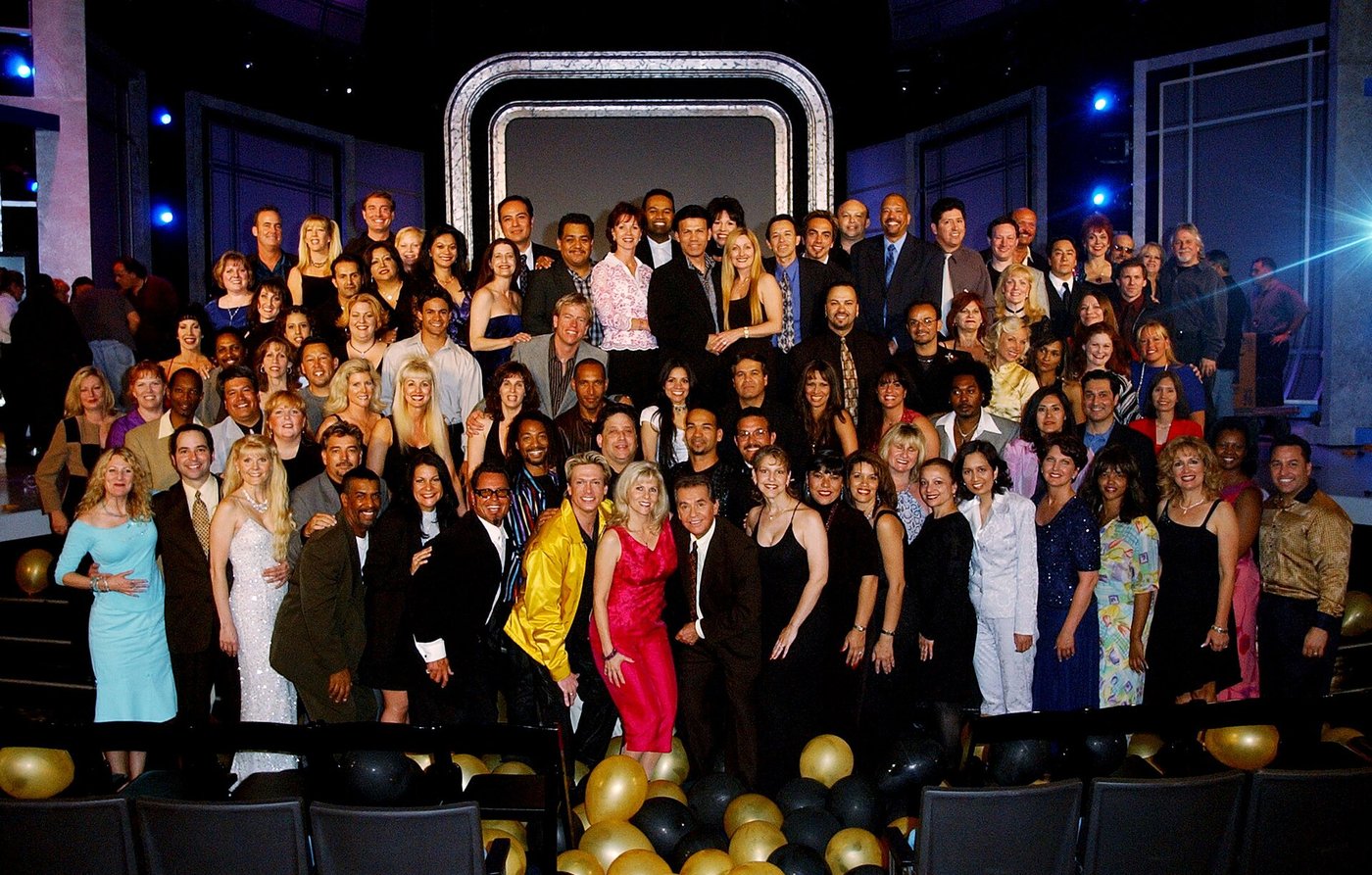
Nationalized teen music culture and made the host a perpetual industry power broker.
Why it matters
From the desk
Why American Bandstand still plays
Distribution first: local WFIL-TV Philadelphia, then national ABC from 1957. Dick Clark's after-school floor. **2,821 episodes, 33 seasons**, 1952–1989 in the long count. Kids on camera rating records, artists paying court (often lip-synced), Rate-a-record as participatory UI, dance crazes as the weekly SKU. That is not a sock hop. That is a distribution channel disguised as a dance floor. Rex can hymn the jukebox. The metric is overnight singles.
Clark's clean-cut hosting brand made rock and roll more acceptable to mainstream sponsors and parents — payola-era survival skills as showbiz Darwinism, eternal youth as a hosting SKU. The show's integration and image politics were complicated; its power to mint hits was not. For decades, if it played on *Bandstand*, it was in the conversation. Teenagers danced on camera while records played and artists performed, often lip-synced; Rate-a-record segments and dance crazes became signature participatory elements. *American Bandstand* nationalized teen dance culture and made Dick Clark a multi-decade power broker in popular music. It taught labels that TV exposure could sell singles overnight. Every later music-video and performance show still pays rent on that Philadelphia floor. Bob Horn is on the creation card beside Clark. Rex can hymn the sock hop. The chart was the kids deciding what was a 98.
How the catalog numbers the floor: *AB-1: Billy Williams / The Chordettes (Pilot)* is Philadelphia as national teen machine, Clark already teaching labels that TV sells singles. *AB-281: Frankie Ford* is numbered after-school landmark, kids still rating records while payola-era survival skills stay off-mic. *AB-806: Bob Luman* is 1960 season open as catalog number, the dance floor still a distribution channel. *Trini Lopez / The Feather* is named guest hour in the long run, stars paying court on a floor that nationalized teen music culture.
*American Bandstand Returns: A Brand New Start!* is franchise closer in this pack, the after-school brand trying on a reunion title. **If it played, it sold.** Nostalgia without the label math is just a sock hop cosplay.
Dare: watch the Thursday after a later performance show buries the kids and keeps the host. You'll know who lost the room. *American Bandstand* already ran the machine that made the host a perpetual industry power broker. The chart was the dance.
Episode guide
How this series is filed
TV Flash files American Bandstand (1952–1989) on WFIL-TV/ABC as a season-first catalog of 2821 listed hours across 33 seasons, 1957-08-05–2005-09-12 from “AB-1: Billy Williams/ The Chordettes (Pilot)” (S01E01) to “American Bandstand Returns: A Brand New Start!” (S33E02).
Open the episode guide · S01E01 AB-1: Billy Williams/ The Chordettes (Pilot) · S33E02 American Bandstand Returns: A Brand New Start!
Essential episodes
Dick Clark's after-school floor — kids rating records, stars paying court, the machine that sold singles. Filed by Max Sterling (Streaming Confidential).
- S01E01 AB-1: Billy Williams/ The Chordettes (Pilot)
AB-1: Billy Williams / The Chordettes (Pilot) — Philadelphia floor as national teen machine, Clark already teaching labels that TV sells singles.
- S02E01 AB-281: Frankie Ford
AB-281: Frankie Ford: numbered after-school landmark, kids still rating records while payola-era survival skills stay off-mic.
- S04E01 AB-806: Bob Luman
AB-806: Bob Luman — 1960 season open as catalog number, the dance floor still a distribution channel disguised as a sock hop.
- S12E34 Trini Lopez / The Feather
Trini Lopez / The Feather: named guest hour in the long run, stars paying court on a floor that nationalized teen music culture.
- S33E02 American Bandstand Returns: A Brand New Start!
American Bandstand Returns: A Brand New Start! — franchise closer in this pack, the after-school brand trying on a reunion title.
At a glance
Dick Clark turned a Philadelphia dance floor into America's after-school mirror. American Bandstand (nationally from 1957 on ABC after local roots) put teenagers on camera to rate records, invent dance crazes, and make Clark the eternal teenager of music TV. Artists lip-synced; kids decided what was a 98; parents got a clean face on rock and roll. The show's integration and image politics were complicated; its power to mint hits was not. For decades, if it played on Bandstand, it was in the conversation.
Network & studio
Why watch now
American Bandstand is Dick Clark's after-school dance floor: kids rating records, stars paying court, payola-era survival skills. Watch it now as the machine that nationalized teen music culture — a Philadelphia floor that taught labels TV could sell singles overnight, and made the host a perpetual industry power broker.
Cultural impact
American Bandstand nationalized teen dance culture and made Dick Clark a multi-decade power broker in popular music. It taught labels that TV exposure could sell singles overnight. Every later music-video and performance show still pays rent on that Philadelphia floor.
Creators
Dick Clark · Bob Horn
Key cast
- Dick Clark as Host
Flash facts
- Hosted by Dick Clark; went to national ABC distribution in 1957 after earlier local Philadelphia success.
- Featured teenagers dancing on camera while records played and artists performed (often lip-synced).
- Rate-a-record segments and dance crazes became signature participatory elements.
- Helped popularize countless pop and rock acts for a national teen audience.
- Clark's clean-cut hosting brand made rock and roll more acceptable to mainstream sponsors and parents.
FAQ
Where should I start?
Start with Clark's national ABC years: rate-a-record, the dance floor, a guest act paying court. The after-school machine is the point, not a plot.
What can I skip?
Skip a 1952–89 completionist project. Mega-run music TV is a sample of crazes and faces. Local Philadelphia weeks are origin lore, not required homework.
Is it still worth it?
Yes, as the original youth-music television machine — fashion, dances, and unflappable gatekeeping.
Concert show or dance party?
Teen dance-and-records variety — kids on camera, lip-synced guests, host as industry broker.
Official & further reading
External sites for further reading — TV Flash is not affiliated with these networks or studios.
Back to the decade
Also on the dial
More after American Bandstand
- Related showLife Is Worth LivingBishop Sheen vs. Milton Berle in the ratings — a chalkboard and a cape beat vaudeville some weeks.
- Related showThe Ernie Kovacs ShowVisual gags, blackouts, and Nairobi Trio — the medium inventing itself for laughs.
- Related showRocky and His FriendsA flying squirrel, a moose, and Cold War satire — Jay Ward's anarchic gift at decade's end.
- Related showKukla, Fran and OllieAd-lib puppets and Fran Allison — gentle absurdity that adults watched without irony.
- Related showSky KingArizona rancher with a Cessna — aviation adventure for kids who wanted wings.
- Related showThe United States Steel HourIndustrial giant, theatrical punch — live drama with a steel-hard production sheen.