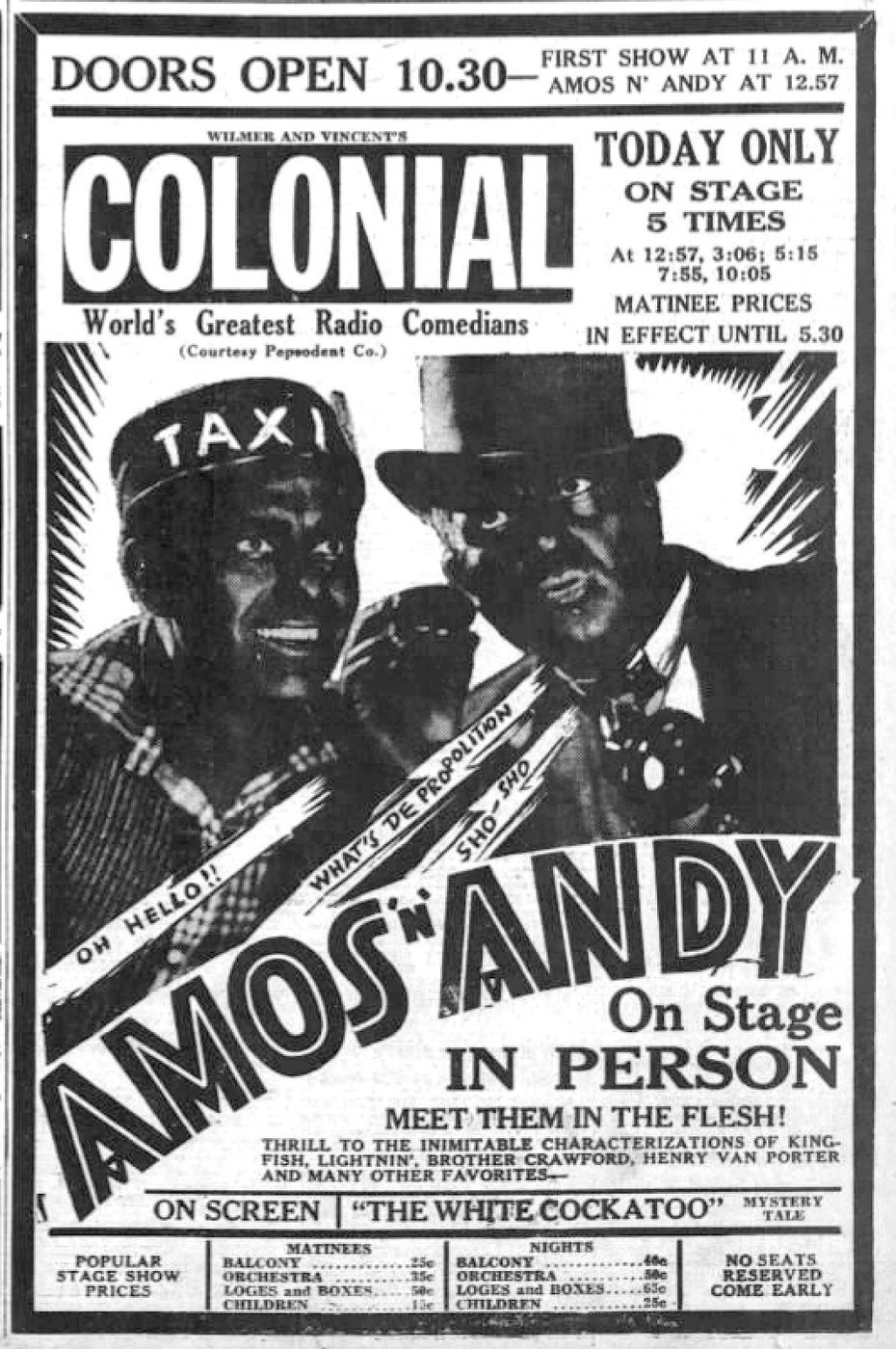
Historic as both a mass hit and a flashpoint for civil-rights protest over stereotypes.
Why it matters
From the desk
Why Amos 'n' Andy still plays
The laugh is already the crime scene. Amos 'n' Andy, CBS 1951–1953, seventy-eight episodes, adapted from Freeman Gosden and Charles Correll's radio series: Alvin Childress as Amos Jones, Spencer Williams as Andrew 'Andy' Hogg Brown, Tim Moore as George 'Kingfish' Stevens, Ernestine Wade as Sapphire Stevens. A mass hit and a civil-rights flashpoint over stereotypes. Hugely popular, deeply fraught. The NAACP campaign and CBS's later shelving of reruns — withdrawn from syndication in 1966 amid civil-rights era pressure — are inseparable from the show's story. **They are not amicable**, the hit and the protest. The heat is the file.
Watch it in 2026 as history, not comfort. The museum guards of prestige will want a clean canon and a closed door. Cute. The seating chart is who early television allowed to be funny, and who paid the bill for the laugh. Sources close to the campaign will say the stereotypes were the product. The later shelf is the after-party that became a vault. Four seasons of a sitcom that remains in the catalog as evidence. The comedy is the evidence. The argument is the reason it stays.
One almost-empathy beat for the Black performers who had to work inside a form built from radio minstrel architecture — Childress, Williams, Moore, Wade — while the protest gathered and the hit kept hitting. They do not get the easy retrospective. They got the timeslot. The people who want just the text, not the text messages, will try to separate the gags from the campaign. The text is the seating chart. The campaign is in the lobby. The fire is not a metaphor.
Who was where in the file: the opener, Kingfish Gets Drafted, is series open as history, not comfort — a mass hit whose stereotypes would become a civil-rights flashpoint. A mid-run titled household hour, The Adoption, is still a document of who early television allowed to be funny, and who paid the bill. Season three ignites on a scheme title, Andy Goes Into Business, the sitcom still a hit while protest was already gathering. Late-run, The Chinchilla Business, is the form still running as NAACP heat moved toward the rerun shelf. The 1953 closer, Story of the Invisible Glass, is the last named hour, later shelved in reruns, the archive remaining a required uncomfortable file.
Last flash: a laugh track, a campaign, a 1966 shelf. Ask me how I know. The deleted Story is the rerun that did not air. The door closes on a 1953 hour. The argument did not.
Episode guide
How this series is filed
TV Flash files Amos 'n' Andy (1951–1953) on CBS as the episode guide: 78 listed hours across 4 seasons, 1951-06-28–1955-04-13 from “Kingfish Gets Drafted” (S01E01) to “Story of the Invisible Glass” (S04E13).
Open the episode guide · S01E01 Kingfish Gets Drafted · S04E13 Story of the Invisible Glass
Essential episodes
Mass hit and civil-rights flashpoint — watch as history, not comfort, who early TV allowed to be funny. Filed by Vivian Cross (The Carpet Report).
- S01E01 Kingfish Gets Drafted
Kingfish Gets Drafted: series open as history, not comfort — a mass hit whose stereotypes would become a civil-rights flashpoint.
- S02E25 The Adoption
The Adoption: mid-run titled household hour, still a document of who early television allowed to be funny, and who paid the bill.
- S03E01 Andy Goes Into Business
Andy Goes Into Business — season-three ignition on a scheme title, the sitcom still a hit while protest was already gathering.
- S04E01 The Chinchilla Business
The Chinchilla Business: late-run titled hustle, the form still running as NAACP heat moved toward the rerun shelf.
- S04E13 Story of the Invisible Glass
Story of the Invisible Glass closes 1953: last named hour, later shelved in reruns, the archive remaining a required uncomfortable file.
At a glance
A TV adaptation of the long-running radio comedy, now with Black actors in roles originated by white creators Freeman Gosden and Charles Correll on radio. Amos 'n' Andy (CBS, 1951–1953) starred Alvin Childress as Amos Jones, Spencer Williams as Andy, Tim Moore as George "Kingfish" Stevens, and Ernestine Wade as Sapphire Stevens. It drew large audiences and intense criticism for stereotypical portrayals. Sustained NAACP protest followed; CBS withdrew reruns from syndication in 1966 amid civil-rights-era pressure. Historic as both a mass hit and a flashpoint. Essential — and uncomfortable — TV history: a document of who early television allowed to be funny, and who paid the bill for the laugh.
Network & studio
- CBS — broadcast network
Why watch now
Amos 'n' Andy is the sitcom that forces the conversation: a mass hit and a civil-rights flashpoint over stereotypes, later shelved in reruns after NAACP protest. Watch it in 2026 as history, not comfort — a document of who early television allowed to be funny, and who paid the bill for the laugh.
Cultural impact
Amos 'n' Andy is historic as both a mass CBS hit and a flashpoint for civil-rights protest over racial stereotypes. Gosden and Correll's radio comedy moved to television with Black actors in the roles; the NAACP campaign and CBS's 1966 withdrawal of reruns are inseparable from the story. Later arguments about who gets to be funny on television still walk through this catalog. The comedy is the evidence. The protest is the reason it remains in the brief.
Creators
Freeman Gosden · Charles Correll · CBS Television
Key cast
- Alvin Childress as Amos Jones
- Spencer Williams as Andrew 'Andy' Hogg Brown
- Tim Moore as George 'Kingfish' Stevens
- Ernestine Wade as Sapphire Stevens
Flash facts
- CBS television sitcom 1951–1953; adapted from the radio series by Gosden and Correll.
- Alvin Childress played Amos; Spencer Williams played Andy; Tim Moore played Kingfish; Ernestine Wade played Sapphire.
- Faced sustained protest from the NAACP over racial stereotypes.
- CBS withdrew reruns from syndication in 1966 amid civil-rights era pressure.
- Drew large audiences while remaining a civil-rights flashpoint.
FAQ
Where should I start?
Start with the understanding that you are watching a hit and a protest document at once. Sample the sitcom form, then read it against the NAACP campaign and the later rerun shelving.
What can I skip?
Skip 'comfort binge' framing. This is not a cozy complete-run. Skip treating it as a simple relic without the civil-rights aftershock.
Is it still worth it?
Yes, as history — a mass hit and a stereotype flashpoint. Worth it as a document of early TV's racial contract, not as easy laughter.
Sitcom or historical document?
A popular sitcom that history now watches as a civil-rights flashpoint — comedy as evidence, not comfort.
Official & further reading
External sites for further reading — TV Flash is not affiliated with these networks or studios.
Back to the decade
Also on the dial
More after Amos 'n' Andy
- Related showThe Ernie Kovacs ShowVisual gags, blackouts, and Nairobi Trio — the medium inventing itself for laughs.
- Related showThe Adventures of Robin HoodRichard Greene's Robin — British export that American kids treated like native folklore.
- Related showThe United States Steel HourIndustrial giant, theatrical punch — live drama with a steel-hard production sheen.
- Related showOmnibusAloft culture for the masses — Leonard Bernstein, Orson Welles, and Sunday seriousness.
- Related showMamaNorwegian immigrant family warmth — live family drama before sitcoms ate the hour.
- Related showMy Little MargieGale Storm's scheming daughter vs. dad's blood pressure — screwball sitcom fizz.