Injected late-60s youth aesthetics into cop TV and pushed ensemble diversity.
Why it matters
From the desk
Why The Mod Squad still plays
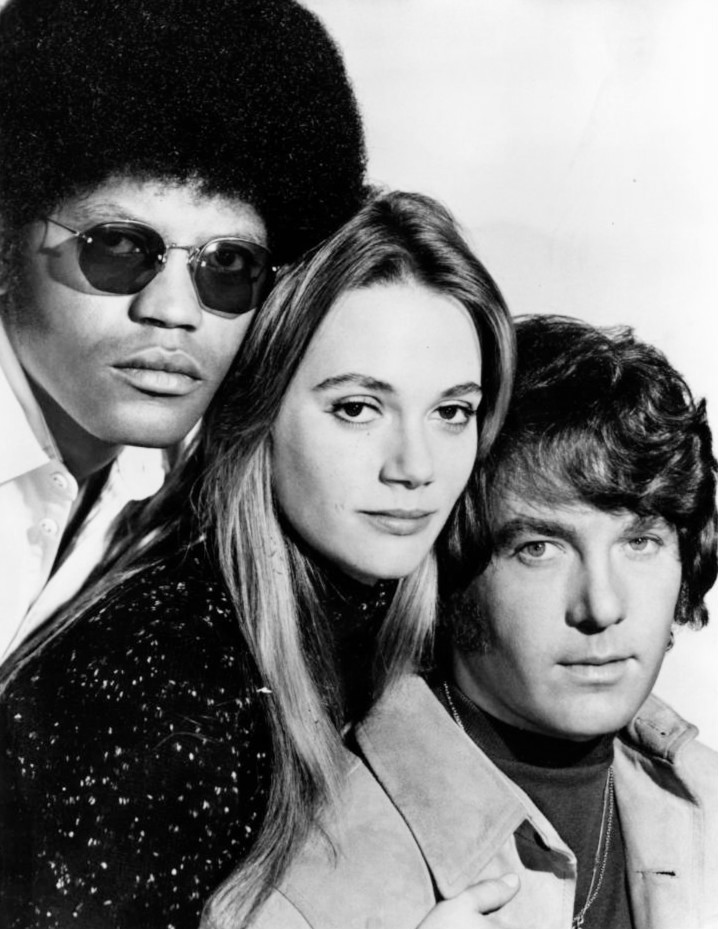
The poster is the form. ABC's *The Mod Squad* (1968–1973) photographs Michael Cole, Clarence Williams III, and Peggy Lipton as one Black, one white, one blonde — three young undercover cops with records, fighting the system from inside Aaron Spelling's youth-crime franchise. Tige Andrews as Capt. Greer. Leather, social issues, parental-generation bosses. Bud Ruskin and Spelling packaged troubled youths recruited to infiltrate youth-crime cases. Five seasons of establishment television wearing love beads. The trio still photographs like a poster. That is not an accident of fashion. It is the hour's composition.
Cop TV injected with late-sixties youth aesthetics and a multiracial trio as a prime-time brand. Mixed procedural cases with contemporaneous social themes and style. Later revived as a 1999 feature. The blotter will file Spelling as glamour excess avant la lettre. Fine, as a footnote. What the series argues is Hollywood packaging the generation gap as a cop show in leather — the catchphrase energy of 'the squad' outliving the flares. Youth-culture aesthetics mainstreamed into network cop drama.
*The Teeth of the Barracuda* is the 1968 poster: Cole, Williams, Lipton as young undercovers with records. *The Girl in Chair Nine* opens season two still selling youth-crime as franchise, late-sixties social issues riding along. *The Judas Trap* is mid-run betrayal grammar, the trio still photographed like a poster while the casework ticks. *The Connection* opens the last season as a two-door hour, Spelling's youth cops at the end of their undercover lease. *And Once for My Baby* closes five ABC seasons of establishment-needling crime TV — hop-friendly, fashion-forward, catalog-honest.
Permission: watch the leather as design, not as a costume-party joke the timeline invented. The people who want only the leak miss the undercover grammar — troubled pasts as the weekly in, social themes as the ride-along, Greer as the parental-generation boss the hour needs. Five seasons. A time capsule of how Hollywood packaged the generation gap.
Watch it as cop TV wearing love beads on purpose. You do not need every case. Sample the 1968 poster, one mid-run door, and the catalog closer. Verdict: ensemble diversity as a prime-time brand, stylish social-issue crime drama, and still a photograph before it is a sermon. Lipton, Williams, and Cole hold the frame. Spelling held the franchise. The text is the undercover lease.
Episode guide
How this series is filed
TV Flash files The Mod Squad (1968–1973) on ABC as the episode guide: 124 listed hours across 5 seasons, 1968-09-24–1973-03-01 from “The Teeth of the Barracuda” (S01E01) to “And Once for My Baby” (S05E24).
Open the episode guide · S01E01 The Teeth of the Barracuda · S05E24 And Once for My Baby
Essential episodes
One Black, one white, one blonde — Spelling's youth-crime undercovers, poster-pretty and issue-adjacent. Filed by Julian Hart (The Binge Brief).
- S01E01 The Teeth of the Barracuda
The Teeth of the Barracuda is the 1968 poster: Cole, Williams, Lipton as young undercovers with records, fighting the system from inside.
- S02E01 The Girl in Chair Nine
The Girl in Chair Nine opens season two still selling youth-crime as franchise — late-sixties social issues riding along.
- S03E11 The Judas Trap
The Judas Trap — mid-run title as betrayal grammar, the trio still photographed like a poster while the casework ticks.
- S05E01 The Connection (1)
The Connection (1) opens the last season as a two-door hour: Spelling's youth cops at the end of their undercover lease.
- S05E24 And Once for My Baby
And Once for My Baby closes five ABC seasons of establishment-needling crime TV — hop-friendly, fashion-forward, catalog-honest.
At a glance
One Black, one white, one blonde — three young undercover cops with records, fighting the system from inside Aaron Spelling's youth-crime franchise. ABC's The Mod Squad (1968–1973; 123 episodes) made Michael Cole, Clarence Williams III, and Peggy Lipton the faces of counterculture policing. Leather, social issues, and parental-generation bosses filled the hour. It was establishment television wearing love beads. The catchphrase energy of 'the squad' outlived the flares.
Network & studio
- ABC — broadcast network
Why watch now
One Black, one white, one blonde — three young undercover cops with records, fighting the system from inside Aaron Spelling's youth-crime franchise. Michael Cole, Clarence Williams III, and Peggy Lipton photographed like a poster while late-sixties social issues rode along. Establishment television wearing love beads.
Cultural impact
The Mod Squad mainstreamed youth-culture aesthetics into network cop drama and made a multiracial trio a prime-time brand. It influenced later undercover and young-detective formats. The series is a time capsule of how Hollywood packaged the generation gap.
Creators
Bud Ruskin · Aaron Spelling
Key cast
- Michael Cole as Pete Cochran
- Clarence Williams III as Linc Hayes
- Peggy Lipton as Julie Barnes
- Tige Andrews as Capt. Adam Greer
Flash facts
- ABC crime drama associated with Aaron Spelling; aired 1968–1973 (5 seasons, 123 episodes).
- Starred Michael Cole, Clarence Williams III, and Peggy Lipton as undercover young officers.
- Premise: troubled youths recruited to infiltrate youth-crime cases.
- Mixed procedural cases with contemporaneous social themes and style.
- Later revived in a 1999 feature film adaptation.
FAQ
Where should I start?
Pete, Linc, and Julie on an undercover youth-case hour is the poster: Cole, Williams, Lipton, social-issue crime with fashion. Capt. Greer is the establishment foil.
Do I need all five seasons?
No. Stylish weekly procedural. Sample the trio's look and a couple of contemporaneous-theme hours; the 1999 film is optional afterlife.
Cop show or counterculture souvenir?
Crime drama with youth branding — Spelling before later glamour excess. The generation-gap packaging is the point, not a documentary.
Is it still worth it without the flares?
If you want late-sixties/early-seventies cop TV that actually photographs like a poster, yes. Lipton, Williams, and Cole still hold the frame.
Official & further reading
External sites for further reading — TV Flash is not affiliated with these networks or studios.
Back to the decade
Also on the dial
More after The Mod Squad
- Related showThe Green HornetBritt Reid and Kato — martial-arts sidekick energy that made Bruce Lee a U.S. star.
- Related showThe F.B.I.Efrem Zimbalist Jr. vs. the ten most wanted — Bureau procedural as national myth.
- Related showABC's Wide World of SportsThe thrill of victory, the agony of defeat — anthology sports as global window.
- Related showShindig!Prime-time rock variety — go-go dancing and British Invasion heat on ABC.
- Related showF TroopFort Courage farce — cavalry, Hekawi schemes, and slapstick frontier corruption.
- Related showMcHale's NavyPT-73 hijinks — wartime sitcom with Ernest Borgnine's sneaky skipper.