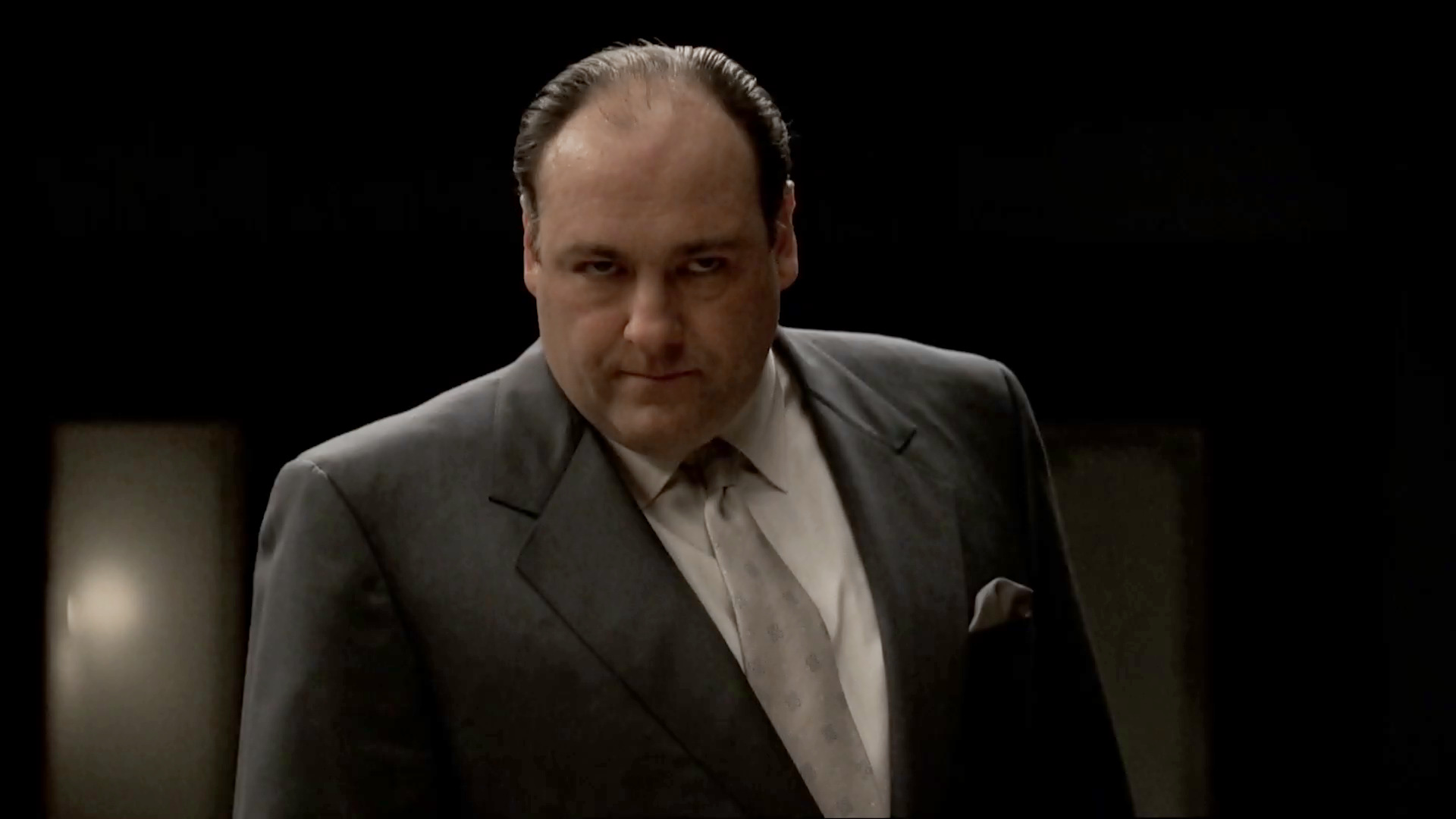
Cable antihero age begins; Sunday night as secular church.
Why it matters
From the desk
Therapy for a Monster Who Knew He Was the Product
Six HBO seasons that flipped prestige TV on: a mob boss in a psychiatrist's office, consequence that sticks, and a cut to black the culture still litigates.
The first useful image is not a gun. It is a man in a waiting room. The Sopranos opens, January 10, 1999, on Tony Soprano seeking psychiatric help after collapsing at a family gathering, and the century's novel learns to breathe on Sunday night cable. David Chase did not invent the gangster. He invented a structure that would not let the gangster be only a gangster: family as co-author of harm, New Jersey mundanity in the same frame as violence, dreams that are not Easter eggs so much as the show thinking out loud. James Gandolfini's performance is the reason the antihero era had a body. Lorraine Bracco's Melfi is the reason it had a conscience that could refuse him. Edie Falco's Carmela is not a prop. That last fact is how you know the series is literature with better lighting, not a crime blotter with prestige cinematography.
College (season 1) is the hour that proved the show would not flinch. A father-daughter college tour and a piece of work that will not stay off-campus — the domestic and the mortal in one weekend, which is the series in miniature. Pine Barrens (season 3) is the bottle as winter joke and moral weather: two men, woods, a job that will not close. Prestige later confused quiet with empty; this hour is quiet because it is loaded, and funny because Chase trusted the audience to sit in snow. Long Term Parking (season 5) is payment. The show's appetite has a cost that does not reset. Made in America (June 10, 2007) is the cut people mean when they say an ending became a civic event. I will not narrate the last shot. I will say it is an argument about whether you were owed a souvenir.
Gossip will lead with casting wars, who almost played Tony, and the industrial afterlife of the cut to black. Fine. The tabloids will say the ending was a cop-out; the cut says the audience had become the hungry party. When the room only cares about the leak, it is often because the text left a vacuum. This text does not. It interrogates the appetite it feeds. That is why it still stands while so many grandchildren inherited only the appetite — charisma without examination, violence as seasoning, male emptiness sold as depth. I have filed that allergy elsewhere. The master remains the master because the camera is not merely seduced.
What the seasons argue: one is the contract (therapy, family, the business). Two and three tighten the crew and the cost. Four and five are empire and its parking lots. Six is the long ending, including the split final season, dream logic that divides households, and a last hour that refuses to be a trailer. You do not need every dream decoded to watch. You need to notice when a dream is the show refusing a simpler cut. Skip nothing in the first season. Graze later only if you already know you are abandoning a novel midway and can live with that as a character flaw.
Verdict: it is worth the binge, slowly. Sunday night as secular church was not a marketing slogan; it was a viewing practice HBO accidentally made sacred. Comparable titles: Breaking Bad as the more formal moral chemistry set; The Wire as the institutional cousin that will not center the monster. Start at the pilot, then College if you need to know whether the show is serious. The scandal of the ending will outlive the craft for people who wanted a hug from a show that never offered one. That is, unfortunately, also part of television history. Put the work first anyway. The cut still matters more than the carpet.
Episode guide
How this series is filed
TV Flash files The Sopranos (1999–2007) on HBO as the episode guide: 86 listed hours across 6 seasons, 1999-01-10–2007-06-10 from “Pilot” (S01E01) to “Made in America” (S06E21).
Open the episode guide · S01E01 Pilot · S06E21 Made in America
Essential episodes
A critic's short list — hours that still teach contract, bottle, payment, and the cut. Filed by Julian Hart (The Binge Brief).
- S01E01 Pilot
The waiting room as thesis. A mob boss seeks help; the century's novel learns to breathe on cable.
- S01E05 College
The flinch test. Domestic weekend and mortal work in one frame — the series in miniature.
- S03E11 Pine Barrens
Bottle as winter weather. Two men, woods, a job that will not close; funny because it trusts you to sit in snow.
- S05E12 Long Term Parking
Payment. The appetite has a cost that does not reset — consequence as form, not a jumpscare.
- S06E21 Made in America
The cut as argument. A closer that still treats the audience as a hungry party, not a customer.
From the desk
Flash columns that open this package’s pilots, finales, or fandom heat:
- The Carpet Report: Finale-Night Looks, Soft Exits, and the Afterparty That Outlasts the Credits — The Carpet Report
- Spoiler-Free (Mostly): Finale Discourse Wars — When the Timeline Writes a Better Ending — Spoiler-Free (Mostly)
- The Binge Brief: Best TV Pilots That Still Teach the Craft — The Binge Brief
- Golden Age Dispatch: Finales That Stopped America — Golden Age Dispatch
- The Binge Brief: Antihero Fatigue — When Prestige’s Favorite Monster Got Boring — The Binge Brief
At a glance
Mob boss Tony Soprano juggles therapy, family, and organized crime while prestige cable rewrites what TV can be. Dreams, violence, and New Jersey mundanity share the frame. The cut to black still starts fights.
Network & studio
- HBO — cable network
- HBO Entertainment — production studio
Why watch now
Because the antihero era's founding novel still interrogates the appetite it feeds: therapy as structure, family as co-author of harm, and a last cut that treats the audience as a hungry party rather than a customer owed a souvenir.
Cultural impact
The Sopranos made HBO synonymous with adult drama and finale discourse a national sport. Casting wars and “the dream” debates are endless sermon material.
Creators
David Chase
Key cast
- James Gandolfini as Tony Soprano
- Edie Falco as Carmela Soprano
- Lorraine Bracco as Dr. Jennifer Melfi
- Michael Imperioli as Christopher Moltisanti
- Tony Sirico as Paulie Gualtieri
- Steven Van Zandt as Silvio Dante
- Dominic Chianese as Corrado "Junior" Soprano
- Jamie-Lynn Sigler as Meadow Soprano
- Robert Iler as A.J. Soprano
Flash facts
- HBO drama (1999–2007) created by David Chase about a New Jersey mob boss in therapy.
- Widely credited with helping usher in TV’s modern prestige “Golden Age.”
- James Gandolfini and Edie Falco delivered signature antihero/family performances.
- Six seasons (broadcast as 1999–2007) with lasting critical rankings atop all-time lists.
- Prequel film The Many Saints of Newark (2021) expanded the franchise.
FAQ
Do I need every dream sequence?
You need to watch them. You do not need a forum decoder ring. The dreams are the show thinking, not a puzzle box with a prize. If you skip them you skip the interiority that separates this from a handsome crime series.
Is the finale a cop-out?
Made in America (June 10, 2007) is an argument, not a glitch. It refuses a souvenir. Whether that is courage or withholding is the civic fight. It is not an unfinished sentence in the production sense. The series ended.
Where should I start, and can I skip seasons?
Start at the 1999 pilot. Do not skip season 1. College (s01e05) is the seriousness test. Later seasons reward patience more than they reward grazing. This is a novelistic run, 86 hours, 1999–2007.
Comedy or tragedy?
A comic tragedy about a man who wants to be seen as a family guy while running a violent business. The jokes are structural, not relief. If you want only the murders, you will miss why Melfi's office exists.
Is this where peak TV starts?
It is the switch that made HBO synonymous with adult serial drama for a mass audience. Not the only ancestor — but the one after which Sunday night felt like a civic appointment. Watch the text before the mythology of the text.
Cultural eras
Official & further reading
External sites for further reading — TV Flash is not affiliated with these networks or studios.
Back to the decade
Also on the dial
More after The Sopranos
- Related showOzPrison as pressure cooker — HBO brutality before Tony ever saw Dr. Melfi.
- Related showThe Larry Sanders ShowLate-night backstage as blood sport — meta comedy that taught prestige how to laugh.
- Related showSex and the CityBrunch, Manolos, and voiceover dating dispatches from a mythic Manhattan.
- Related showThe WireInstitutions as characters — the show people cite to win arguments.
- Related showGame of ThronesDragons, leaks, and a finale that still starts dinner fights.
- Related showSuccessionBillionaire family knife fight — insults as love language.