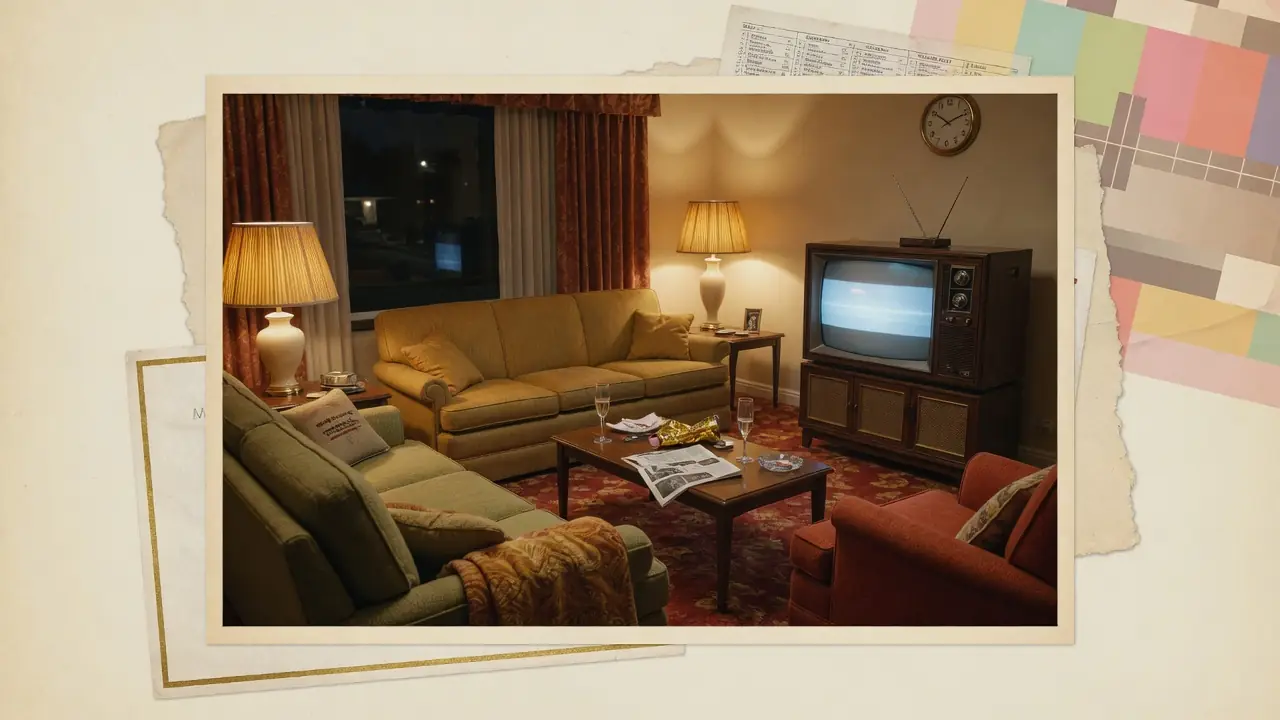
There was a time when a series finale did not trend — it emptied the streets. Three networks, one living room, and a nation that still shared a pulse. Max will tell you the algorithm is culture now. Fine. Inventory is inventory. But some endings still teach what appointment television meant when the remote had fewer buttons than a cocktail napkin. Raise a glass: finales that stopped America — or at least stopped the dinner dishes.
Which finales still feel like national events?
M*A*S*H — Goodbye, Farewell and Amen (1983). The war comedy that earned its tears. Ratings mythology still uses this night as a measuring stick. Watch how the finale honors eleven seasons of tonal risk without collapsing into a clip show of apologies. Package: M*A*S*H. Pilot for the curious: M*A*S*H - The Pilot.
Cheers — One for the Road (3) (1993). Where everybody knows your name — and then the door closes. Ensemble perfection saying goodbye without a streaming afterparty roadmap. Package: Cheers.
Seinfeld — The Finale (2) (1998). A show about nothing that became a referendum. Love it or still fight about it at dinner: that is the point. Event comedy as cultural argument. Package: Seinfeld.
Friends — The Last One, Part 2 (2004). Soft power with a fountain and a couch. The global sitcom goodbye that proved multi-cam could still own a Thursday like a three-network heirloom. Package: Friends.
The Sopranos — Made in America (2007). Cut to black. Still starts fights. Cable’s antihero age ends not with a sermon but with a refusal — which is very golden-age of it, actually: trust the audience or don’t. Package: The Sopranos.
All in the Family — Too Good Edith (1979). The living-room argument machine taking a last bow. Not every finale emptied stadiums; some emptied the jokes into something quieter and truer. Package: All in the Family.
What did “stopped America” actually mean?
On the palate: cigarette haze, affiliate clearances, and a watercooler that was a literal cooler. Event endings shared DNA with must-see TV nights and sweeps stunts — but the best ones earned the silence after the credits.
Three scandals (or near-scandals) that would trend today:
- Cast contract leverage around a final season — as old as star power, newer only in the press cycle speed.
- Network notes that tried to soften a last episode’s bite — Standards & Practices as an uncredited co-writer.
- Spinoff hunger the morning after — Hollywood never met a goodbye it couldn’t franchise.
Max’s drop culture is a vending machine with a PR department. Linear finales were a cathedral with commercial breaks. Both can be holy; only one required you to show up at the same hour as your neighbors.
How do you watch a classic finale without nostalgia cosplay?
Watch for craft under the myth. Did the last hour keep the show’s own rules, or did it become a parade? M*A*S*H keeps the war in the room. Cheers keeps the bar as character. The Sopranos keeps ambiguity as ethics. Nostalgia is allowed. Amnesia is not.
For the craft school of first hours, Julian’s pilot brief is the syllabus. For chart burial and binge openers, Max can keep the Thursday dump. I will be here with the remote that only had three choices — and somehow more chaos.
A toast, then: to finales that made America put the dishes down. And a raised eyebrow: half the people quoting those nights were in another room making a sandwich. Even national events had commercial breaks and human bladders. Television is a soap opera. You just need the right guide — and occasionally, a link to the actual last episode.
FAQ
What is the highest-rated series finale in U.S. TV history?
M*A*S*H’s “Goodbye, Farewell and Amen” (1983) remains the legendary benchmark for series-finale viewership in the three-network era; exact rankings vary by measurement era, but cultural memory still treats it as the event finale.
Why do classic finales still start arguments?
They closed shared cultural chapters. When a whole country watched the same ending, disagreement became dinner-table sport — and the shows themselves often refused neat moral bows.
Where can I open these finales on TV Flash?
Each finale title above links to its episode page; each series name links to the full show package and episode guide.