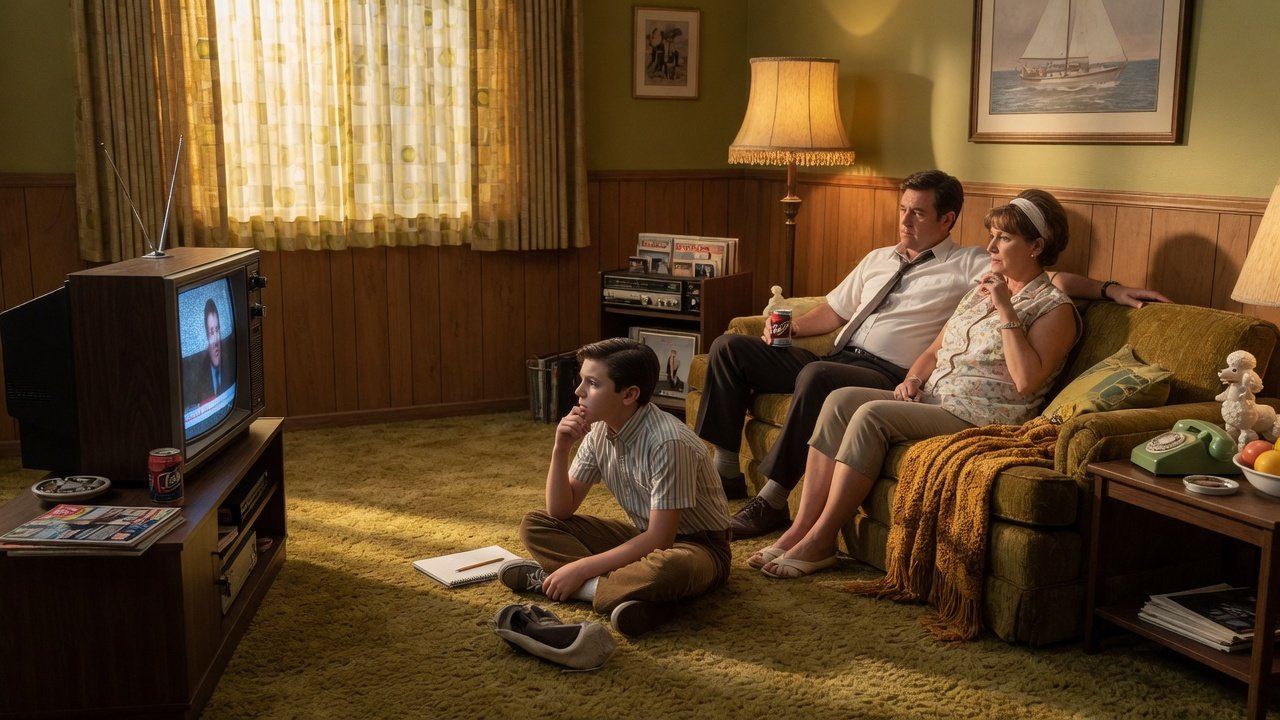
Voiceover coming-of-age template still copied (and remade).
Why it matters
From the desk
A Voiceover That Made the Suburbs Feel Like a Novel
The Wonder Years premiered after a Super Bowl and then spent six seasons arguing that memory is a form: Daniel Stern’s adult Kevin, a suburban decade, and coming-of-age without a laugh track as alibi.
The camera finds a suburban street and a boy who does not yet know he is being remembered. January 1988, after Super Bowl XXII, ABC drops a comedy-drama into the loudest possible living room and then asks that living room to be quiet. The Wonder Years is a voice first: Daniel Stern as adult Kevin, narrating late-sixties and early-seventies adolescence with a novelist’s patience and a sitcom’s timing. Fred Savage has to play the present tense of that memory without winking at the future tense. That is the craft. Neal Marlens and Carol Black built a form that looks like nostalgia and behaves like structure — needle drops as chapter titles, a family as a pressure system, Winnie Cooper as a name the culture still uses like a private joke.
My Father’s Office is the hour that teaches the show’s real subject: not first love, though first love is the marketing, but work, class, and the boy watching a man disappear into a job. Our Miss White is the crush as civic weather — a classroom, a decade, a performance that has to stay child-sized. Goodbye is the series taking a loss seriously enough to drop the cute. How I’m Spending My Summer Vacation is memory as a seasonal close. The tabloids will say the young cast grew up in public. They did. That is context. The cut says the narration is doing the adult labor so the child faces do not have to. People treating television like a crime blotter miss that this is also literature with a baseball glove.
What the season is arguing, when it is arguing: that suburbia is not a blank; that Vietnam and the evening news leak into the kitchen; that a laugh track would be a lie. An early Outstanding Comedy Series Emmy told the industry the hybrid was legal. Six seasons is a long adolescence. The later years have to age Kevin in real time, which is both honest and dangerous — voices change, crushes change, the narration can start explaining instead of revealing. That is a craft problem, not a scandal. Skip the weeks that only remix the crush. Do not skip the father. Dan Lauria’s Jack is the show’s unsentimental spine. Alley Mills, Jason Hervey, Olivia d’Abo, Josh Saviano’s Paul — the ensemble is a family, which means it is also a set of limits.
You can sample without a full binge. The Super Bowl premiere is a complete short story. The office hour is the thesis. The goodbye hour is the bill. Independence Day, in two parts, is the closer: childhood declared over with the form’s own instrument, the voice that has been talking the whole time. The 2021 reboot is a different family and a different argument. It is not a decoder ring for 1988. Verdict: The Wonder Years still works when the narration is specific and fails when it becomes a greeting card. Watch it for Stern’s control, Savage’s lack of adult irony, and the rare network trick of making memory feel like a weekly chapter instead of a clip reel. The reboot discourse will outlive some mid-run hours. The father in the office will outlive the discourse. That, unfortunately, is also how television history actually happens — the work first, the lobby later.
Episode guide
How this series is filed
TV Flash files The Wonder Years (1988–1993) on ABC as the episode guide: 115 listed hours across 6 seasons, 1988-01-31–1993-05-12 from “Pilot” (S01E01) to “Independence Day (2)” (S06E22).
Open the episode guide · S01E01 Pilot · S06E22 Independence Day (2)
Essential episodes
The hours where memory is structure — father, classroom, goodbye, and the voice that closes the book. Filed by Julian Hart (The Binge Brief).
- S01E01 Pilot
Super Bowl lead-out as a short story. The voiceover contract in one night.
- S01E03 My Father's Office
The real subject: work, class, a boy watching a man disappear into a job.
- S02E02 Our Miss White
The crush as civic weather. Child-sized performance, adult instrument on the track.
- S03E20 Goodbye
The series taking a loss seriously enough to drop the cute.
- S06E22 Independence Day (2)
Childhood declared over with the show’s own instrument. Both parts; this is the close.
At a glance
Adult Kevin Arnold narrates suburban adolescence through first loves, family friction, and 60s/70s cultural weather. Voiceover turns ordinary years mythic. Coming-of-age as national soft focus.
Network & studio
- ABC — broadcast network
Why watch now
Watch it for the narration as form: a Super Bowl premiere that asked the living room to be quiet, then six seasons of suburbia, war-on-TV kitchens, and a crush the culture still names. Memory as weekly chapters, not as a greeting card.
Cultural impact
The Wonder Years made narrated suburbia a TV genre and young cast growing-up-in-public a long-running tabloid sport. Reboot discourse never fully dies.
Creators
Neal Marlens · Carol Black
Key cast
- Fred Savage as Kevin Arnold
- Danica McKellar as Winnie Cooper
- Josh Saviano as Paul Pfeiffer
- Dan Lauria as Jack Arnold
- Alley Mills as Norma Arnold
- Jason Hervey as Wayne Arnold
- Olivia d'Abo as Karen Arnold
- Daniel Stern as Narrator (adult Kevin)
Flash facts
- ABC coming-of-age comedy-drama (1988–1993) created by Neal Marlens and Carol Black.
- Premiered after Super Bowl XXII; Fred Savage starred as suburban teen Kevin Arnold.
- Adult Kevin narration by Daniel Stern framed late-1960s/early-1970s memory.
- Won a Primetime Emmy for Outstanding Comedy Series early in its run.
- A 2021 reboot series later aired on ABC/Freeform with a different family focus.
FAQ
Where should I start?
The Super Bowl premiere is a complete short story. Then My Father’s Office, so you meet the show’s real subject. If those two hours land, the rest of season one is a short, clean run.
What can I skip?
Crush-remix weeks in the later seasons, when Kevin’s aging outruns the form. Keep the father hours, the seasonal closes, and the goodbye that drops the cute. Six seasons is longer than the myth.
Is the finale a real ending?
Yes. Independence Day uses the narrator — the show’s instrument — to close childhood. It is a closer, not a reboot door. Watch both parts.
Comedy or drama?
Comedy-drama without a laugh track as alibi. Funny because memory is funny; serious because the kitchen has a war on television. If you want pure sitcom, this is the wrong suburb.
Do I need the 2021 reboot?
No. It is a different family and a different brief. The 1988–1993 series is complete. Treat the reboot as a cousin, not as homework.
Official & further reading
External sites for further reading — TV Flash is not affiliated with these networks or studios.
Back to the decade
More from the 1980s — Glitz, Soaps & Nighttime Neon. All shows.
Also on the dial
More after The Wonder Years
- Related showFamily MattersPerfect Strangers spin-off that got Urkel'd into a phenomenon.
- Related showMax HeadroomStuttering CGI-ish host and cyberpunk TV news — 20 minutes into the future.
- Related showPolice Squad!Six episodes of pure Zucker spoof — canceled, then immortal via Naked Gun movies.
- Related showHead of the ClassIndividualized Honors Program kids with a substitute teacher who actually gets them.
- Related showPerfect StrangersCousin from Mypos, dance of joy, and Chicago fish-out-of-water chaos.
- Related showChina BeachVietnam through nurses and R&R tents — prestige war drama without the gung-ho filter.