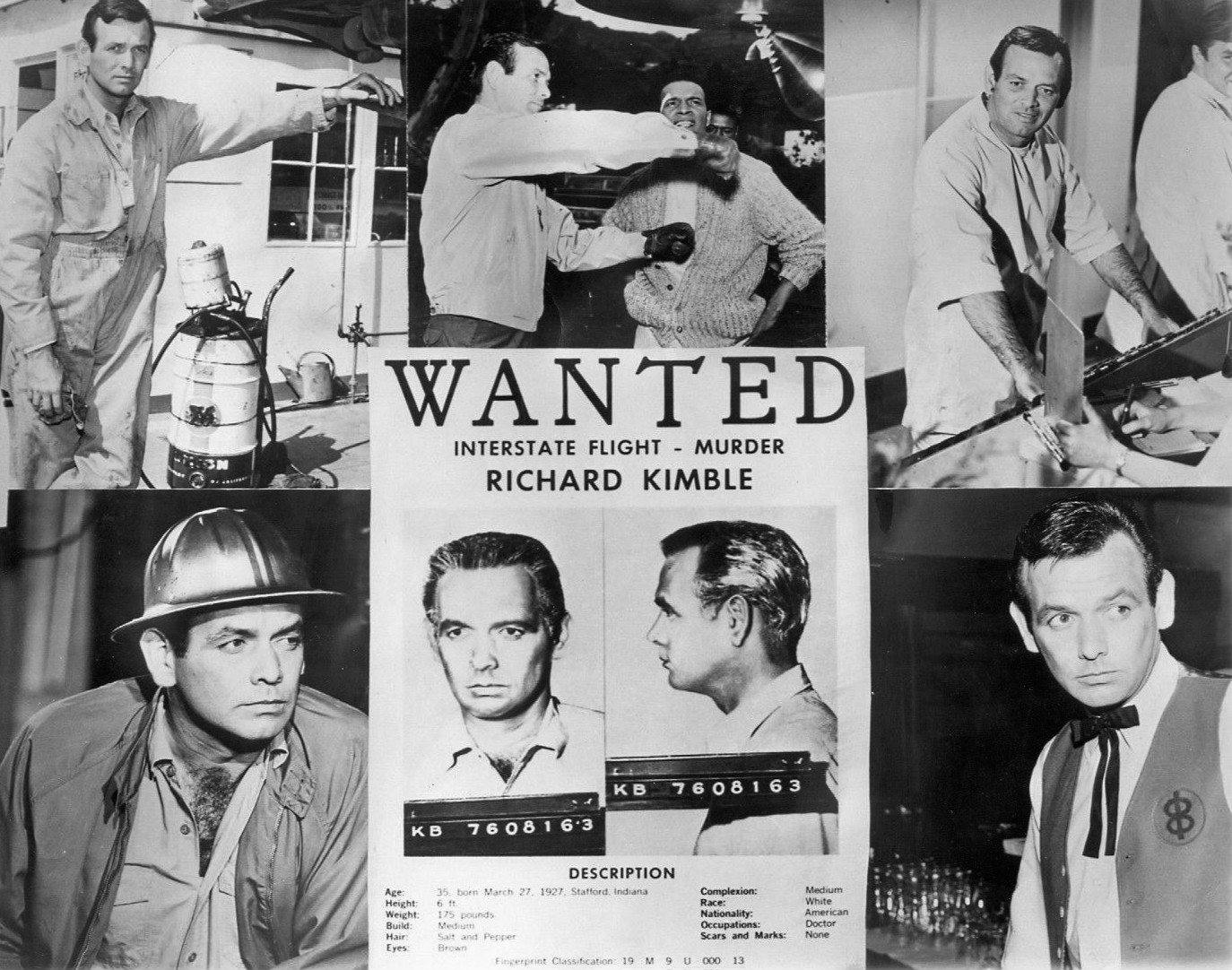
Serialized manhunt as national event — the ancestor of 'appointment finales.'
Why it matters
From the desk
Four Seasons of Running, One Night of Verdict
Roy Huggins's manhunt as national appointment — David Janssen's quiet, Barry Morse's pressure, and a 1967 finale that taught America to wait for a gavel on a Tuesday.
The running still matters more than the one-armed man as trivia. The Fugitive, 1963 on ABC, is a novel of pursuit told in weekly towns: Dr. Richard Kimble, convicted of a murder he did not commit, moving through other people's lives while Lt. Gerard moves through his. David Janssen plays exhaustion as craft — a face that does not beg the camera. Barry Morse plays Gerard as vocation, not cartoon. Bill Raisch's one-armed man is the rumor that structures four years. Serialized television did not invent the long game here, but this series taught a mass audience to treat an ending as a civic date.
Watch the episode as a short story with a bruise. Kimble arrives, works a job, helps a stranger, almost stays, runs. That is the grammar. Variation is the art: a nightmare in a small town, a search in a city wind, a corner that is actually a trap. The show is anthology in the guest cast and serial in the sweat. People who only remember the finale are remembering the weather report. The work is the 120 hours of nearly-caught, which is a harder trick than a last-reel unmasking. Comparable titles are later chase dramas and every limited series that mistakes a twist for a destination. This one knew the destination and still had to invent Tuesdays.
Gossip as footnote: Janssen's intensity, the production's grind, the frenzy around the last episode as early viral television — numbers still cited like scripture in rooms that have not watched a middle-season hour. The tabloids will say America stopped. The cut says whether the last two parts argue with the first season's promise or merely cash it. I think they cash it, mostly, with a professionalism the later "event finales" could copy as marketing and not as structure. People treating television as a crime blotter will start with the ratings myth. Fine. Then watch Nightmare at Northoak and tell me the myth is the interesting part.
What the series is arguing: innocence is a job, not a halo; law can be sincere and still wrong; kindness from strangers is both plot fuel and a moral claim. It is not a lecture. It is a chase that keeps meeting people. That is why the guest-star mill matters: each town is a one-act play that has to work if the serial is going to feel like a country instead of a treadmill. Some hours are sausage. Four seasons of sausage and gold is the network bargain. You do not binge this as a weekend dare unless you like fatigue as method. You sample, then you commit to the last two parts because the culture still talks as if you were there.
The Judgment, split across two August 1967 hours, is the tail that justifies the phrase appointment finale. Honest bookend: the series actually ends, the verdict actually arrives, and the afterlife is a 1993 film plus every later innocent-man procedural that borrowed the sweat. Verdict: watch it for Janssen's quiet and for the rare pleasure of a long game that agrees to stop. The scandal of how the last night outran the craft in memory is, unfortunately, also part of television history. The critic's job is to put the running first, then admit the gavel was earned.
Episode guide
How this series is filed
TV Flash files The Fugitive (1963–1967) on ABC as the episode guide: 120 listed hours across 4 seasons, 1963-09-17–1967-08-29 from “Fear in a Desert City” (S01E01) to “The Judgment (2)” (S04E30).
Open the episode guide · S01E01 Fear in a Desert City · S04E30 The Judgment (2)
Essential episodes
Five hours of pursuit as form — the bruise, the town, the date with the gavel. Filed by Julian Hart (The Binge Brief).
- S01E11 Nightmare at Northoak
Small-town dread as craft. The chase meeting a closed community that does not need a speech about fear.
- S01E19 Search in a Windy City
City wind instead of desert: the same grammar in a different weather, which is the series' real variation.
- S01E30 The End Game
First-season pressure at a boil — the nearly-caught hour as the show's true set piece.
- S02E24 Everybody Gets Hit in the Mouth Sometime
A title that already understands bruise. Guest-town one-act with the serial sweat still on.
- S04E29 The Judgment (1)
The door into the civic ending. Watch with part two; this is the rare long game that agrees to stop.
At a glance
Dr. Richard Kimble runs from a wrongful murder conviction while hunting the one-armed man who destroyed his life. Weekly towns become temporary sanctuaries and traps. The manhunt is the series; the finale was a national event.
Network & studio
- ABC — broadcast network
Why watch now
Watch the long chase as form: Janssen's quiet, Morse's pressure, and a four-season manhunt that taught America to wait for a verdict. The finale is not a twist night so much as a civic appointment the later event-TV industry still tries to buy.
Cultural impact
The Fugitive’s finale stopped America and taught networks what a true event ending could do. Serialized thriller DNA for generations of manhunt TV.
Creators
Roy Huggins
Key cast
- David Janssen as Dr. Richard Kimble
- Barry Morse as Lt. Philip Gerard
- Bill Raisch as The One-Armed Man
Flash facts
- ABC drama created by Roy Huggins and produced by Quinn Martin; aired September 17, 1963–August 29, 1967 (4 seasons, 120 episodes).
- David Janssen stars as Dr. Richard Kimble, wrongly convicted and hunting the one-armed man while pursued by Lt. Gerard.
- Won the Emmy for Outstanding Dramatic Series in 1966; first three seasons black-and-white, fourth in color.
FAQ
Do I have to watch all four seasons of The Fugitive?
No. The grammar is weekly: Kimble arrives, almost stays, runs. Sample strong hours, then watch the two-part finale if you want the civic ending the culture still cites.
Will the finale spoil the rest?
The last two parts close the manhunt. If you care about arriving at the verdict with the 1967 audience, save “The Judgment” until you have lived with the chase. The middle seasons are not mystery boxes; they are variations.
Is it too slow for a modern binge?
It is a 1960s hour drama, not a plot-velocity gadget. Janssen's quiet is the point. If you need constant twists, this is the wrong assignment. If you want pursuit as form, it still plays.
How serialized is it, really?
The innocence, Gerard, and the one-armed man continue. Guest towns reset. Think anthology with a bruise, not a puzzle-box that punishes hopping.
Where should I start?
The pilot, “Fear in a Desert City,” states the contract. For the work at full craft, try “Nightmare at Northoak” or “Search in a Windy City” before you jump to the gavel.
Cultural eras
Official & further reading
External sites for further reading — TV Flash is not affiliated with these networks or studios.
Back to the decade
Also on the dial
More after The Fugitive
- Related showThe Green HornetBritt Reid and Kato — martial-arts sidekick energy that made Bruce Lee a U.S. star.
- Related showThe F.B.I.Efrem Zimbalist Jr. vs. the ten most wanted — Bureau procedural as national myth.
- Related showABC's Wide World of SportsThe thrill of victory, the agony of defeat — anthology sports as global window.
- Related showShindig!Prime-time rock variety — go-go dancing and British Invasion heat on ABC.
- Related showF TroopFort Courage farce — cavalry, Hekawi schemes, and slapstick frontier corruption.
- Related showMcHale's NavyPT-73 hijinks — wartime sitcom with Ernest Borgnine's sneaky skipper.