There was a time when a sitcom did not “drop.” It arrived, live-to-tape energy in a living room that only had three choices and still chose chaos. I Love Lucy is not nostalgia cosplay. It is the operating system. Max will tell you the algorithm is culture now. Cute. Half the For You page is still stealing Lucy’s blocking.
Which hours still run the machine?
The Girls Want to Go to a Nightclub (1951). The marriage is the premise; the physical comedy is the proof. Lucy as agent of disorder, Ricky as gravity. Watch it as architecture, not as a museum. Package: I Love Lucy.
The Audition (1951). Ambition as farce — already the engine that will carry six seasons of “let me in the show.” Golden-age dirt: the audition is never only an audition.
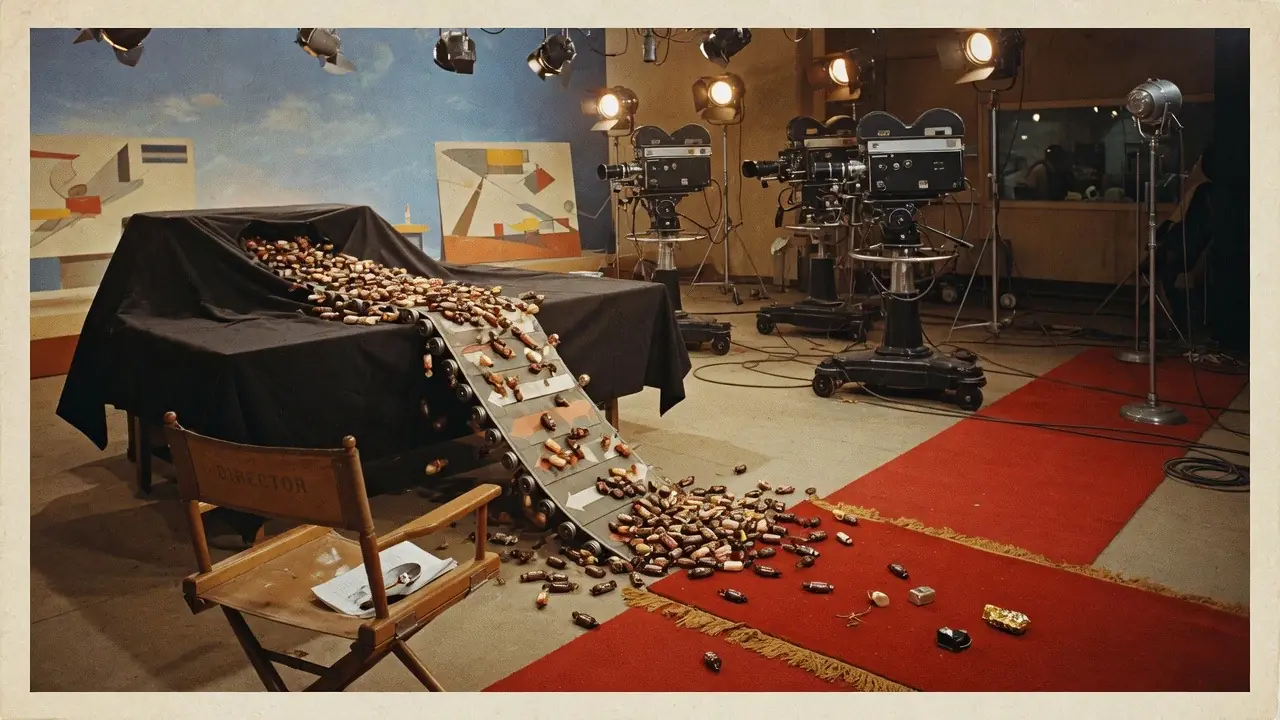
Job Switching (1952). The candy line. If you have seen a conveyor-belt joke in the last seventy years, you have seen a grandchild of this hour. Physical comedy as industrial critique, whether they filed it that way or not.
Mr. and Mrs. TV Show (1954). Television eating itself: the Ricardos as a TV couple inside a TV couple. Standards & Practices would have had notes. The audience had a living room.
The Ricardos Dedicate a Statue (1957). The catalog bookend. Not every finale emptied stadiums; some dedicated a statue and left the form undefeated.
What did “best” mean when the remote had three buttons?
It meant the hour you described at the office cooler the next morning — a literal cooler. Event comedy as shared pulse. Contract fights, guest-star mythology, and who owned Monday night are older than any streamer Q&A. The pattern is old: bury a flop, hype a tired idea, rewrite a star. Lucy made the rewrite look like a dance.
For anthology ethics instead of multi-cam farce, the desk also listed The Twilight Zone essentials on that package — Serling’s first instrument was isolation, not a laugh track. Same decade’s nerve. Different cathedral.
How do you watch Lucy without “simpler times” slop?
Watch the blocking. The candy line is a machine. The nightclub pilot is a marriage contract. The statue is a curtain that knows it already won. Nostalgia is allowed. Amnesia is not. Julian will ask if the cut argued. I will ask whether your prestige comedy could survive a studio audience that paid for the ticket in real time.
Raise a glass: start at the nightclub, then the candy line. The rest of sitcom history is footnotes with better lighting.
FAQ
What are the essential I Love Lucy episodes?
A short desk list: the nightclub pilot, “The Audition,” “Job Switching,” “Mr. and Mrs. TV Show,” and the series bookend “The Ricardos Dedicate a Statue.”
Why does the candy-factory episode still matter?
It is the cleanest surviving demonstration of multi-cam physical comedy as structure — a conveyor of jokes that later sitcoms still copy.
Where can I open these hours on TV Flash?
Links above go to individual episode pages; the Lucy package now carries the essential-episode mini-pack.