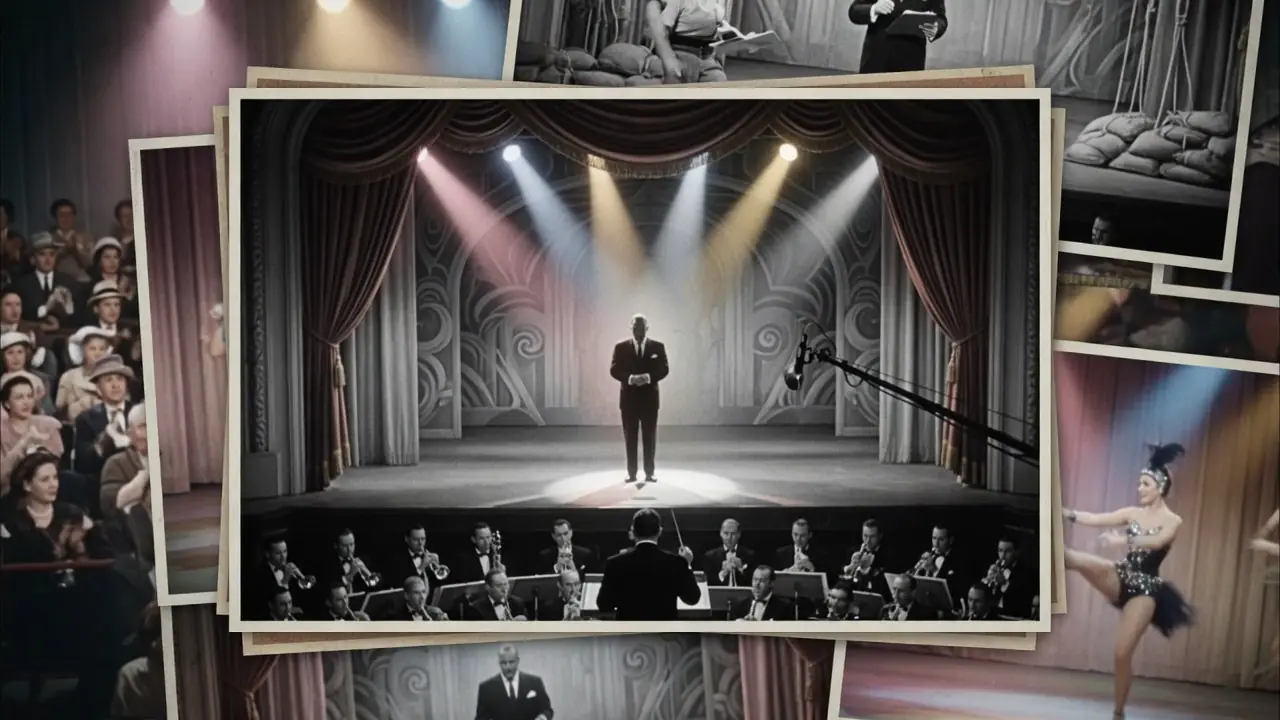
Picture a Sunday when the screen could still embarrass a nation in real time. No pause button for the collective gasp — just a camera, a cue, and millions of living rooms agreeing, for one hour, on a shared pulse. Live television event nights were not gentler than streaming premieres; they were riskier per square inch of air. Variety spectacles, spoiler-proof finales, awards chaos, sports bleeding into variety bleeding into news: the schedule made weather. That pattern should feel familiar whenever a platform cosplays “live” with a counter and a spoiler warning. The gadgets changed. The hunger for a simultaneous heart attack did not.
What did a live event night actually feel like?
Scarcity with sweat. The Ed Sullivan Show could mint a career or freeze one while the country watched the minting. Early television’s live dramas treated performance like high-wire work because it was. Later, live musicals and stunt episodes borrowed that voltage for a jaded age. On the palate: cigarette lore in the control room, affiliate panic, Standards & Practices hovering like a nervous priest, and a laugh or a flub that could not be patched before the watercooler opened at dawn.
Three live-night moves that would trend today (and did, without needing the word viral):
- The unrecoverable flub — human error as national anecdote by morning.
- The breakthrough performance — one song, one monologue, career weather permanently changed.
- The finale-as-civic-event — not always live, but eventized like it was: MASH* goodbyes, mystery-showing finales, ratings myths executives still cite like scripture.
None of this requires ancestor worship. Plenty of live hours were beige porridge with better microphones. Memory, though: when everything is available, nothing is urgent, and urgency was the social accelerant of old event TV. You felt the flop. You felt the phenomenon. The remote had fewer bullets, and people still found ways to make drama.
Was live better — or simply impossible to hide?
Impossible to hide is not the same as better. Tape and then digital editing brought craft miracles the pure live era could not attempt. But live culture forced a kind of civic craft: writers wrote to the clock; performers lived with the country overnight; endings could not hide inside a silent interface. The historical claim the room forgets: shared nights manufactured shared language faster than abundance does. That language included gossip — who froze, who killed, who got cut by the censor with a smile still on.
Streaming’s live-ish experiments — global drops, concurrent sports, awards specials, “watch together” buttons — are not fraud. They are admissions. The chart boys know simultaneous attention still pays. When they bury a show on a quiet Friday, they are choosing the opposite of event night. When they stage a premiere with a countdown, they are stealing from Sullivan’s grandchildren without the rabbit ears. I will not pretend 1955 had a For You page. I will insist 2026 still wants what 1955 sold: a reason to be in the same hour as strangers.
Old-Hollywood dirt is fair game; cruelty toward the dead is not. Prefer the anecdote that survives three barstools — the star who hated the live medley America hummed for a decade, the producer who kept a spare sketch because live always eats a plan.
What should we steal from the live event map?
Not the oligopoly. The risk. Weekly chapters that cannot be entirely sanded. Finales that accept a nation’s mood as part of the art. Promos that treat the audience as a public. And humility: the country once gathered without a group chat and still managed spoilers via telephone and cousin. Imagine Sullivan with a quote-tweet. Actually — better not. Some living rooms barely survived the volume knob.
A toast, then, to the night that ended when it ended, whether the algorithm liked it or not — and to the performer who saved a collapsing cue with a glance the home audience never knew was panic. Glory always had a human, slightly deflating detail. That, my dears, is continuity.
FAQ
What were live TV event nights in classic television?
They were scheduled broadcasts — variety shows, live dramas, specials, and major finales — designed to be watched simultaneously by a mass audience, making performance risk and shared reaction part of the cultural experience.
Why did live television matter so much in the network era?
Limited channels and fixed schedules concentrated attention. A single live performance could define a career overnight, and national conversation formed the next day around a common set of moments.
How do modern streamers use “event night” logic?
Through countdowns, weekly drops, live sports and awards, global premieres, and synchronized releases that recreate simultaneous attention — even when the rest of the catalog remains on-demand.