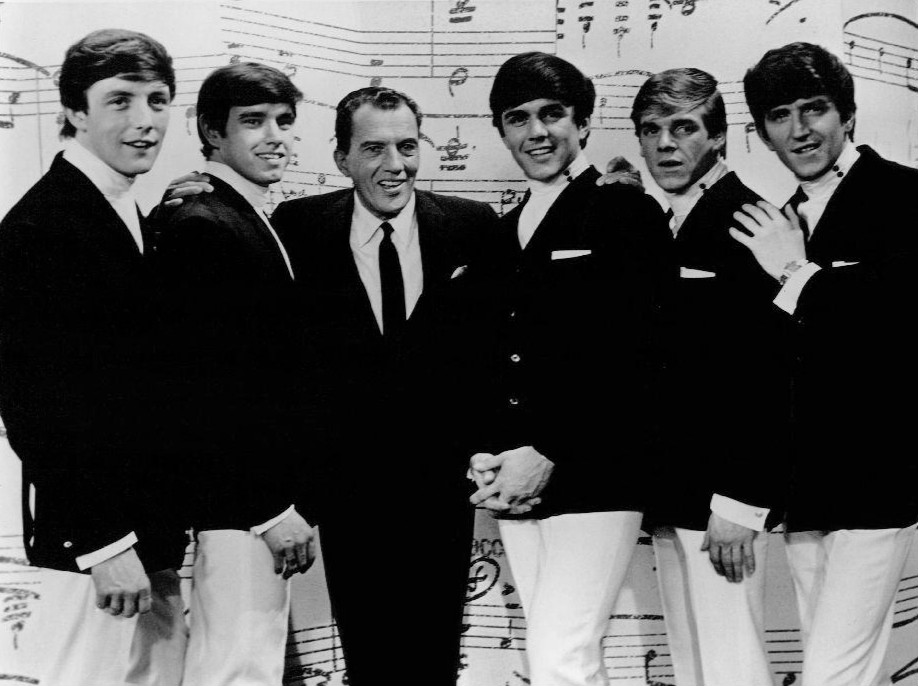
Variety as cultural gatekeeping; one booking could mint a legend.
Why it matters
From the desk
Sunday Night Was a Rope Line — Ed Held the Clipboard
Twenty-three years of living-room gatekeeping: Elvis from the waist up, the Beatles as a national scream, and a host who could mint a legend or ice a comic before Monday’s papers.
Flash: it is Sunday, the set is a Sunday best, and a man who looks like your accountant is about to decide whether America gets to scream. The Ed Sullivan Show was not a variety hour. It was a rope line with a full orchestra. Booking was foreign policy. One slot could mint a legend; one freeze-out could send a comic back to the Catskills with a publicist already calling it a misunderstanding. The museum wants a civic story about shared culture. I want the clipboard. Who got the eight o’clock heat. Who got the animal act. Who had to change a lyric because the host smiled like a priest.
1956: Elvis, first appearance, and the living room discovers the pelvis is a policy issue. Later they shoot him from the waist up as if a camera crop were a morals clause. 1964: the Beatles, first appearance, and the scream is the show. You can still feel the heat through kinescope grain — girls losing their faces, parents losing the argument, a host who introduces history like a dentist. 1967: the Doors, a requested lyric change, and a singer who did not get the amicable memo. They are not amicable. That is the heat-check. The Stones, the Jackson Five, the comics who killed and the comics who got iced — same stage, different funerals.
Who was where (beat sheet, not a TOC):
1. Talent in a look engineered for a nation that still sat together, which is a kind of carpet whether the museum likes it or not.
2. Sullivan doing gratitude theater and punishment theater in the same stiff shoulders.
3. A publicist already spinning the banned comic as a scheduling conflict.
4. A PA named Dot holding the only accurate rundown, because the host’s smile was not a document.
The people who want just the text, not the text messages, will tell you to study the bookings as canon. Cute. The bookings were text messages. Jackie Mason’s feud with the host is still the template for a comic who misread the room and a kingmaker who never forgot. Censorship dust-ups were the deleted captions of their day. Opera next to Topo Gigio next to a British invasion is not a playlist. It is a power map: who was allowed to be loud in the American living room, and who had to be cute about it.
How to watch a mega-list without drowning in dated novelty acts: hunt the cultural crime scenes. The 1948 opener is Broadway-and-boxers infrastructure, Toast of the Town before the surname became a verb. Then jump to Elvis, the Beatles, a Stones booking, the Doors night, a Jackson Five Sunday. You are not bingeing. You are walking a rope. The last 1971 hour is the door close — Melanie, impressions, the Sunday machine coughing after the culture had already moved to other rooms. Variety as gatekeeping does not survive once the kids stop asking the host for permission.
Last flash: the Beatles did not merely appear. They were admitted. Elvis did not merely dance. He was cropped. Ask me how I know. The deleted Story was the lyric they were told not to sing, and the next day’s column was the one that decided whether the act still had a career. For the museum-guard version of Sunday night, there is always a critic who wants the set list without the blood. I will be where the clipboard was. The door is closed. The scream is not.
Episode guide
How this series is filed
TV Flash files The Ed Sullivan Show (1948–1971) on CBS as a season-first catalog of 690 listed hours across 19 seasons, 1948-06-20–1971-03-28 from “Rodgers and Hammerstein, Monica Lewis, José Ferrer, Ruby Goldstein” (S01E01) to “Melanie; David Frye; Sandler & Young” (S24E25).
Open the episode guide · S01E01 Rodgers and Hammerstein, Monica Lewis, José Ferrer, Ruby Goldstein · S24E25 Melanie; David Frye; Sandler & Young
Essential episodes
The crime-scene Sundays — pelvis policy, British invasion, lyric fights, a new family’s first scream. Filed by Vivian Cross (The Carpet Report).
- S09E51 Elvis Presley (1st appearance) / Charles Laughton / Dorothy Sarnoff
Elvis, first appearance: the pelvis as a policy issue, the living room as a morals board.
- S17E19 Beatles (1st appearance) / Oliver Broadway cast
February 9, 1964 — admission, not merely a booking. The scream is the show.
- S18E05 Rolling Stones / Jack Jones / Stiller & Meara
The Stones on the same stage as the smile: British heat the clipboard could not fully civilize.
- S21E02 The Doors / Yul Brynner / Rodney Dangerfield
The Doors night: a requested lyric change and a singer who skipped the amicable memo.
- S23E12 Jackson Five / Lainie Kazan / John Davidson
Jackson Five Sunday — a new family’s first national scream on the old rope line.
From the desk
Flash columns that open this package’s pilots, finales, or fandom heat:
- Golden Age Dispatch: Colbert Closes the Variety Night — A Last Late Show, a Monday NBC Hour, and the Old Hunger for a Shared Pulse — Golden Age Dispatch
- Golden Age Dispatch: Watch the Winner Tomorrow — How Living Rooms Used to Process a Monday Night — Golden Age Dispatch
- Golden Age Dispatch: Monday-Night Statues — When NBC Still Owns the Living Room — Golden Age Dispatch
- Golden Age Dispatch: Live TV Event Nights — When the Country Shared One Pulse — Golden Age Dispatch
At a glance
Sunday night variety hosted by stiff, kingmaking Ed Sullivan — comics, dancers, and rock acts in one living-room broadcast. A single booking could mint a legend or scorch a career. America met the Beatles, Elvis controversies, and a thousand almost-famouss through his stage.
Network & studio
- CBS — broadcast network
Why watch now
Sunday as a rope line: Sullivan’s clipboard decided who got to be loud in the living room. Watch the bookings as foreign policy — Elvis cropped, Beatles admitted, lyrics policed — and the feuds that still read like a publicist calling a freeze-out a scheduling conflict.
Cultural impact
Sullivan was the original appointment influencer — one slot could rewire pop history. Variety as soft power never had a clearer American throne.
Creators
Ed Sullivan · Marlo Lewis
Key cast
- Ed Sullivan as Host
- Ray Bloch as Orchestra leader
- Ralph Paul as Announcer
Flash facts
- CBS Sunday-night variety series (originally Toast of the Town, 1948–55) that ran 1948–1971: 24 seasons, 1,068 episodes.
- Presented music, comedy, Broadway, circus acts, and cultural milestones including The Beatles’ 1964 U.S. TV appearances.
- Long fixed 8–9 p.m. ET slot for most of its run; executive produced by Ed Sullivan.
FAQ
Where should I start?
If you want heat, start with Elvis’s first 1956 booking, then the Beatles on February 9, 1964. If you want the machine itself, glance at the 1948 opener, then jump to the crime scenes.
What can I skip?
Skip completionism and most mid-run novelty stacks unless you like time-capsule packing peanuts. Hunt named bookings — music, comics with feud lore, the nights that made Monday’s papers.
Is the last show worth it?
As a door close, yes. March 1971 is the Sunday machine shutting after the kids had already stopped asking permission. It is not the Beatles scream. It is the lights.
Do I watch in order?
No. It is a variety log, not a serial. Order helps only if you are tracing a feud or an act’s return bookings. Otherwise, jump by name and date.
Music show or comedy show?
A gate. Comics, rock, Broadway, opera, puppets — the mix is the power. One stage deciding who got to be loud in the American living room.
Cultural eras
Official & further reading
External sites for further reading — TV Flash is not affiliated with these networks or studios.
Back to the decade
Also on the dial
More after The Ed Sullivan Show
- Related showThe Ernie Kovacs ShowVisual gags, blackouts, and Nairobi Trio — the medium inventing itself for laughs.
- Related showThe Adventures of Robin HoodRichard Greene's Robin — British export that American kids treated like native folklore.
- Related showThe United States Steel HourIndustrial giant, theatrical punch — live drama with a steel-hard production sheen.
- Related showOmnibusAloft culture for the masses — Leonard Bernstein, Orson Welles, and Sunday seriousness.
- Related showAmos 'n' AndyHugely popular, deeply fraught — the sitcom that forces the conversation about race and early TV.
- Related showMamaNorwegian immigrant family warmth — live family drama before sitcoms ate the hour.