Cult cancellation → streaming revival pattern.
Why it matters
From the desk
The Callback Was the Architecture
Mitchell Hurwitz’s Bluth saga is a crossword that learned to be a sitcom — Fox cult, Netflix revival, and a finale that is not the 2006 cancellation.
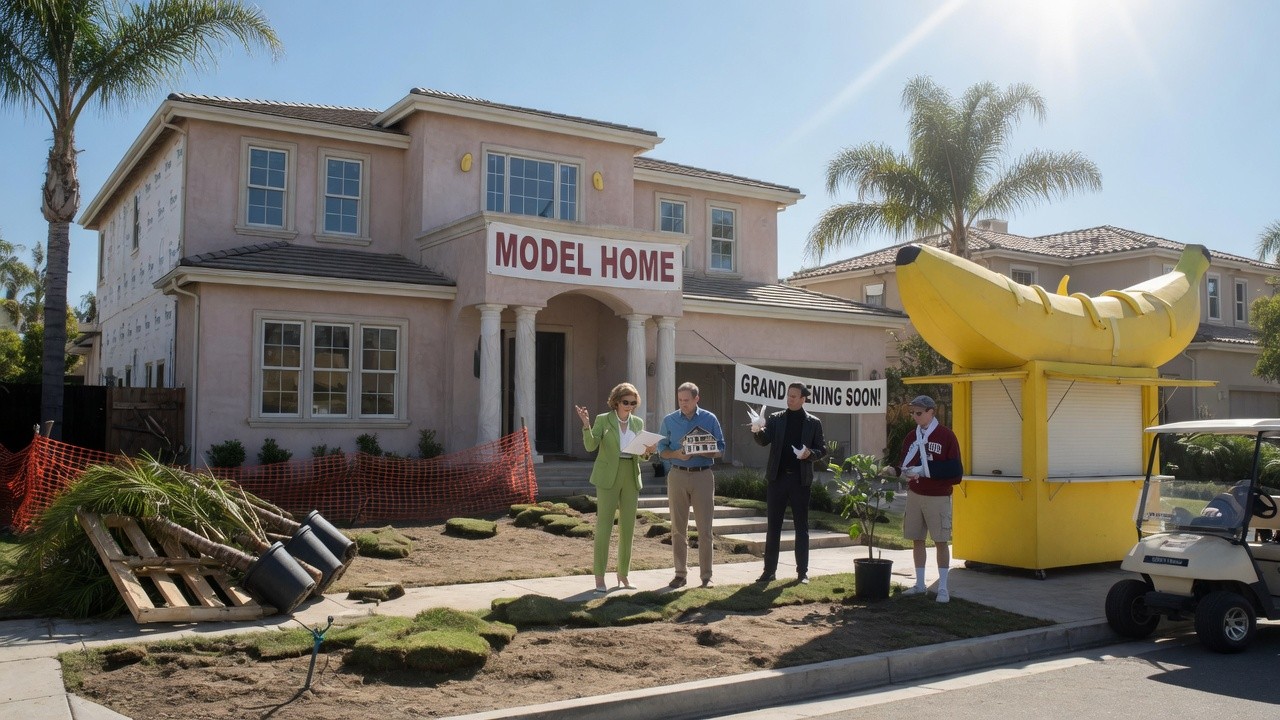
Open on a narrator who is already the joke. Ron Howard’s voice is not garnish; it is a formal device, a raised eyebrow with residuals. Arrested Development, created by Mitchell Hurwitz, treats the single-camera sitcom like a crossword: callbacks as plot, cutaways as punctuation, a family so densely incompetent that rewatch becomes a second job. Jason Bateman’s Michael is the straight man as a structural beam. Will Arnett’s Gob, Portia de Rossi’s Lindsay, Michael Cera’s George Michael, Alia Shawkat’s Maeby, Tony Hale’s Buster, David Cross’s Tobias, Jessica Walter’s Lucille, Jeffrey Tambor’s George Sr. — the ensemble is an instrument, not a poster. If you came for catchphrases, you will get them. If you came to watch joke architecture, you are in the right house, even if the house is a model home.
Craft first. The Fox years (three seasons, 2003–2006) are the argument: network comedy running denser than the slot could sell. “Pilot” teaches the contract. “Pier Pressure” is the callback machine at industrial scale. The first-season closer already behaves like a series that expects to be studied. Then Fox cancels a critically spoiled child, which is the origin myth the cult never stopped telling. “Development Arrested” is a 2006 ending that is not this series’ ending. That distinction is the whole later story. Gossip will tell you about neglect, about time slots, about how the joke was that nobody watched. Fine. Footnote. The text was already built for people who would watch twice.
Netflix’s revival is a different machine, and pretending otherwise is how you get a bad-faith rewatch. Season four arrives in 2013 as a dump-era experiment: timelines, solo chapters, a density that sometimes forgets the audience is not a writers’ room. Season five tries to be a family again. Tambor’s later public disgrace is part of the record around those years; it is not a plot point I am going to aestheticize. The work of the Fox seasons still stands. The revival is optional graduate school, not a correction of the thesis. People who stop at season three are allowed a complete thought. People who continue are watching a second formal bet.
Compared with 30 Rock, this is the crossword; Tina Fey’s show is the live-feed. Compared with Community, it is less thesis-about-TV and more thesis-about-family-as-a-criminal-enterprise. The influence on later single-camera comedy is real and also over-claimed by people who think a callback is a personality. A callback is a bill: it only lands if episode four planted the charge. That is craft, not nostalgia cosplay.
Rewatch advice: start at the Fox pilot and let season one teach the dialect. If you only have a weekend, stay in seasons one through three. Skip the temptation to treat “I’m having a love affair with this show” GIFs as the text. Skip, if you must, season four’s first pass until you can give it the attention it demands; it is not casual. The last hour in the pack, “The Fallout,” is a 2019 series closer. It is a finale. It is not “Development Arrested,” and it is not an open tab because someone on a streamer took a reunion meeting.
Verdict: Arrested Development remains the strongest case that a sitcom can be built for rewatch without being built for comfort. It is for viewers who will let a narrator lie to them as a form of love. It is not for anyone who needs the Bluths to be hugs. The scandal of the cancellation will outlive half the revival discourse. That is, unfortunately, also part of television history. The crossword still has an answer key. It is the Fox years. Everything after is extra credit.
Episode guide
How this series is filed
TV Flash files Arrested Development (2003–2006) on Fox as the episode guide: 84 listed hours across 5 seasons, 2003-11-02–2019-03-15 from “Pilot” (S01E01) to “The Fallout” (S05E16).
Essential episodes
Architecture hours — Fox dialect, cancellation myth, actual last page. Filed by Julian Hart (The Binge Brief).
- S01E01 Pilot
The contract: narrator as device, family as a criminal sitcom, model home as set and thesis.
- S01E10 Pier Pressure
Pier Pressure — callback density as industrial craft, not a meme kit.
- S01E22 Let 'Em Eat Cake
First-season closer that already expects to be studied. The crossword showing its work.
- S03E13 Development Arrested
Development Arrested: Fox’s 2006 ending, which is not this series’ ending. Cult origin, not the last page.
- S05E16 The Fallout
The Fallout (2019): the pack’s actual finale. Revival closer, not an open tab.
At a glance
The wealthy Bluth family collapses into criminal incompetence while narrator Ron Howard documents every callback. Dense joke architecture rewards rewatches like a second job. Cancellation became cult fuel.
Network & studio
- Fox — broadcast network
Why watch now
A sitcom written like a crossword: callbacks as plot, narration as a raised eyebrow. Watch the Fox years for joke density unmatched on network; treat the Netflix seasons as a different machine. It teaches rewatch comedy, then tests whether revival is the same sport — and it does have a last episode, in 2019.
Cultural impact
Arrested Development wrote the cult cancellation → streaming revival pattern. Fox neglect lore and Netflix politics are half the joke now.
Creators
Mitchell Hurwitz
Key cast
- Jason Bateman as Michael Bluth
- Portia de Rossi as Lindsay Bluth Fünke
- Will Arnett as Gob Bluth
- Michael Cera as George Michael Bluth
- Alia Shawkat as Maeby Fünke
- Tony Hale as Buster Bluth
- David Cross as Tobias Fünke
- Jeffrey Tambor as George Bluth Sr. / Oscar Bluth
- Jessica Walter as Lucille Bluth
Flash facts
- Satirical single-camera sitcom created by Mitchell Hurwitz; Fox run 2003–2006, later Netflix seasons.
- Ron Howard executive-produced and narrated the Bluth family saga.
- Won multiple Emmys including Outstanding Comedy Series for season one; cult classic status.
- Canceled by Fox despite acclaim; Netflix revived it (seasons 4–5).
- Influenced later single-camera comedies with dense callbacks and cutaway gags.
FAQ
Where should I start Arrested Development?
The Fox pilot. Season one teaches the dialect — narrator, callbacks, model home. Do not start at the Netflix seasons and work backward.
Can I stop after season three?
Yes, and you will have a complete Fox novel. “Development Arrested” is a 2006 cancellation closer, not this pack’s last hour. The revival is graduate school.
Is the real finale the Fox ending or the Netflix one?
This series ended in 2019. “The Fallout” is the pack’s finale. The 2006 closer is an ending the show outlived. Reunion talk is not season six.
Do I have to rewatch to get it?
You have to rewatch to get all of it. The first pass should still be funny. If it is only homework, the density is fighting you; stay in season one.
Comedy or puzzle box?
A sitcom written like a crossword. The puzzle is in service of jokes, not the other way around. If you wanted mystery-box prestige, the island is next door.
Official & further reading
External sites for further reading — TV Flash is not affiliated with these networks or studios.
Back to the decade
Also on the dial
More after Arrested Development
- Related showThe Simple LifeParis and Nicole do farm work — celebutante culture as sitcom.
- Related showBonesSquints, sarcasm, and a Brennan/Booth will-they that ran for years.
- Related showThe O.C.Welcome to the O.C., bitch — teen soap with a killer soundtrack.
- Related showGleeShow choir as cultural weather system — mashups, slushies, and Monday mornings.
- Related showThe Bernie Mac ShowAmerica — Bernie Mac tells you how it is raising his sister's kids.
- Related showMalcolm in the MiddleSingle-camera chaos, fourth-wall genius kid, and Lois forever.