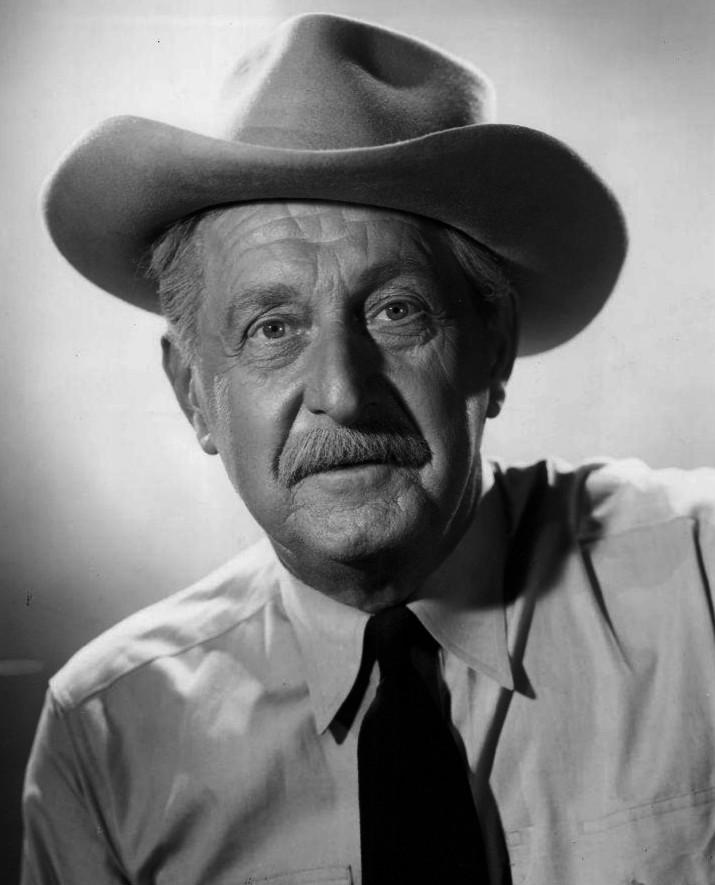
Death Valley Days
True western tales hosted by a string of future governors and old pros.
True western tales hosted by a string of future governors and old pros.
Longest-running western anthology; Borax sponsorship as pure Americana branding.
Why it matters
From the desk
The window is eighteen seasons. Death Valley Days ran in syndication from 1952 to 1970 — **452 episodes**, outlasting shinier primetime westerns on pure inventory — and the continuity was not a sheriff. It was Twenty Mule Team Borax. Ruth Woodman's desert brief treated claimed-true stories of the American West as a weekly textbook with a pitchman host: Stanley Andrews as the Old Ranger, then Ronald Reagan, Robert Taylor, Dale Robertson. Old pros and at least one future president selling desert lore from the same desk. Rex will call that Americana. The calendar calls it a hold.
Host-as-pitchman is the format. True-ish frontier tales as a brand. Reagan's stint is the trivia grenade the timeline still throws; Borax is the actual business model. Longest-running western anthology as a commercial that learned to look like a history lesson. Nostalgia desks want the mule team as folklore. Fine. **Eighteen seasons** is a windowing flex the later prestige West still cannot match on volume. Discovery here was not a row on an app. It was a sponsor that refused to leave the desert.
How the inventory stacked: (1) the opener, How Death Valley Got Its Name, origin-myth hour as Borax Americana — host-as-pitchman already the anthology's real continuity; (2) season two's titled yarn, The Diamond Babe, true-ish frontier as a brand later presidents and old pros would host; (3) a place-name ignition, Reno, the longest-running western anthology still selling 20 Mule Team manners between stories; (4) mid-run, California Gold Rush in Reverse, a historical joke — sponsored Americana still treating the desert as a weekly textbook; (5) the listed closer in this mega-pack, Early Candle Lighten, last named hour of the Borax trail, pitchman hosts packed away after a record western run.
Watch it for the ritual, not for a binge math that was never the point. A 2026 viewer is not finishing 452 desert yarns. You sample the desk, the mule-team sponsor, the proof a western could be a commercial and a history lesson in the same breath. If they bury the finale in the archive, you'll know who lost the room: anyone still pretending linear folklore beat inventory. The desert had a product. The product had a show. That is culture now, whether the golden-age toast admits it or not.
Episode guide
TV Flash files Death Valley Days (1952–1970) on Syndication as a season-first catalog of 452 listed hours across 18 seasons, 1952-10-01–1970-04-24 from “How Death Valley Got Its Name” (S01E01) to “Early Candle Lighten” (S18E26).
Open the episode guide · S01E01 How Death Valley Got Its Name · S18E26 Early Candle Lighten
Borax-sponsored frontier anthology — host as pitchman, true-ish tales, the longest-running western brand. Filed by Max Sterling (Streaming Confidential).
How Death Valley Got Its Name: origin-myth hour as Borax Americana, host-as-pitchman ritual already the anthology's real continuity.
The Diamond Babe — season-two titled yarn, true-ish frontier as a brand later presidents and old pros would host.
Reno: place-name ignition, the longest-running western anthology still selling 20 Mule Team manners between stories.
California Gold Rush in Reverse: mid-run title as historical joke, sponsored Americana still treating the desert as a weekly textbook.
Early Candle Lighten closes this mega-pack: last named hour of the Borax trail, pitchman hosts packed away after a record western run.
Anthology western dramatizing (claimed) true stories of the American West, long sponsored by Twenty Mule Team Borax. Death Valley Days ran in syndication from 1952 to 1970, outlasting many primetime westerns in episode count. Hosts included Stanley Andrews as the Old Ranger, Ronald Reagan, Robert Taylor, and Dale Robertson — old pros and at least one future president selling desert lore from the same desk. Ruth Woodman's series treated frontier tales as a brand: host-as-pitchman ritual, mule-team sponsor, Americana as a commercial and a history lesson in the same breath. True-ish desert stories as a pitch that refused to clock out.
Death Valley Days is the longest-running western anthology, Borax-sponsored Americana hosted by old pros and at least one future president. True-ish frontier tales as a brand. A 2026 viewer watches it for the host-as-pitchman ritual and the trivia that Ronald Reagan once sold 20 Mule Team from the same desk.
Death Valley Days was the longest-running western anthology, Borax sponsorship as pure Americana branding. A syndicated desert brief outlasted shinier primetime westerns on pure episode count. Hosts rotated — Old Ranger to Reagan to Taylor to Robertson — while the mule-team pitch stayed. Later host-as-sponsor westerns still rent this desk: claimed-true frontier tales as a commercial that doubled as a history lesson.
Ruth Woodman
Start with any host era you can find — Andrews, Reagan, Taylor, Robertson — and a Borax-framed 'true' desert tale. The anthology-plus-pitch is the show.
Skip a 1952–70 complete wagon. Standalone western parables repeat. You are sampling host-as-pitchman, not a serial.
Yes, as the longest-running western anthology and a brand ritual. The Reagan desk is catnip; the form is the reason.
Sponsored western anthology — claimed-true frontier tales with a host pitch, not a continuing ranch saga.
External sites for further reading — TV Flash is not affiliated with these networks or studios.
Also on the dial