Sea Hunt
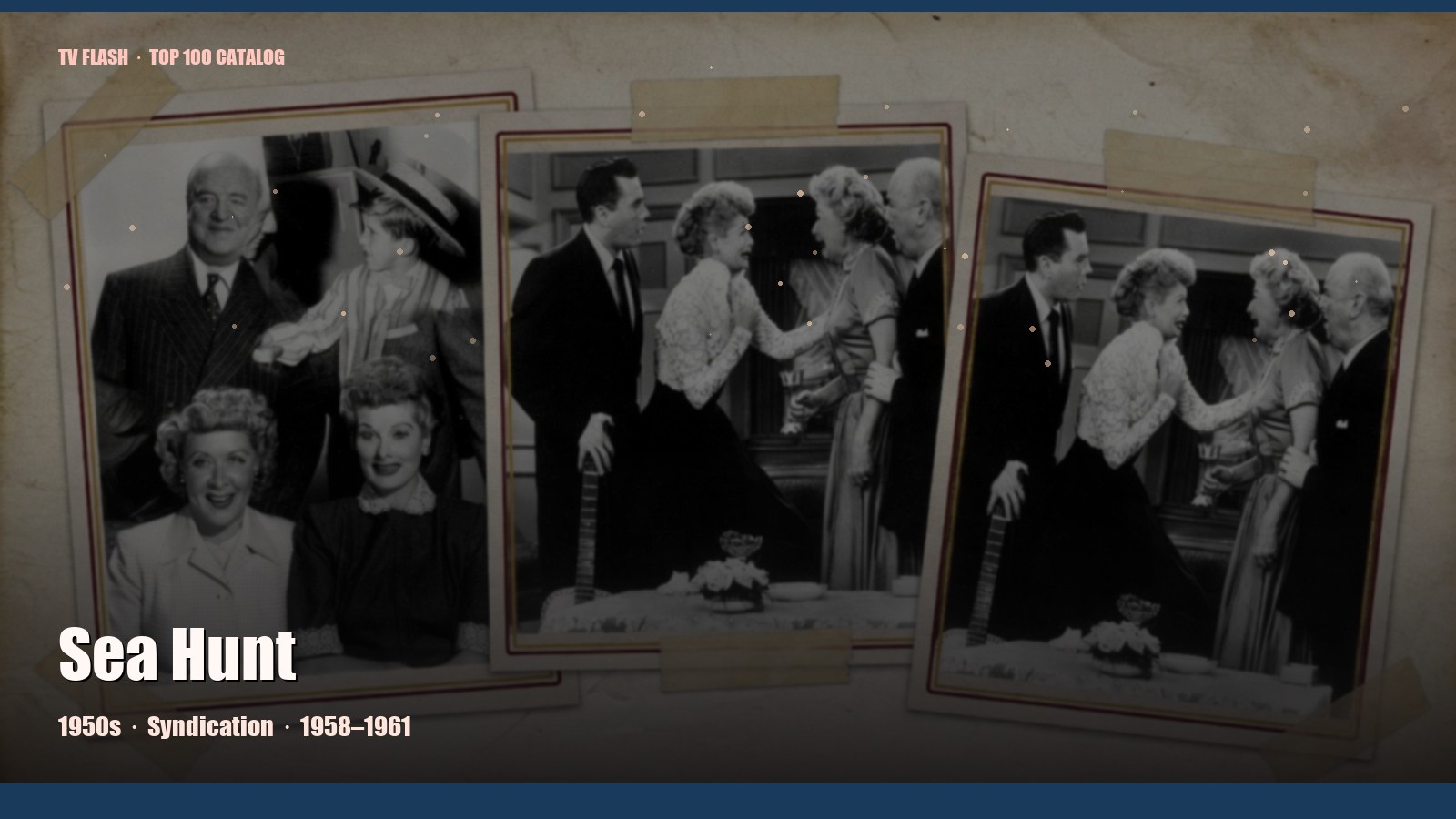
Lloyd Bridges in scuba gear — underwater action that made divers of a generation.
Lloyd Bridges in scuba gear — underwater action that made divers of a generation.
Syndicated underwater adventure that popularized scuba culture on TV.
Why it matters
From the desk
The silhouette is a man in scuba, tanks on the back, California light turning the Pacific into a second red carpet nobody called a carpet. Sea Hunt (first-run syndication, 1958–1961) put Lloyd Bridges in the water for 155 episodes produced by Ivan Tors, real diving footage and aquatic stunts as the whole look. Ex-Navy frogman Mike Nelson takes dangerous underwater assignments off the coast. Kids watching in 1958 grew up wanting tanks for Christmas; the series is credited with boosting public interest in scuba. **This was not a studio tank pretending; this was a wet franchise.** Location action before cheap CGI. The image is the argument.
Bridges's diving commitment is image management as craft: a star who got wet on purpose. Sons Beau and Jeff hanging around the set is family-business lore the timeline still treats as a cute caption. Let them. The look is the plot — rubber, chrome, bubbles, a body moving like the ocean hired it. Tessa's tags will turn the kids-on-set beat into a thread. The fittings were the dives. Ivan Tors produced 155 syndicated hours; the California coast was the backlot; the tank was the dare. Spectacle with a zipper and a mask.
Look board for a frogman procedural: wet-suit black, tank gleam, mask as jewelry, California coast as the lighting plot, bubbles as sequins that do not need a publicist. Elevated casual, if casual means drowning for a close-up. One vulnerable note: that performance is exhausting — actual diving, actual risk, a generation of living-room kids reading the gear as glamour. Then back to the silhouette. Syndicated underwater adventure as a first-run flex. The star's body is the show the way a gown is a show.
The opener, Sixty Feet Below, is Bridges in scuba as a generation's dare, syndicated underwater adventure already popularizing the gear as TV spectacle. Season two's place-name, The Alcatraz Story, is location action still cheaper than CGI and wetter than most network hours. A mid-run one-word title, Asylum, carries the family-business lore of Beau and Jeff hanging around a set that looked like a second ocean. The last year starts on a diving title, Point of No Return, the wet franchise still a first-run syndication flex. The 1961 closer, Round Up, is the last named dive, Bridges packing the tanks after making divers of a living-room generation.
Last image: a mask breaking the surface, chrome catching the sun, the second look (the airport departure, 1950s edition) being a man still damp. See you at the after-party. It is underwater. The tags can fight about the kids on set; the silhouette already won.
Episode guide
TV Flash files Sea Hunt (1958–1961) on Syndication as the episode guide: 155 listed hours across 4 seasons, 1958-01-04–1961-09-23 from “Sixty Feet Below” (S01E01) to “Round Up” (S04E38).
Open the episode guide · S01E01 Sixty Feet Below · S04E38 Round Up
Lloyd Bridges in scuba — syndicated underwater spectacle, location action before cheap CGI. Filed by Lana Reyes (Red Carpet Reality).
Sixty Feet Below: Bridges in scuba as a generation's dare, syndicated underwater adventure already popularizing the gear as TV spectacle.
The Alcatraz Story — season-two place-name, location action still cheaper than CGI and wetter than most network hours.
Asylum: mid-run one-word title, family-business lore of Beau and Jeff hanging around a set that looked like a second ocean.
Point of No Return starts the last year on a diving title, the wet franchise still a first-run syndication flex.
Round Up closes 1961: last named dive, Bridges packing the tanks after making divers of a living-room generation.
Ex-Navy frogman Mike Nelson takes dangerous underwater assignments off the California coast. Sea Hunt (first-run syndication, 1958–1961) put Lloyd Bridges in scuba gear for 155 episodes produced by Ivan Tors, emphasizing real diving footage and aquatic stunts. Kids watching in 1958 grew up wanting tanks for Christmas; the series is credited with boosting public interest in scuba. Bridges's diving commitment and sons Beau and Jeff hanging around the set is family-business lore. Syndicated underwater adventure as spectacle before cheap CGI — a frogman procedural, a generation of divers, and a star who got wet on purpose.
Sea Hunt put Lloyd Bridges in scuba gear and made divers of a generation. Syndicated underwater adventure that popularized scuba as TV spectacle. In 2026 it is worth watching as location action before cheap CGI, plus the family-business lore of Beau and Jeff hanging around a set that actually went underwater.
Sea Hunt popularized scuba culture on television and proved first-run syndication could sell location spectacle. Tors's 155 dives made the California coast a backlot and the tank the argument. Kids wanted tanks for Christmas; a generation of divers dates the itch here. Later underwater adventure still owes this frogman procedural — Bridges wet on purpose, not a studio tank pretending.
Ivan Tors
Start with Bridges underwater. Mike Nelson's assignments and the real diving footage are the show; you have the form in one dive.
Skip 155 similar jobs. The scuba spectacle repeats. Family-set lore is extra, not an episode requirement.
Yes, as syndicated aquatic adventure that popularized scuba on television. Wet stunts, not desktop oceans.
Syndicated underwater adventure — frogman jobs and real diving, not a nature lecture.
External sites for further reading — TV Flash is not affiliated with these networks or studios.
Also on the dial