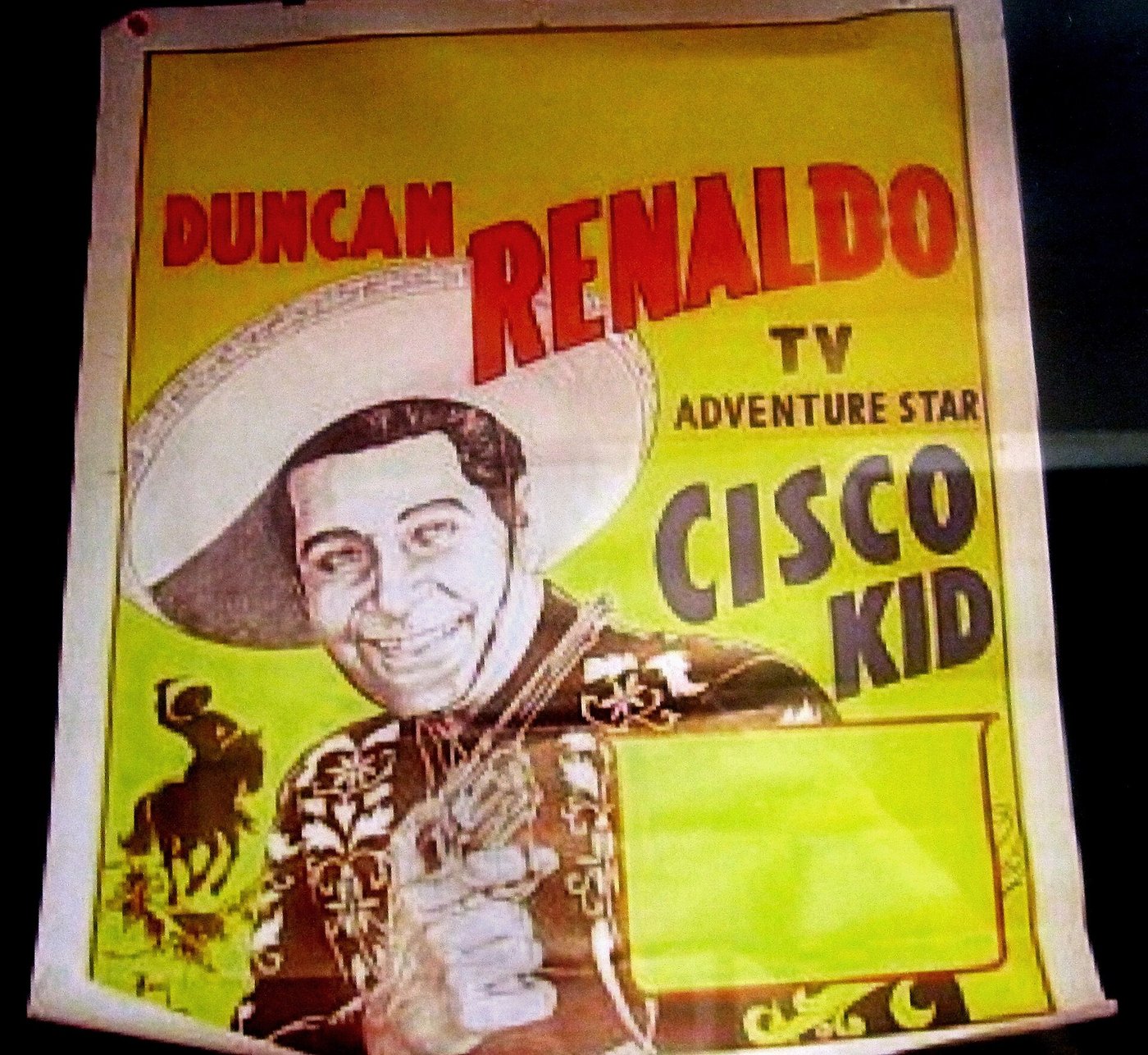
The Cisco Kid
O. Henry's robin-hood caballero in early color — 'Oh, Pancho!' 'Oh, Cisco!'
O. Henry's robin-hood caballero in early color — 'Oh, Pancho!' 'Oh, Cisco!'
Early color-filmed western half-hours; bilingual hero friendship as kids' adventure brand.
Why it matters
From the desk
Oh, Pancho. Oh, Cisco. Playground liturgy, 1950, and the trick is the film stock. The Cisco Kid (first-run syndication, 1950–1956, Ziv) brought O. Henry's robin-hood caballero to half-hours filmed in color — a novelty when most television was still gray. Duncan Renaldo as Cisco, Leo Carrillo as Pancho, charming roving heroes righting wrongs along the borderlands with gallantry and humor. One hundred fifty-six episodes, six seasons. Their off-screen bond sold the on-screen companero warmth. Frederick Ziv's color half-hours made the borderlands look like a postcard on purpose. On the palate: sun, a catchphrase duet, and a future other cowboy shows still shot in gray.
The historical claim: bilingual hero friendship as a kids' adventure brand, not a footnote to the dusty monoculture. Max's vending-machine culture will sell you a colorized extra and call it discovery. Cute. This one was color when color was a dare. Patterns are old — hyping a gimmick, burying a show that was actually ahead of the set in the living room. The living room here got a postcard. Companero warmth, gallantry, a catchphrase exchange that still sounds like two friends inventing a duet. First-run syndication again, doing the network's job without the network's permission.
What the night looked like: kids repeating the names; adults noticing the color; a western that looked ahead while the rest of the hat market stayed gray. Renaldo and Carrillo's off-screen bond is the gossip with a bibliography — the warmth was not only a camera trick. 156 syndicated hours. The later westerns forgot to write the friendship. This one put it in the title card's echo.
The opener, Boomerang, opens O. Henry's robin-hood caballero in early color: Oh, Pancho, Oh, Cisco, bilingual friendship as a kids' brand. A mid-run titled caper, Monkey Business, is the rare western that looks like a color postcard on purpose. A named hour as masquerade, Cisco Plays the Ghost, is companero warmth still the point of the half-hour. Late-run hardware, A Six-Gun for No-Pain, is the color caballero still riding a half-hour filmed for a future set. The 1956 closer, Tangled Trails, is the last named ride, the color caballero packing away a friendship the later westerns forgot to write.
A toast to two friends in color, and to the slightly deflating detail that most of the country was still watching gray sets and had to take the postcard on faith. Linear event television, martini-dry. The vending machine can keep its filters. This one developed in daylight.
Episode guide
TV Flash files The Cisco Kid (1950–1956) on Syndication as the episode guide: 156 listed hours across 6 seasons, 1950-09-05–1956-03-22 from “Boomerang” (S01E01) to “Tangled Trails” (S06E26).
Open the episode guide · S01E01 Boomerang · S06E26 Tangled Trails
Oh, Pancho! Oh, Cisco! — early color caballero, compañero warmth, a western shot as a postcard. Filed by Rex Fontaine (Golden Age Dispatch).
Boomerang opens O. Henry's robin-hood caballero in early color: Oh, Pancho, Oh, Cisco, bilingual friendship as a kids' brand.
Monkey Business: mid-run titled caper, the rare western that looks like a color postcard on purpose.
Cisco Plays the Ghost — named hour as masquerade, compañero warmth still the point of the half-hour.
A Six-Gun for No-Pain: late-run titled hardware, the color caballero still riding a half-hour filmed for a future set.
Tangled Trails closes 1956: last named ride, the color caballero packing away a friendship the later westerns forgot to write.
Charming roving hero Cisco and sidekick Pancho right wrongs along the borderlands with gallantry and humor. The Cisco Kid (first-run syndication, 1950–1956, Ziv) brought O. Henry's robin-hood caballero to half-hours filmed in color — a novelty when most TV was still gray. Duncan Renaldo and Leo Carrillo starred; their off-screen bond sold the on-screen companero warmth. Oh, Pancho! Oh, Cisco! became playground liturgy. Bilingual hero friendship as a kids' adventure brand, a color postcard on purpose. Watch it as the rare western that looked ahead to color while other cowboy shows still shot in gray — warmth, gallantry, and a catchphrase exchange that still sounds like two friends inventing a duet.
The Cisco Kid brought O. Henry's robin-hood caballero to early color half-hours: Oh, Pancho! Oh, Cisco! Bilingual hero friendship as a kids' adventure brand. In 2026 it is the rare western that looks like a color postcard on purpose — companero warmth, filmed for a future other cowboy shows still shot in gray.
The Cisco Kid pioneered color-filmed western half-hours and sold bilingual hero friendship as a kids' adventure brand. Ziv's 1950–1956 syndication made the borderlands look like a postcard on purpose; the catchphrase exchange became playground liturgy. Renaldo and Carrillo's companero warmth was the product. Later kid westerns still chase that duet: gallantry, humor, and a friendship that photographs in color.
Frederick Ziv
Start with Renaldo and Carrillo's companero rhythm. The color photography and the Oh, Pancho / Oh, Cisco exchange are the brand.
Skip needing every borderlands wrong righted. Formula adventure repeats. You are here for the friendship and the color postcard.
Yes, as early color-filmed western half-hours and a bilingual kids' adventure brand.
Color kids' western adventure — robin-hood caballero and sidekick, friendship as the product.
External sites for further reading — TV Flash is not affiliated with these networks or studios.
Also on the dial