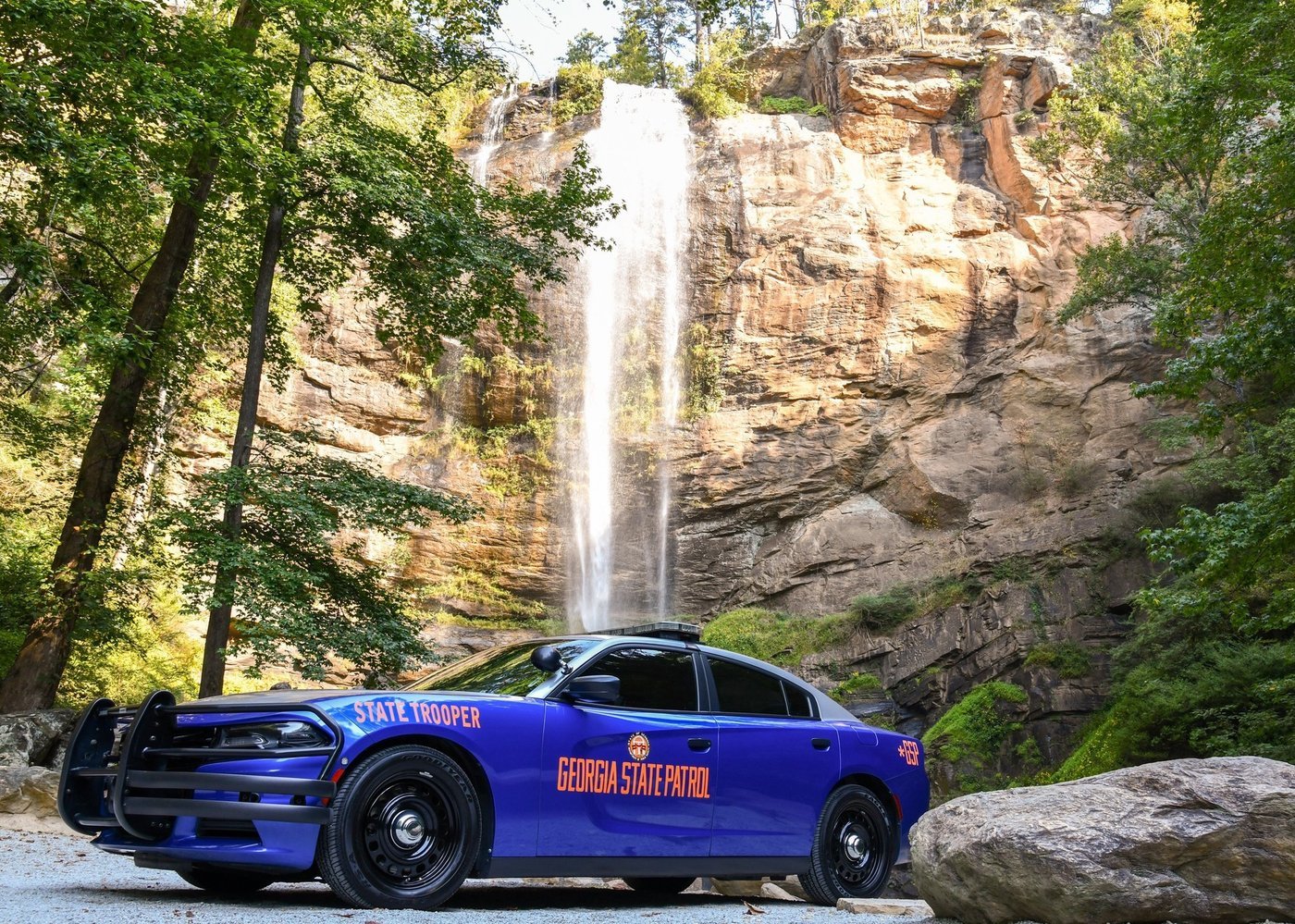
Highway Patrol
Broderick Crawford's bark and a dispatch radio — 'Ten-four' as national grammar.
Broderick Crawford's bark and a dispatch radio — 'Ten-four' as national grammar.
Syndicated crime hit that proved non-network first-run could own the culture.
Why it matters
From the desk
Ten-four, and the living room answers. First-run syndication, 1955–1959, Ziv Television, 156 episodes of Chief Dan Mathews leading California Highway Patrol officers against hijackers, killers, and road crime in semi-documentary bark. Broderick Crawford's gravel, William Boyett's sergeant, endless freeways, radio codes as national grammar. Highway Patrol did not need a network logo to own the night. It sounded like a scanner you could not turn off. On the palate: asphalt, a dispatch speaker, and a closing shout that still feels like a door slamming on a squad car.
The historical claim the streaming desks sand off: non-network first-run could be culture, not remaindered inventory. Max's world is a vending machine with a PR department; Ziv's freeway liturgy was appointment television without the affiliate prayer. Crawford's bark taught America cop-talk. The codes and the closing Highway Patrol! energy became pop-culture texture — not because an algorithm queued them, but because the half-hour kept arriving like weather. First-run syndication as a second network. Believe it or go back to pretending 1955 needed a For You page.
What the night looked like around this show: a living room that could hear gravel through the dashboard; a freeway as the only set that mattered; a star whose voice was the branding. Semi-documentary style without the museum hush. 156 syndicated hours, four seasons, a freeway liturgy that made ten-four household speech. Patterns are old. Burying a show, hyping a flop, rewriting a star — the linear version was a bark and a radio code, and it worked.
The opener, listed as prison break and road block, is Crawford's bark opening first-run syndication as culture, ten-four already on its way into national grammar. An early titled hour, Radioactive, is Cold War freeway texture — gravel voice and squad cars teaching cop-talk without a network logo. Season three ignites on a pulp title, Hypo Bandit, the radio-dispatch crime show still a non-network hit that sounded like news. The last year starts as Frightened Witness, dispatch cadence still the star, endless freeways still the set. The 1959 closer, Bank Messenger, is the last titled ten-four, Crawford packing the bark that made syndication feel like a second network.
A toast, then, to the scanner that outtalked the networks, and to the star whose gravel made a code into English. Glory always had a human, slightly deflating detail: it was still just a freeway, and the shout at the end was still a job. Linear event television, martini-dry. The vending machine can keep its windows. This one had a radio.
Episode guide
TV Flash files Highway Patrol (1955–1959) on Syndication as the episode guide: 156 listed hours across 4 seasons, 1955-10-05–1959-06-29 from “Prison Break / Road Block” (S01E01) to “Bank Messenger” (S04E39).
Open the episode guide · S01E01 Prison Break / Road Block · S04E39 Bank Messenger
Ten-four as national grammar — Crawford's bark, freeways, first-run syndication that owned the culture. Filed by Rex Fontaine (Golden Age Dispatch).
Prison Break / Road Block: Crawford's bark opens first-run syndication as culture, ten-four already on its way into national grammar.
Radioactive — titled Cold War freeway hour, gravel voice and squad cars teaching America cop-talk without a network logo.
Hypo Bandit: season-three ignition on a pulp title, the radio-dispatch crime show still a non-network hit that sounded like news.
Frightened Witness starts the last year, dispatch cadence still the star, endless freeways still the set.
Bank Messenger closes 1959: last titled ten-four, Crawford packing the bark that made syndication feel like a second network.
Chief Dan Mathews leads California Highway Patrol officers against hijackers, killers, and road crime in semi-documentary style. Highway Patrol (first-run syndication, 1955–1959, Ziv Television) proved a non-network hit could own the culture: Broderick Crawford's bark, 156 episodes, endless freeways, ten-four as national grammar. William Boyett's Sgt. Ken Williams rode shotgun on the scanner energy. Radio codes and the closing shout became pop-culture texture. Crawford's gravel voice taught America cop-talk. Watch it as the radio-dispatch crime show that still sounds like a squad-car speaker — gravel, asphalt, and a bark you can hear through the dashboard.
Highway Patrol proved first-run syndication could own the culture: Broderick Crawford's bark, endless freeways, and ten-four as national grammar. Watch it in 2026 as the radio-dispatch crime show that taught America cop-talk — gravel voice, squad cars, and a non-network hit that still sounds like a scanner.
Highway Patrol proved non-network first-run could own the culture. Ziv's 156 syndicated episodes made Crawford's bark and radio codes into household speech: ten-four as national grammar, freeways as a liturgy. Semi-documentary road crime without a network logo still sounded like a scanner. Later cop-talk on television still rents this gravel and this dispatch.
Ziv Television Programs
Start with Crawford barking ten-four over freeway crime. Semi-documentary dispatch is the form; you have the show in one chase.
Skip 156 identical road weeks. Formula is the point. You do not need a network-era comparison chart to hear the scanner.
Yes, as syndicated cop-talk that entered the language. Gravel and freeways still photograph.
Syndicated half-hour crime procedural — dispatch radio and freeway patrol, not a serialized cop soap.
External sites for further reading — TV Flash is not affiliated with these networks or studios.
Also on the dial