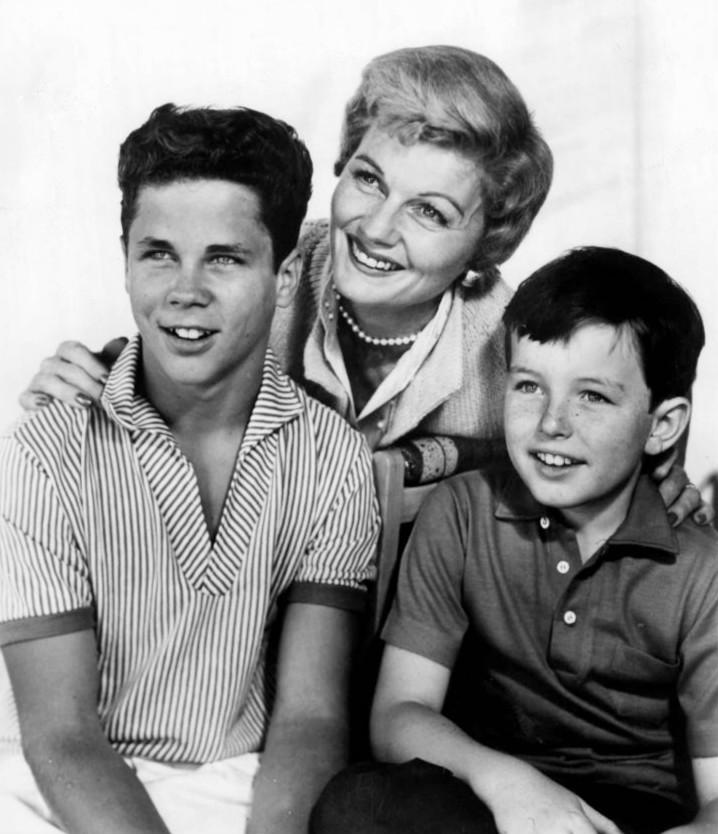
The sitcom family myth that later decades spent decades rewriting.
Why it matters
From the desk
Mayfield Was a Broadcast Contract, Not a Town
Six seasons of child-height sitcom: Ward’s speeches, June’s pearls, and a suburban brand later decades used as a punchline — usually without watching the blocking.
October 1957: a boy gets spelled, a father prepares a speech, and CBS (then ABC) sells America a suburb that never had to survive a zoning meeting. Leave It to Beaver is not a documentary of the 1950s. It is a contract. The camera sits at child height. Trouble is a fib, a borrowed boat, a crush, a haircut that will not behave. Ward Cleaver talks like a man who has read the network’s idea of a civic handbook. June is costumed as calm. Wally is the rehearsal for adulthood. Beaver is the nation’s stand-in for the kid who meant well and still tracked mud on the myth.
On the palate: lawn clippings, milk, and a laugh track that rarely has to work that hard. The historical claim the room forgets: the show is gentler than the satire it enabled, and sharper than the think pieces that only remember the pearls. You can watch an hour and see actual embarrassment, actual kid logic, actual parental overreach that the speech at the end only partly mops up. That mopping is the brand. Later sitcoms spent decades rewriting Mayfield — some with love, some with a wrecking ball. Max’s feed will serve you irony about picket fences. Cute. Irony is cheap if you have not sat through the original blocking.
What a network night looked like around this family:
1. A child lead as the camera’s conscience — rare then, endlessly copied after.
2. A timeslot migration from CBS to ABC, which is how you know a property had become portable furniture.
3. Growing kids as a production problem: voices change, faces lengthen, the myth has to stretch or end.
Watch the early hours for the OS. The spelling opener is the template: small crime, large lecture, affection underneath. Captain Jack is kid agency bumping into adult panic. The haircut hour is vanity as a childhood emergency, which is funnier if you remember that television was teaching boys how to be seen. Beaver and Violet is crush logic without the later sitcom leer. The scrapbook closer is memory as product — a finale that admits the series had become a family album the country was expected to keep on the coffee table.
How not to watch: as a morality lecture about how America used to be. It used to be a set. Cast growing pains were real; tabloids later feasted on the gap between Mayfield and teenage life off-camera, which is the oldest Hollywood math in the book. Prefer the anecdote that survives a biography to the smear. Jerry Mathers and Tony Dow had to age in public while the scripts kept them in a childhood the audience was already outgrowing. That is the deflating detail in the toast: the perfect father was a working actor with lines to hit before lunch.
A toast, then, to the suburb that never existed and the half-hours that still teach how a kid-centered sitcom is built. Start where Beaver gets spelled. Leave when the scrapbook closes. If you only need Mayfield as a punchline, you do not need this desk. If you want the operating system later writers spent their careers arguing with, the living room is still open — three networks, no scroll, a speech at the end whether the child deserved it or not.
Episode guide
How this series is filed
TV Flash files Leave It to Beaver (1957–1963) on CBS/ABC as the episode guide: 234 listed hours across 6 seasons, 1957-10-04–1963-06-20 from “Beaver Gets 'Spelled” (S01E01) to “Family Scrapbook” (S06E39).
Open the episode guide · S01E01 Beaver Gets 'Spelled · S06E39 Family Scrapbook
Essential episodes
Kid-logic hours that still show how the family sitcom was built — and how it closed as an album. Filed by Rex Fontaine (Golden Age Dispatch).
- S01E01 Beaver Gets 'Spelled
The template: small crime, large lecture, affection underneath the civic handbook.
- S01E02 Captain Jack
Kid agency versus adult panic — camera height as the whole argument.
- S01E04 The Haircut
Childhood vanity as emergency; television teaching boys how to be seen.
- S03E32 Beaver and Violet
Crush logic without the later sitcom leer — Mayfield’s idea of heat.
- S06E39 Family Scrapbook
Memory as product: a scrapbook closer that treats the run as a family album.
At a glance
Young Theodore “Beaver” Cleaver navigates suburban childhood while Ward and June dispense mid-century parental wisdom. Wally and friends fill out a Mayfield that looks like national brand innocence. Gentle lessons arrive without irony — which is exactly why later decades ironized them.
Network & studio
- CBS — broadcast network
- ABC — broadcast network
- Revue Productions — production studio
Why watch now
Child-height sitcom before the wrecking ball: small crimes, large speeches, kids aging in public while the myth pretends they don’t. Watch Mayfield as a broadcast contract — then decide whether later satire was answering the blocking or just the pearls.
Cultural impact
Leave It to Beaver became shorthand for idealized suburbia — and the punchline for every “not like that anymore” think piece. Later family sitcoms spent decades rewriting its template.
Creators
Joe Connelly · Bob Mosher
Key cast
- Jerry Mathers as Theodore 'Beaver' Cleaver
- Tony Dow as Wally Cleaver
- Barbara Billingsley as June Cleaver
- Hugh Beaumont as Ward Cleaver
Flash facts
- Family sitcom that premiered on CBS (1957–58) then moved to ABC (1958–1963); 6 seasons, 234 episodes.
- Produced by Gomalco/Kayro with Revue Studios; single-camera series following suburban Cleaver family life.
- Later revived as Still the Beaver / The New Leave It to Beaver.
FAQ
Where should I start?
Start with the 1957 spelling opener, then Captain Jack. Those two teach kid logic versus adult panic — the show’s real camera height.
What can I skip?
Skip treating six seasons as a novel. Later years show the boys aging in public; sample them for that production fact, not because a serialized mystery is hiding.
Is the finale worth it?
Yes, as a scrapbook. It is memory as product: the series admitting it had become a family album. Not a twist closer. A photo album with a laugh track.
Do I watch in order?
Early seasons reward sequence because the kids age. After that, most half-hours are self-contained lessons. Growing faces are the continuity.
Is it only a punchline now?
It became one. The hours themselves are gentler sitcom craft — embarrassment, kid logic, a speech that only partly mops up the mess. Watch before you ironize.
Cultural eras
Official & further reading
External sites for further reading — TV Flash is not affiliated with these networks or studios.
Back to the decade
Also on the dial
More after Leave It to Beaver
- Related showLife Is Worth LivingBishop Sheen vs. Milton Berle in the ratings — a chalkboard and a cape beat vaudeville some weeks.
- Related showThe Ernie Kovacs ShowVisual gags, blackouts, and Nairobi Trio — the medium inventing itself for laughs.
- Related showRocky and His FriendsA flying squirrel, a moose, and Cold War satire — Jay Ward's anarchic gift at decade's end.
- Related showKukla, Fran and OllieAd-lib puppets and Fran Allison — gentle absurdity that adults watched without irony.
- Related showSky KingArizona rancher with a Cessna — aviation adventure for kids who wanted wings.
- Related showThe United States Steel HourIndustrial giant, theatrical punch — live drama with a steel-hard production sheen.