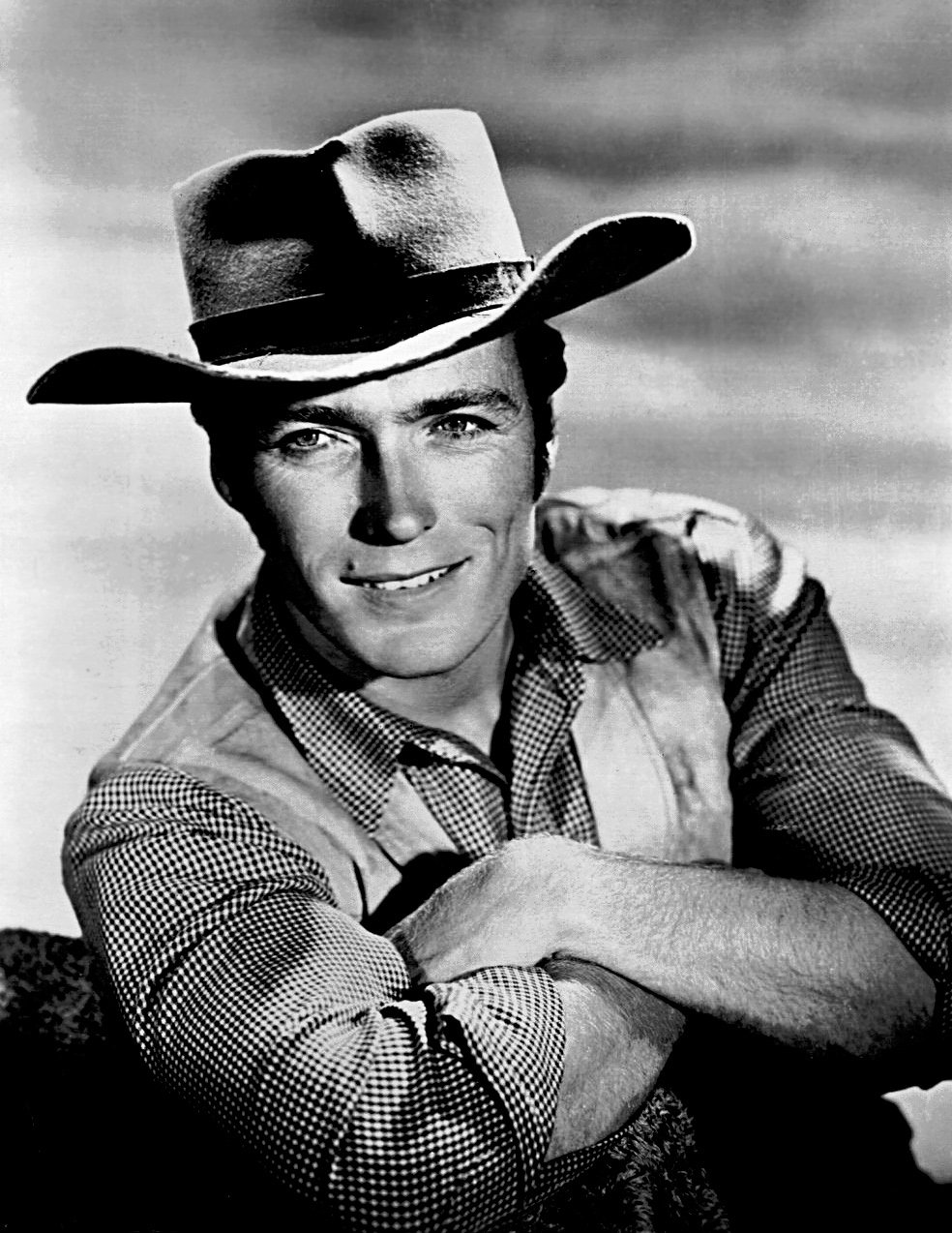
Cattle-drive procedural western; launching pad for Clint Eastwood's global stardom.
Why it matters
From the desk
Why Rawhide still plays
The cattle are already moving when the cameras find them — January 9, 1959, CBS, trail boss Gil Favor and ramrod Rowdy Yates punching a weekly clock that looks like dust and sounds like a job. Rawhide is not a campfire postcard. It is a cattle-drive procedural: Head 'em up, move 'em out, and a young Clint Eastwood learning the sneer the later spaghetti years would sell as destiny. Eric Fleming holds the drive. Sheb Wooley and Paul Brinegar's Wishbone keep the workplace from becoming a statue. Charles Marquis Warren's premise ran eight seasons, 218 episodes, into 1965. The heat is the pipeline hiding in a hat.
**They are not amicable**, the TV cowboy and the global star he is about to become. Eastwood's Rowdy Yates breakout is the ultimate television-to-legend leak: a ramrod on a CBS schedule full of hats, already practicing the face that would leave the network. The museum guards of prestige will tell you to wait for the Italian films. Cute. The seating chart is the trail. The gossip is the sneer in weekly form, years before the one-name industry. Sources close to the drive will say the theme still sounds like work. Believe them.
One almost-empathy beat for the cook and the crew who saw everything — the waterhole trouble, the guest-trade hours, the star packing a future while still punching a time card. They do not get the retrospective. They got the dust. Warren's cattle-drive premise stood out even in a western-saturated era because it treated the trail as a workplace, not a costume party. Trail dust as drama you clock into. That is the geometry.
Who was where on this drive:
The 1959 opener, listed as a tumbleweed incident, is the procedural walking in already — trail dust as workplace drama, Eastwood already in the pipeline. A season-three ignition keeps the series' own Incident naming grammar; head-'em-up is still a weekly clock. A mid-late landmark titled for a red wind is the cowboy-to-global-star pipeline still on a trail-drive time card. A listed hour that steps off the Incident formula, The Photographer, is guest-trade craft on a drive that had become a workplace. The 1965 closer, a last titled crossing at White Feather, is the sneer packed for spaghetti westerns and the drive over.
The people who want just the text, not the text messages, will file this under hats. The text is the seating chart of a future movie king still answering to a trail boss. Last flash: the theme still sounds like dust. The door closes on a 1965 crossing. The sneer did not stay on CBS.
Episode guide
How this series is filed
TV Flash files Rawhide (1959–1965) on CBS as the episode guide: 218 listed hours across 8 seasons, 1959-01-09–1965-12-07 from “Incident of the Tumbleweed” (S01E01) to “Crossing at White Feather” (S08E13).
Open the episode guide · S01E01 Incident of the Tumbleweed · S08E13 Crossing at White Feather
Essential episodes
Head 'em up — cattle-drive procedural, trail dust as workplace, Eastwood learning the sneer on a weekly clock. Filed by Vivian Cross (The Carpet Report).
- S01E01 Incident of the Tumbleweed
Incident of the Tumbleweed: cattle-drive procedural opens, trail dust as workplace drama, Eastwood already in the pipeline.
- S03E01 Incident at Rojo Canyon
Incident at Rojo Canyon — season-three ignition on the series' own naming grammar, head-'em-up still a weekly clock.
- S06E01 Incident of the Red Wind
Incident of the Red Wind: mid-late landmark title, the TV cowboy-to-global-star pipeline still punching a trail-drive time card.
- S07E11 The Photographer
The Photographer: named hour that steps off the Incident formula, guest-trade craft on a drive that had become a workplace.
- S08E13 Crossing at White Feather
Crossing at White Feather closes 1965: last titled crossing, the sneer already packed for spaghetti westerns, the drive over.
At a glance
Trail boss Gil Favor and ramrod Rowdy Yates drive cattle across a hard country, meeting trouble at every waterhole. Charles Marquis Warren's CBS western (January 9, 1959–1965) made young Clint Eastwood a household name years before his film breakthrough in Italy. Eric Fleming's Favor, Sheb Wooley's Pete Nolan, and Paul Brinegar's Wishbone rounded the drive; the theme and dust-caked realism stood out even in a western-saturated era. Cattle-drive procedural: trail dust as workplace drama. Head 'em up, move 'em out.
Network & studio
Why watch now
Rawhide is the cattle-drive procedural: Head 'em up, move 'em out, and Clint Eastwood learning the sneer that later conquered spaghetti westerns. Watch it now as the TV cowboy-to-global-star pipeline in weekly form — trail dust as workplace drama, years before Eastwood became a one-name industry.
Cultural impact
Rawhide kept the cattle-drive western alive into the mid-1960s and launched a global star. Eastwood's Rowdy Yates was the TV-cowboy-to-film pipeline in weekly form, preceding the Italian breakthrough. In a western-saturated era, the drive itself — a job, a trail, trouble at the waterhole — stood out as dust-caked realism. Later spaghetti-western immortality still exits from this CBS ramrod.
Creators
Charles Marquis Warren
Key cast
- Eric Fleming as Gil Favor
- Clint Eastwood as Rowdy Yates
- Sheb Wooley as Pete Nolan
- Paul Brinegar as Wishbone
Flash facts
- CBS western January 9, 1959–1965.
- Clint Eastwood's Rowdy Yates role preceded his film breakthrough in Italy.
- Created/produced in the adult western wave with a distinctive cattle-drive premise.
- Eric Fleming starred as trail boss Gil Favor; Paul Brinegar as cook Wishbone.
- Sheb Wooley played scout Pete Nolan.
FAQ
Where should I start?
Start with Fleming as Favor and Eastwood as Rowdy on the drive — the cattle-drive workplace is the premise from week one.
What can I skip?
Skip a waterhole-by-waterhole complete cattle season. Procedural trail trouble repeats. You are here for the drive and the sneer, not a hidden serial.
Is it still worth it?
Yes, as the TV cowboy-to-global-star pipeline in weekly form. Dust as a job.
Gunfighter western or workplace drive?
Cattle-drive western procedural — a moving job, not a lone-gunfighter myth.
Official & further reading
External sites for further reading — TV Flash is not affiliated with these networks or studios.
Back to the decade
Also on the dial
More after Rawhide
- Related showThe Ernie Kovacs ShowVisual gags, blackouts, and Nairobi Trio — the medium inventing itself for laughs.
- Related showThe Adventures of Robin HoodRichard Greene's Robin — British export that American kids treated like native folklore.
- Related showThe United States Steel HourIndustrial giant, theatrical punch — live drama with a steel-hard production sheen.
- Related showOmnibusAloft culture for the masses — Leonard Bernstein, Orson Welles, and Sunday seriousness.
- Related showAmos 'n' AndyHugely popular, deeply fraught — the sitcom that forces the conversation about race and early TV.
- Related showMamaNorwegian immigrant family warmth — live family drama before sitcoms ate the hour.