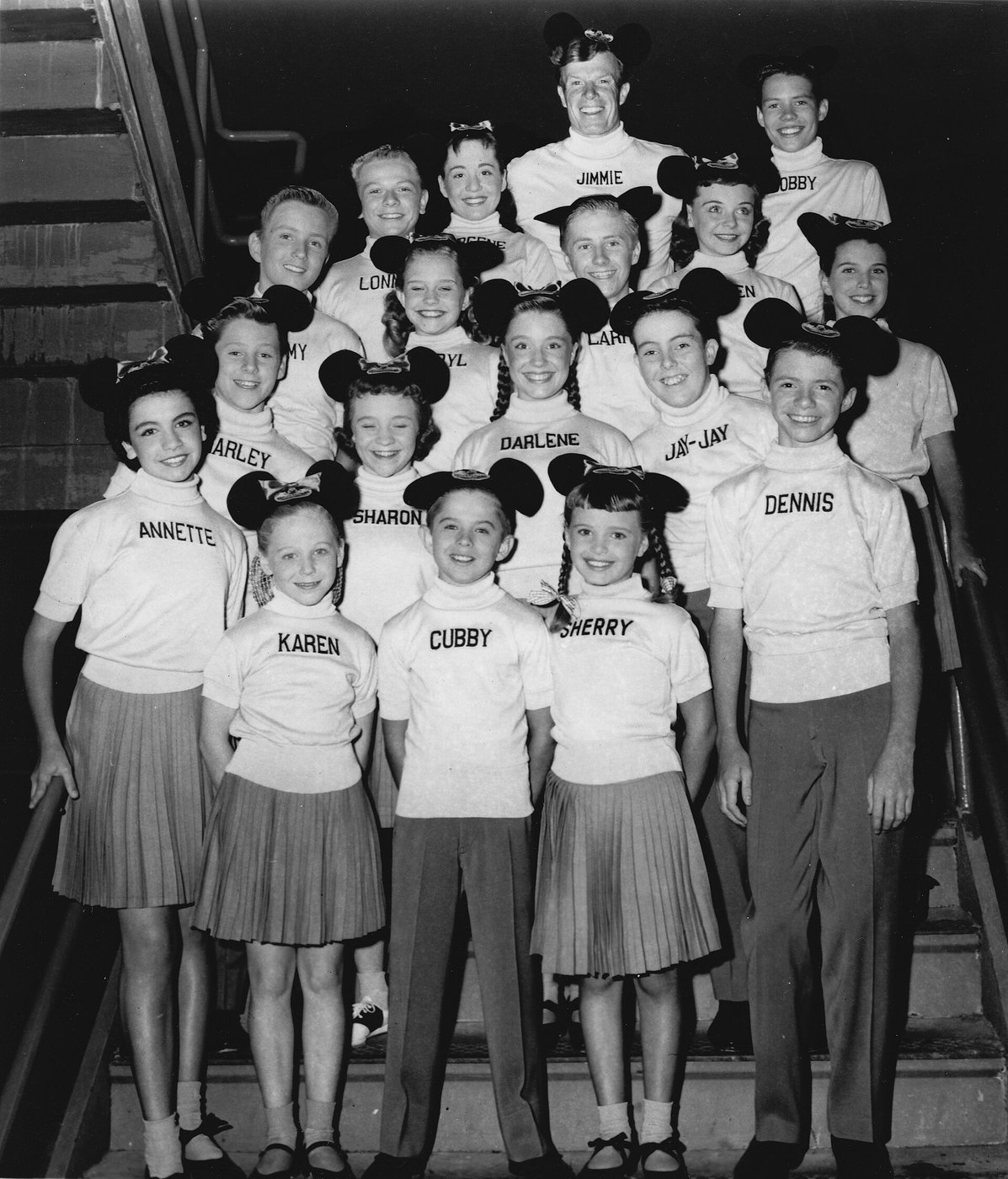
Defined 1950s children's fandom and the manufactured kid-star pipeline.
Why it matters
From the desk
Why The Mickey Mouse Club still plays
The work is a daily roll call. ABC's *The Mickey Mouse Club* (classic run 1955–1959) mixes serials, music, and Disney polish under Walt's youth brand: Mouseketeers in ears, Jimmie Dodd as host and Head Mouseketeer, Annette Funicello as the breakout whose fame outgrew the ears, Tommy Cole and Karen Pendleton among the rotating cast. One hundred one episodes in this catalog slice, two seasons of file, children's variety as corporate family. Wholesome, catchy, ruthlessly effective branding — part of the same 1950s TV strategy as the *Disneyland* anthology. That is the structure.
Annette's breakout is the gossip the blotter will lead with and the cut files as a manufactured kid-star pipeline working as designed. Later revivals proved the clubhouse could reopen; the 1950s original remains the pure hit of mouse-eared appointment TV. *The Mickey Mouse Club* defined children's club television and minted Mouseketeer stardom as a career path. Annette Funicello became a prototype teen idol from a kids' show bench. The ears remain global shorthand for Disney childhood. Bill Walsh shares the creation card with Walt. Featured a rotating cast of Mouseketeers in musical numbers, skits, and serials — children's variety as corporate family, wholesome, catchy, ruthlessly effective branding, part of the same 1950s TV strategy as the *Disneyland* anthology. Fandom as a weekday theme, not a leak. Jimmie Dodd ran roll call; the ears did the rest of the branding.
What the calendar is arguing: themed weekdays as merch machine. *Opening Day* is Mouseketeers, felt ears, and M-I-C-K-E-Y as daily talent school. *Anything Can Happen Day* is mid-fall themed weekday, the clubhouse already teaching fandom the calendar as a merch machine. *Fun With Music Day* restarts 1956 on the Monday theme — Annette's breakout era humming under the roll-call brand. A later 1956 *Fun With Music Day* marker keeps the same theme title, the ears still the most efficient children's fandom Disney ever broadcast.
*Talent Round-Up Day* is a mid-run landmark on file — position and title, not an invented plot. Skip treating the ears as irony. The form is club television. People who want a crime blotter will miss that the pipeline *is* the show.
Verdict: watch it as 1950s children's fandom in original packaging — the manufactured kid-star pipeline, and the clubhouse later decades kept reopening. The rumor is Annette. The text is the roll call. Both are the franchise.
Episode guide
How this series is filed
TV Flash files The Mickey Mouse Club (1955–1959) on ABC as the episode guide: 101 listed hours across 2 seasons, 1955-07-17–1956-10-01 from “Opening Day” (S1955E01) to “Fun With Music Day” (S1956E35).
Open the episode guide · S1955E01 Opening Day · S1956E35 Fun With Music Day
Essential episodes
Ears, roll call, themed weekdays — Disney's kid-star pipeline in the hours the club still names. Filed by Julian Hart (The Binge Brief).
- S1955E01 Opening Day
Opening Day: Mouseketeers, felt ears, and M-I-C-K-E-Y as daily talent school — manufactured kid-star pipeline in original packaging.
- S1955E34 Anything Can Happen Day
Anything Can Happen Day: mid-fall themed weekday, the clubhouse already teaching fandom the calendar as a merch machine.
- S1956E01 Fun With Music Day
Fun With Music Day restarts 1956 on the Monday theme — Annette's breakout era humming under the roll-call brand.
- S1956E35 Fun With Music Day
Fun With Music Day as later 1956 marker: same theme title, the ears still the most efficient children's fandom Disney ever broadcast.
- S1955E51 Talent Round-Up Day
“Talent Round-Up Day” is a mid-run landmark on file — position and title, not an invented plot.
At a glance
Mouseketeers in ears sang the roll call and taught a generation that fandom could be a daily club. ABC's The Mickey Mouse Club (1955–1959 in its classic run) mixed serials, music, and Disney polish under Walt's youth brand. Annette Funicello became the breakout Mouseketeer whose fame outgrew the ears. It was children's variety as corporate family — wholesome, catchy, and ruthlessly effective branding. Later revivals proved the clubhouse could reopen; the 1950s original remains the pure hit of mouse-eared appointment TV.
Network & studio
- ABC — broadcast network
- The Walt Disney Company — production studio
Why watch now
The Mickey Mouse Club is Mouseketeers, ears, and M-I-C-K-E-Y: Disney's talent school broadcast daily, Annette Funicello's breakout, a merch machine in felt. Watch it now as 1950s children's fandom in original packaging — the manufactured kid-star pipeline, and the clubhouse later decades kept reopening.
Cultural impact
The Mickey Mouse Club defined children's club television and minted Mouseketeer stardom as a career path. Annette Funicello became a prototype teen idol from a kids' show bench. The ears remain global shorthand for Disney childhood.
Creators
Walt Disney · Bill Walsh
Key cast
- Jimmie Dodd as Host / Head Mouseketeer
- Annette Funicello as Mouseketeer
- Tommy Cole as Mouseketeer
- Karen Pendleton as Mouseketeer
Flash facts
- Classic ABC run of The Mickey Mouse Club aired 1955–1959.
- Featured a rotating cast of Mouseketeers in musical numbers, skits, and serials.
- Annette Funicello emerged as the best-known original Mouseketeer.
- Part of Disney's broader 1950s television strategy alongside the Disneyland anthology.
- Later revived in multiple later decades for new generations.
FAQ
Where should I start?
Start with the roll call, the ears, and Annette in the classic 1955–59 ABC company. Serials and musical numbers are the daily mix.
What can I skip?
Skip later-decade revivals if you want this 1950s club, and skip a full-school-year completionism. Sample the Mouseketeer machine.
Is it still worth it?
Yes. Foundational kids' variety and the Annette origin story — loyalty-building before streaming kids' algorithms.
Variety, serial, or talent show?
Children's club variety — music, skits, and serials under one set of ears.
Official & further reading
External sites for further reading — TV Flash is not affiliated with these networks or studios.
Back to the decade
Also on the dial
More after The Mickey Mouse Club
- Related showLife Is Worth LivingBishop Sheen vs. Milton Berle in the ratings — a chalkboard and a cape beat vaudeville some weeks.
- Related showThe Ernie Kovacs ShowVisual gags, blackouts, and Nairobi Trio — the medium inventing itself for laughs.
- Related showRocky and His FriendsA flying squirrel, a moose, and Cold War satire — Jay Ward's anarchic gift at decade's end.
- Related showKukla, Fran and OllieAd-lib puppets and Fran Allison — gentle absurdity that adults watched without irony.
- Related showSky KingArizona rancher with a Cessna — aviation adventure for kids who wanted wings.
- Related showThe United States Steel HourIndustrial giant, theatrical punch — live drama with a steel-hard production sheen.