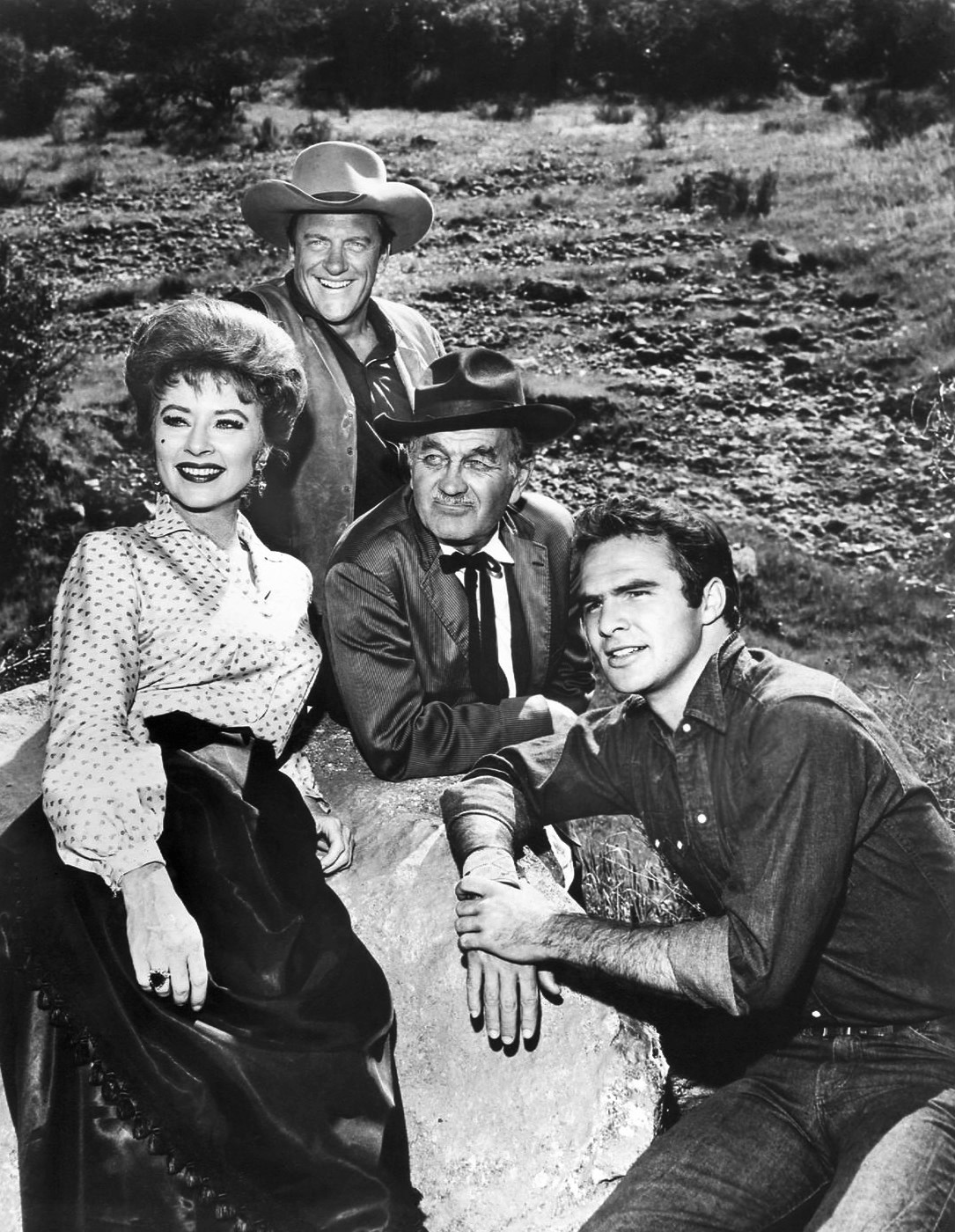
Proved serialized adult drama could own an era's prime-time map.
Why it matters
From the desk
Dodge City as a Weekly Moral Court — Twenty Years, No Scroll
Radio muscle moved to Saturday, then Monday: James Arness as a marshal the camera could believe, and a western that treated violence as civic work instead of costume jewelry.
September 1955, CBS: a marshal takes a bullet in the first hour and the adult western stops being a kid’s hat commercial. Gunsmoke had already lived on radio, with a different voice in the badge. Television wanted a face the lens could trust. The lore still pours like bar whiskey — John Wayne pointing at James Arness, William Conrad left on the airwaves, a casting fight that was really a medium fight. Radio-to-TV is never a reprint. It is a negotiation about whose body gets to mean the law.
On the palate: dust, coffee, and a three-act that knew the difference between a shootout and a verdict. Matt Dillon keeps a fragile peace in Dodge. Kitty, Doc, Chester, then Festus: a chorus, not a gadget ensemble. The show’s real trick was duration. Twenty seasons is not a flex for a spreadsheet. It is proof that serialized adult drama could own an era’s prime-time map without a binge button. Max will tell you longevity is catalog math. Cute. Longevity here was weather. Miss a Monday and the town continued without you, which is how living-room America used to work.
The historical claim the room forgets: this was not nostalgia for a West that never existed so much as a weekly argument about what a town owes a stranger. Early half-hours are lean and mean, filmed like morality plays with horses. Later hours stretch, guest stars arrive with Oscar dust on their boots, and the badge gets tarnished on purpose. Bette Davis in a late-sixties hour is not a stunt. It is the adult western admitting it is also Hollywood, and still asking the marshal to hold the center. Three network facts that would trend today:
1. A radio star denied the TV face because the camera had other needs.
2. A timeslot as a kingdom — Saturday, then Monday, affiliates treating Dodge like a civic appointment.
3. A quiet 1975 closer after two decades, no stadium, no teaser for a universe.
How to watch a mega-list without drowning: do not march from episode one to six hundred like a clerk. Sample the first-season wound, a guest-star moral court, a late-era badge hour, and the closer. The Raid two-parter and Mannon still get cited when people mean the show grew teeth instead of just growing old. The Jailer is craft meeting celebrity without becoming a clip-reel. The Sharecroppers ends the run the way a town ends a job: work done, dust still on the boots, no speech about legacy. That deflation is the toast.
What the binge boys bury is the point. A vending machine with a PR department cannot imitate twenty years of weekly civic ritual. You felt the flop on air, between a newsbreak and a used-car spot. You felt the phenomenon the same way. Gunsmoke’s power was not that every hour was a masterpiece. It was that the country kept showing up to watch a marshal try to remain decent in public. Patterns are old: hyping a tired idea, rewriting a star, calling a retreat a complete story. This one actually completed the story, then left the street empty.
Raise a glass to the radio voice who did not get the TV jawline, and to the marshal who did. Start where Matt gets it. Leave when the sharecroppers walk away. The West on television after that is mostly costume with better hair.
Episode guide
How this series is filed
TV Flash files Gunsmoke (1955–1975) on CBS as a season-first catalog of 635 listed hours across 20 seasons, 1955-09-10–1975-03-31 from “Matt Gets It” (S01E01) to “The Sharecroppers” (S20E24).
Open the episode guide · S01E01 Matt Gets It · S20E24 The Sharecroppers
Essential episodes
Famous hours across a mega-run — first wound, guest-star court, late badge, no parade. Filed by Rex Fontaine (Golden Age Dispatch).
- S01E01 Matt Gets It
The opener that lets the marshal bleed — adult western as wound, not costume.
- S12E03 The Jailer
A late-sixties guest-star moral court: celebrity without turning Dodge into a clip reel.
- S14E17 Mannon
The hour people still cite when they mean the show grew teeth instead of just growing old.
- S20E09 The Tarnished Badge
Late-run badge ethics — longevity arguing with itself about what the star still means.
- S20E24 The Sharecroppers
A workman’s closer after twenty years: no stadium, no universe teaser.
At a glance
Marshal Matt Dillon keeps a fragile peace in 1870s Dodge City while gunfighters, con men, and settlers test the town’s thin moral order. Miss Kitty, Doc, and a rotating deputy chorus ground the violence in character rather than pure shootouts. Longevity turned the western into weekly civic ritual.
Network & studio
- CBS — broadcast network
Why watch now
Twenty seasons of Dodge as a civic appointment: a marshal who can lose, a chorus instead of gadgets, and adult-western hours that treat a gunfight as a verdict. Longevity here was weather, not catalog padding — weekly public work with dust still on the boots.
Cultural impact
Gunsmoke helped make adult western drama a prime-time pillar and set longevity records later shows still cite. Dodge City became a national idea of the West as moral court.
Creators
Norman Macdonnell · John Meston
Key cast
- James Arness as Marshal Matt Dillon
- Amanda Blake as Miss Kitty Russell
- Milburn Stone as Doc Adams
- Dennis Weaver as Chester Goode
- Ken Curtis as Festus Haggen
Flash facts
- Western set in 1870s Dodge City; TV series on CBS ran 1955–1975 (20 seasons, 635 episodes), after a CBS Radio run (1952–1961).
- James Arness starred as Marshal Matt Dillon on television; William Conrad played Dillon on radio.
- Among the longest-running scripted prime-time U.S. dramas of its era; later TV movies reunited cast members.
FAQ
Where should I start?
Start with the 1955 opener, where the marshal is not invincible. Then sample a later guest-star hour rather than marching through hundreds of titles in order.
What can I skip?
Skip the idea of completionism. Six hundred-plus hours are a catalog, not a dare. Mid-run formula weeks exist; use famous titles and season hubs instead of a binge oath.
Is the finale worth it?
Yes, as a workman’s exit. After twenty seasons the closer does not throw a parade. That quiet is the point of a show that treated the badge as a job.
Do I need the radio series first?
No. The television Dodge is its own body. Radio is context for the casting fight and the adult-western tone, not homework.
Is it a kids’ western?
No. It was sold as adult drama: moral court, not costume jewelry. Violence is civic consequence more often than stunt play.
Cultural eras
Official & further reading
External sites for further reading — TV Flash is not affiliated with these networks or studios.
Back to the decade
Also on the dial
More after Gunsmoke
- Related showThe Ernie Kovacs ShowVisual gags, blackouts, and Nairobi Trio — the medium inventing itself for laughs.
- Related showThe Adventures of Robin HoodRichard Greene's Robin — British export that American kids treated like native folklore.
- Related showThe United States Steel HourIndustrial giant, theatrical punch — live drama with a steel-hard production sheen.
- Related showOmnibusAloft culture for the masses — Leonard Bernstein, Orson Welles, and Sunday seriousness.
- Related showAmos 'n' AndyHugely popular, deeply fraught — the sitcom that forces the conversation about race and early TV.
- Related showMamaNorwegian immigrant family warmth — live family drama before sitcoms ate the hour.