Blueprint for blue-collar comedy and the 'classic 39' cult of perfection.
Why it matters
From the desk
One Kitchen, Two Friends, and the Cult of Thirty-Nine
Jackie Gleason’s Brooklyn pressure cooker — sketches first, then the Classic 39 — working-class volume as sitcom architecture, short on seasons and long on afterlife.
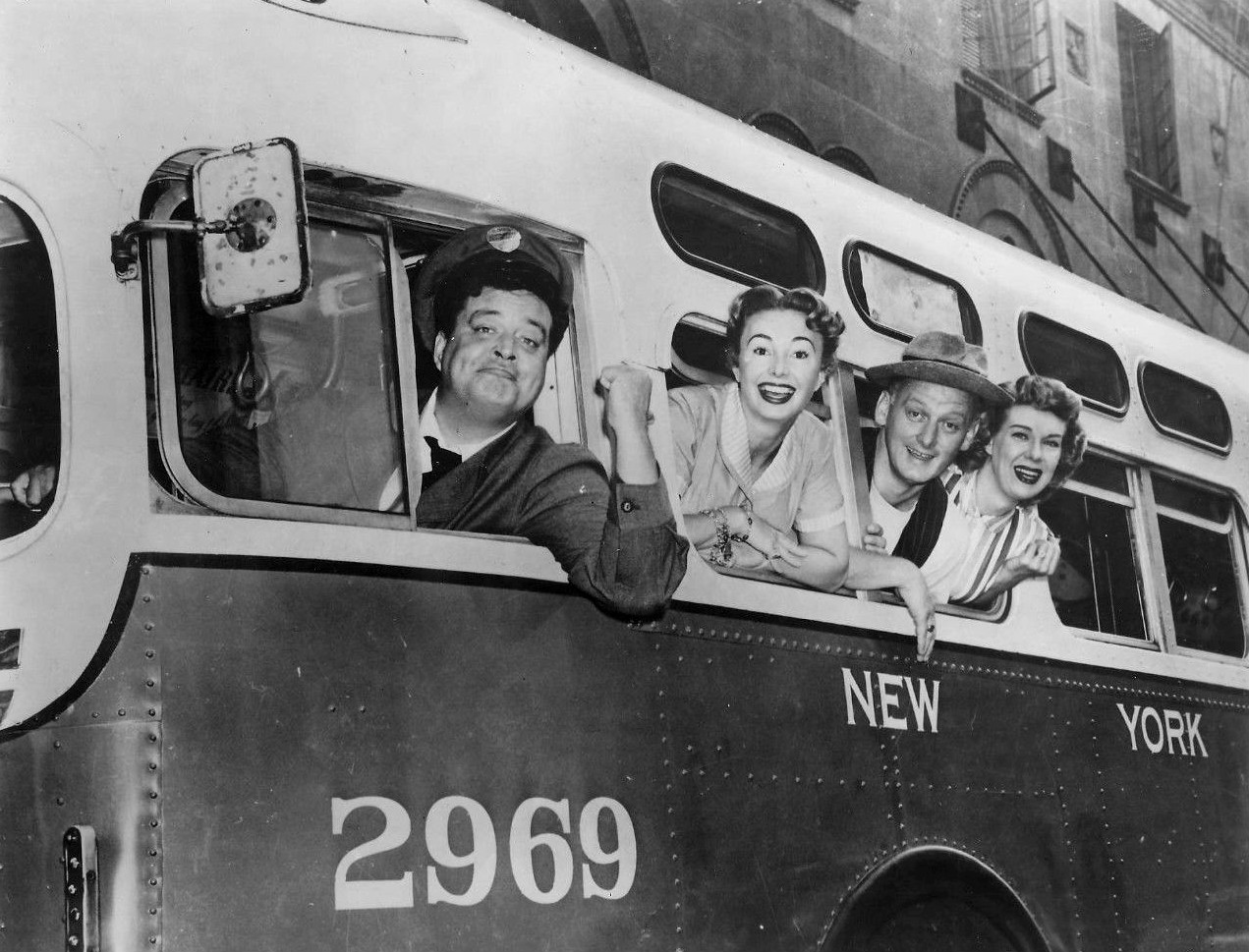
Before the Classic 39 had a Saturday all to themselves, Ralph Kramden was already yelling in a kitchen the size of a conscience. The Honeymooners begins, in this catalog, as 1952 sketch voltage on Gleason’s variety empire: a bus driver’s pride, a wife with the only working bullshit detector in Bensonhurst, a sewer worker as best friend and chaos engine. Television did not invent working-class marriage as comedy. It did, for one tight season of half-hours, freeze it in a set so spare it still looks like a dare. No staircase. No extra rooms. Just volume, loyalty, and a get-rich scheme that will not survive the credits.
On the palate: subway grit and perfect two-couple geometry. Gleason plays size as timing. Audrey Meadows plays Alice as the adult in the room without becoming a scold cartoon. Art Carney’s Norton is the other half of the music — body comedy as devotion. The historical claim the room forgets: the Classic 39 are a cult of perfection because the network run was brief, not because every later revival was a masterpiece. 1955 to 1956, thirty-nine filmed half-hours, then the country spent decades treating them like scripture. Max’s drop culture stretches a premise until the catalog wheezes. Gleason left the table while the plates were still hot. That is not humility. That is showman’s math.
What a network night looked like around this kitchen:
1. Variety as incubator — sketches earning a sitcom, not a streamer order based on a pitch deck.
2. A living-room America that recognized the paycheck argument because it was living it.
3. Rerun religion so fierce later generations met Ralph before they met the variety host who built him.
Watch the Classic 39 as architecture. TV or Not TV is the appliance as class warfare, which is funnier and meaner than nostalgia admits. Better Living Through TV is advertising as farce, two men promising a machine they cannot work — television eating its own commercial. The golf hour and the space-costume hour are pride as costume. The quiz-show hour is working-class hunger meeting a boom-time racket, and Gleason’s face does the math before the punchline. You do not need a plot recap. You need to see how little furniture a great sitcom requires.
The pack is honest about the afterlife, sometimes brutally. Later color hours, reunion specials, clip reels — the catalog keeps Gleason in the building long after the Classic 39 had already closed the argument. The last regular here is a 2004 battles compilation, which is not a finale so much as proof that the kitchen became a souvenir. That is the deflating detail in the toast: the Great One’s perfect season got buried under decades of more. Patterns are old. Hype a revival, sell a lost-episode box, call the rerun a universe. The 39 remain the form.
How to watch without the simpler-times slop: hear the volume as love and as trap. Ralph’s bang-zoom is a catchphrase now. In the room it is a man who cannot afford a larger life and performs one anyway. Alice stays. Norton knocks. The bus keeps its schedule. Linear television made that kitchen a national appointment, then let it end. A vending machine would have ordered season twelve. Raise a glass to the star whose off-screen appetite matched the on-screen lungs — and to the kitchen that never got a second sink. Start with the Classic 39. Let the clip specials wait in the hall.
Episode guide
How this series is filed
TV Flash files The Honeymooners (1955–1956) on CBS as the episode guide: 225 listed hours across 11 seasons, 1952-09-20–2004-10-16 from “The New Bowling Ball” (S01E01) to “Special:The Honeymooners Greatest Battles” (S11E28).
Open the episode guide · S01E01 The New Bowling Ball · S11E28 Special:The Honeymooners Greatest Battles
Essential episodes
Classic 39 voltage — appliance dreams, quiz-show hunger, pride as costume. Filed by Rex Fontaine (Golden Age Dispatch).
- S04E01 TV or Not TV
The Classic 39 opener: an appliance as class warfare in a room with no extra furniture.
- S04E03 The Golfer
Pride as costume — Gleason’s body versus a game he cannot afford to lose in public.
- S04E07 Better Living Through TV
Two men selling a machine on television: advertising farce from inside the medium.
- S04E14 The Man from Space
Working-class sci-fi as embarrassment comedy — the costume is the character.
- S04E18 The $99,000 Answer
Quiz-show hunger meeting boom-time racket; the face does the math before the punchline.
At a glance
Bus driver Ralph Kramden dreams of get-rich schemes while wife Alice keeps him honest in a tiny Brooklyn apartment. Best friend Ed Norton abets the chaos with sewer-worker optimism. The classic 39 episodes compress working-class marriage into pure comic voltage.
Network & studio
- CBS — broadcast network
Why watch now
Thirty-nine half-hours in a kitchen the size of a conscience: Gleason’s volume, Meadows’s spine, Carney’s devotion. Watch working-class pride as sitcom architecture — then notice how little furniture a great comedy needs, and how quickly later revivals became souvenirs.
Cultural impact
Those 39 episodes became a cult of perfection that later animated everything from The Flintstones to every “to the moon” catchphrase echo. Working-class rage and affection found their network vocabulary here.
Creators
Jackie Gleason
Key cast
- Jackie Gleason as Ralph Kramden
- Audrey Meadows as Alice Kramden
- Art Carney as Ed Norton
- Joyce Randolph as Trixie Norton
Flash facts
- Classic 39-episode 'Classic 39' sitcom season aired on CBS from October 1, 1955, to September 22, 1956.
- Grew from sketches on Jackie Gleason’s variety shows; filmed multi-camera at New York’s Adelphi Theatre.
- Ralph Kramden is a New York City bus driver; Art Carney’s Ed Norton is his sewer-worker neighbor and best friend.
FAQ
Where should I start?
Start with the Classic 39 — season four in this pack, beginning with TV or Not TV. The earlier sketches show the characters forming; the 1955–56 half-hours are the form at full voltage.
What can I skip?
Skip the later color hours and clip specials until you have the 39. They are afterlife, not the argument. Completing the 2004 compilations is souvenir hunting.
Is the last episode a real finale?
The Classic 39 close in 1956. This catalog’s last regular is a much later clip special. Treat A Man’s Pride as the artistic button; treat the 2004 reel as proof of rerun religion.
Do I need the sketches first?
No. They are historically juicy — Gleason’s variety incubator — but the sitcom contract is the Classic 39. Watch a couple of early kitchens if you like origin voltage.
Why is a one-season sitcom this famous?
Because the run was short, the set was spare, and the reruns never clocked out. Perfection cults form around what networks do not get to water down.
Cultural eras
Official & further reading
External sites for further reading — TV Flash is not affiliated with these networks or studios.
Back to the decade
Also on the dial
More after The Honeymooners
- Related showThe Ernie Kovacs ShowVisual gags, blackouts, and Nairobi Trio — the medium inventing itself for laughs.
- Related showThe Adventures of Robin HoodRichard Greene's Robin — British export that American kids treated like native folklore.
- Related showThe United States Steel HourIndustrial giant, theatrical punch — live drama with a steel-hard production sheen.
- Related showOmnibusAloft culture for the masses — Leonard Bernstein, Orson Welles, and Sunday seriousness.
- Related showAmos 'n' AndyHugely popular, deeply fraught — the sitcom that forces the conversation about race and early TV.
- Related showMamaNorwegian immigrant family warmth — live family drama before sitcoms ate the hour.